

According to Jeff Park, the short answer is no, but Reddit disagrees.
- Jane Street has drawn renewed scrutiny following allegations tied to the 2022 TerraUSD collapse.
- On Wednesday night, the firm wiped its X account and deleted all of its posts.
- According to the crypto community, if Jane Street had not been manipulating Bitcoin’s price, it could have been at $150,000, if not higher.
- However, analysts are debating whether the larger system is to blame or Jane Street specifically.
Trading company Jane Street has been in hot water after TerraForm Labs accused it of market manipulation, and it deleted all posts from its X account overnight, fueling speculation over its role in the 2020 crypto crash.

The crypto community on Reddit and Twitter has another point of contention. If Jane Street had not manipulated TerraUSD’s (UST) price, if Luna (LUNA) had not subsequently crashed, leading to the FTX collapse, then maybe Bitcoin (BTC) would be at $150,000 right now, if not higher.
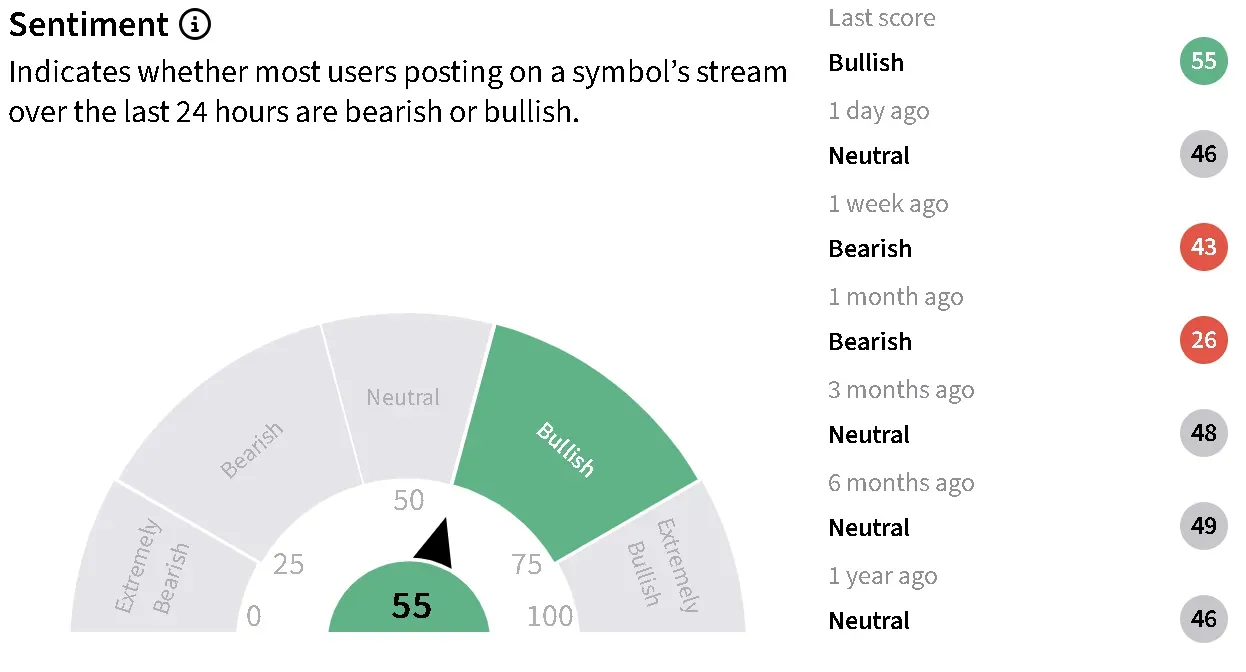
Currently, Bitcoin’s price is trading around $68,400, higher than earlier this week but still nearly 50% below its record high of over $126,000 seen in order. Any retail trader who bought at the peak needs an over 90% rally to break even. On Stocktwits, retail sentiment around the apex cryptocurrency improved to ‘bullish’ from ‘neutral’ territory over the past day.
Jane Street Isn’t Different From Its Fellow APs
According to Jeff Park, the chief investment officer at ProCap and advisor at BitWise, the short answer is no. The long answer is more complicated. No single firm, like Jane Street, should be able to directly suppress Bitcoin’s price. “Every Authorized Participant across every Bitcoin ETF operates under the same rules and the same exemptions,” he said in a short note on X.
However, what the larger structure can suppress is something more subtle. According to Park, Authorized Participants (APs) are unique within the regulatory framework. He explained that under typical regulations, short sellers are required to locate shares before selling them short. However, APs are exempt from that requirement because they have contractual rights to create and redeem ETF shares.
The System Is Broken
What an AP can do is short ETF shares without borrowing stock, without incurring borrow costs, and without a hard deadline to close the position, leaving the position open for as long as it remains commercially reasonable. “This exemption was designed to support orderly ETF market-making. Structurally, however, it creates a window that looks very similar to regulatory arbitrage,” he wrote.
The more important question is not whether a particular firm is the villain. It is whether a regulatory framework designed for traditional ETFs is appropriate for an asset whose core value proposition is independence from the financial institutions now tasked with intermediating it.
– Jeff Park, Chief Investment Officer, ProCap
Simply put, if the hedge is done in futures rather than spot, no spot Bitcoin needs to be purchased. The mechanism is designed so that spot buying is weakened. “The gap between spot and derivatives is then left to basis traders, whose role is to keep those markets aligned,” Jeff wrote.
What Is Jane Street's Actual Net Position?
Crypto analyst Justin Bechler doesn’t disagree that the ETF mechanism is broken, but still has its suspicions about Jane Street’s role. “Jane Street's conduct in Bitcoin markets has not been tested by regulators. Its conduct in other markets has,” he wrote in a post on Reddit.
According to him, since Jane Street is a key authorized participant for major Bitcoin ETFs, it has privileged access to ETF redemption flows. The post alleged Jane Street’s large IBIT holdings may be fully hedged or offset with undisclosed derivatives, meaning the real net exposure could be neutral or even short.
Bechler also noted that Bitcoin has shown repeated sharp sell-offs around 10 a.m. ET, when the stock market opens. According to him, while the mechanism is broken, Jane Street is not innocent of exploiting it for its own gains.
What Is The Lawsuit Against Jane Street?
The federal lawsuit against Jane Street alleges that Jane Street used inside information to trade ahead of a major liquidity event. According to the complaint, a former Terraform intern later employed by Jane Street shared nonpublic information through a private chat group. When Terraform pulled liquidity from a key trading pool, a wallet linked to Jane Street allegedly exited its position minutes later, before the market knew what was happening.
The lawsuit claims Jane Street avoided large losses and worsened the collapse. Jane Street denies the allegations and says Terraform’s failure was caused by its own design flaws and misconduct.
Read also: Bitcoin ETF Inflows Top $500M For First Time This Year, On Track To Break Record Outflow Streak
For updates and corrections, email newsroom[at]stocktwits[dot]com.<
