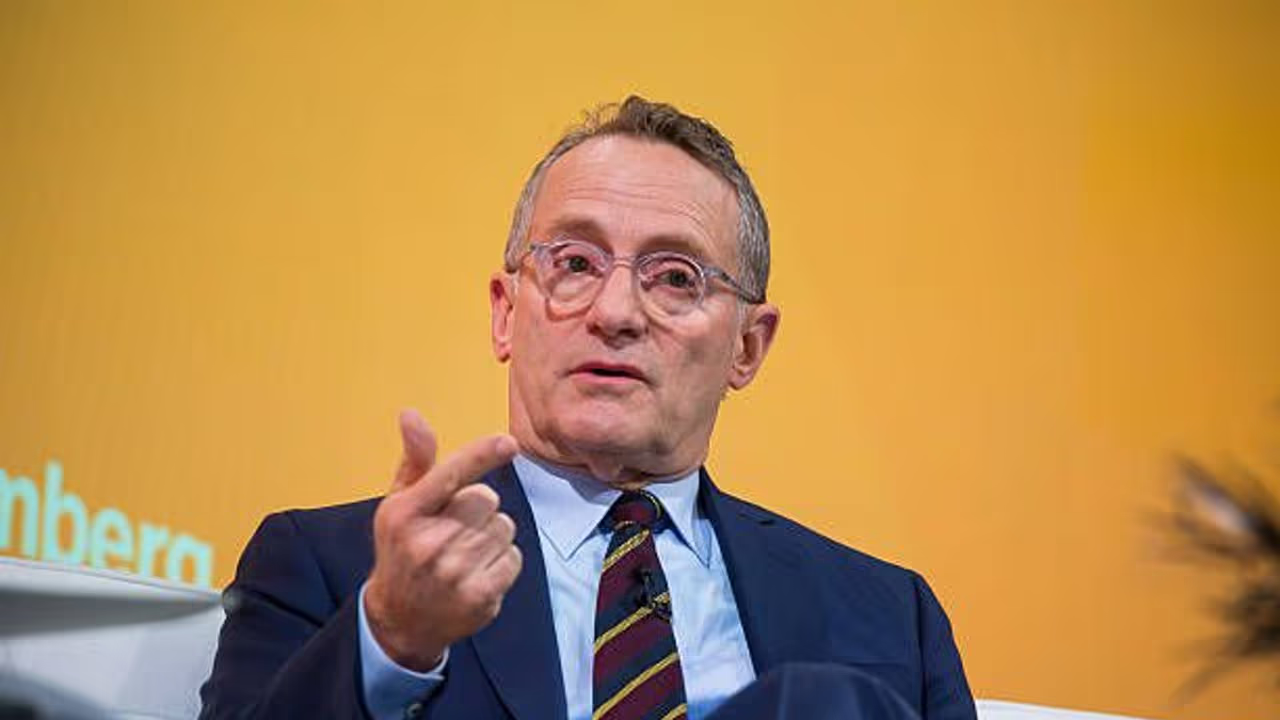
Marks questioned whether hyperscalers’ creditworthiness could change as they borrow more, warning that AI’s demand for debt could also lift government borrowing costs.
- Marks said 42 AI-related companies accounted for roughly two-thirds of the S&P 500’s price gains since January 2024.
- AI appears likely to require an average of $1 trillion in new capital annually, with hundreds of billions likely to be raised through debt issuance each year, he noted.
- Marks argued that whether AI will generate enough value to justify the trillions being invested remains “largely a matter of faith.”
Oaktree Capital Management co-founder Howard Marks said Wednesday that the growing dependence of stock and bond markets on artificial intelligence (AI) has introduced significant risks for investors, particularly as technology companies increasingly rely on borrowing to finance infrastructure expansion.
In his November 11 memo, Marks questioned whether future AI revenues would justify the industry's capital requirements and highlighted the concentration of AI-related exposure across financial markets.
AI's Influence On Stocks, Corporate Earnings
Marks cited JPMorgan data showing that 42 AI-related companies accounted for roughly two-thirds of the S&P 500's price gains since January 2024. He also noted that earnings growth among the Magnificent Seven had outpaced the rest of the S&P 500 for 14 consecutive quarters through June 2026.
The market veteran highlighted Alphabet (GOOG, GOOGL) and Amazon (AMZN) recording a combined $151 billion in second-quarter gains from equity investments, mostly in Anthropic and SpaceX. Marks, however, questioned how lasting those gains would prove.
“The key observation is that the factors our economy and markets depend on today are relatively undiversified,” he wrote.
Marks Flags Rising AI Debt And Borrowing Costs
Citing Goldman Sachs, Marks said global AI-related debt issuance had reached nearly $600 billion in 2026, including approximately $400 billion in the U.S. investment-grade market.
That represented more than one-fifth of total U.S. investment-grade issuance, while AI-related bonds accounted for roughly 12% of the Bloomberg U.S. Dollar Investment Grade Corporate Index.
Looking ahead, Marks said AI appears likely to require an average of $1 trillion in new capital annually, with hundreds of billions likely to be raised through debt issuance each year.
He warned that borrowing demand from “rate-insensitive hyperscalers willing to pay whatever it takes” could push up the government's borrowing costs, questioning whether it had already contributed to rising interest rates.
Hyperscaler Creditworthiness And AI Returns Under Scrutiny
Marks noted that hyperscalers are spending their cash reserves and cash flow while borrowing more to fund AI expansion.
He questioned whether hyperscalers’ creditworthiness or credit ratings could change as they take on more debt, raising concerns for lenders relying on their current investment-grade ratings.
The Oaktree founder also raised concerns about data center lease termination provisions, the lifespan of chips pledged as collateral, and circular financing transactions between AI companies.
Despite these risks, Marks did not conclude that AI was necessarily a bubble. “So no, the technology isn’t an illusion,” he wrote. However, Marks said determining whether AI would generate sufficient value to justify the trillions being invested remained “largely a matter of faith.”
The memo comes as AI-related stocks rallied Wednesday, with the Nasdaq-100 climbing more than 2% as semiconductor and cloud infrastructure shares rebounded. On Stocktwits, retail sentiment around the Invesco QQQ Trust (QQQ), which tracks the index, was ‘neutral’.
See Also: Supermicro Begins Shipping New AMD-Powered AI Servers — Claims Up To 1.8x Higher AI Throughput
For updates and corrections, email newsroom[at]stocktwits[dot]com<