

Ives said the industry is in year three of an eight to 10 year “Vegas Strip 1955”-type build out during an interview with Bloomberg.
- Ives said he sees a ‘tug of war’ between accelerating AI demand and the pressure of financing the spending through debt and capital raises.
- He dismissed worries about neocloud failures, stating that the capacity would be bought up.
- The analyst said he sees the sell-offs in Meta and SpaceX as buying opportunities and expects next week’s hyperscaler earnings to calm the market.
Yorkville Ives partner Dan Ives on Friday called the recent sell-off in AI stocks a ‘SaaS Apocalypse 2.0,’ saying Oracle (ORCL) is in the toughest spot, and dismissed concerns that failures among neocloud companies would slow the AI build-out.
Ives' comments come after a day after the Nasdaq Composite fell 2.6%, its worst session since June, and the Philadelphia Semiconductor Index (SOX) dropped 6.7%. S&P 500 traded lower in morning trade.
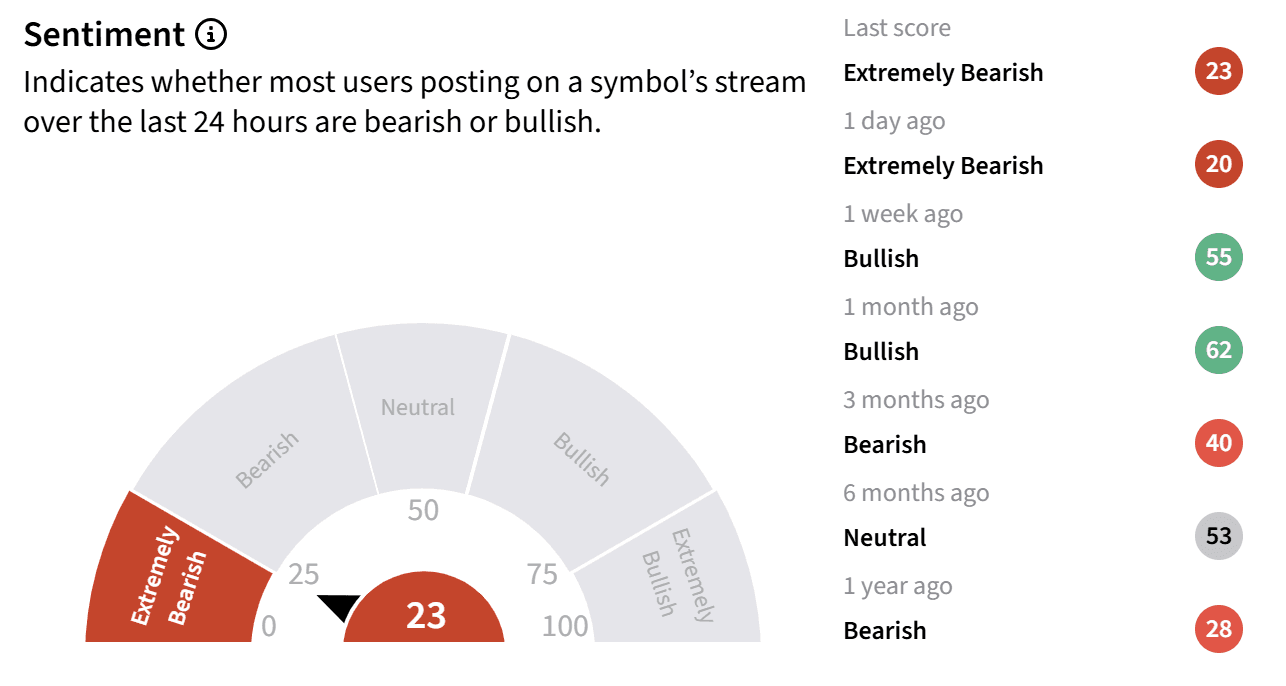
The SPDR S&P 500 ETF (SPY) was down 0.4%, the SPDR Dow Jones Industrial Average ETF (DIA) slipped over 1%, and the Nasdaq-100 tracking Invesco QQQ Trust (QQQ) was marginally in the red. Retail sentiment around QQQ on Stocktwits remained in ‘extremely bearish’ territory over the past day, down from ‘bullish’ a week prior.
The AI Infrastructure SaaS Apocalypse 2.0
In an interview with Bloomberg, the tech analyst said that the current sell-off was akin to a “SaaS apocalypse 2.0 on the infrastructure side,” relative to the first SaaSpocalypse in early February 2026 when there was a sharp sell-off in software names after Anthropic launched new AI agent tools.
He said the reaction in Meta Platforms (META) shares in the previous session was a “head scratcher” given the company’s "unbelievable" third quarter (Q3) numbers and an example of the SaaS apocalypse 2.0 playing out.
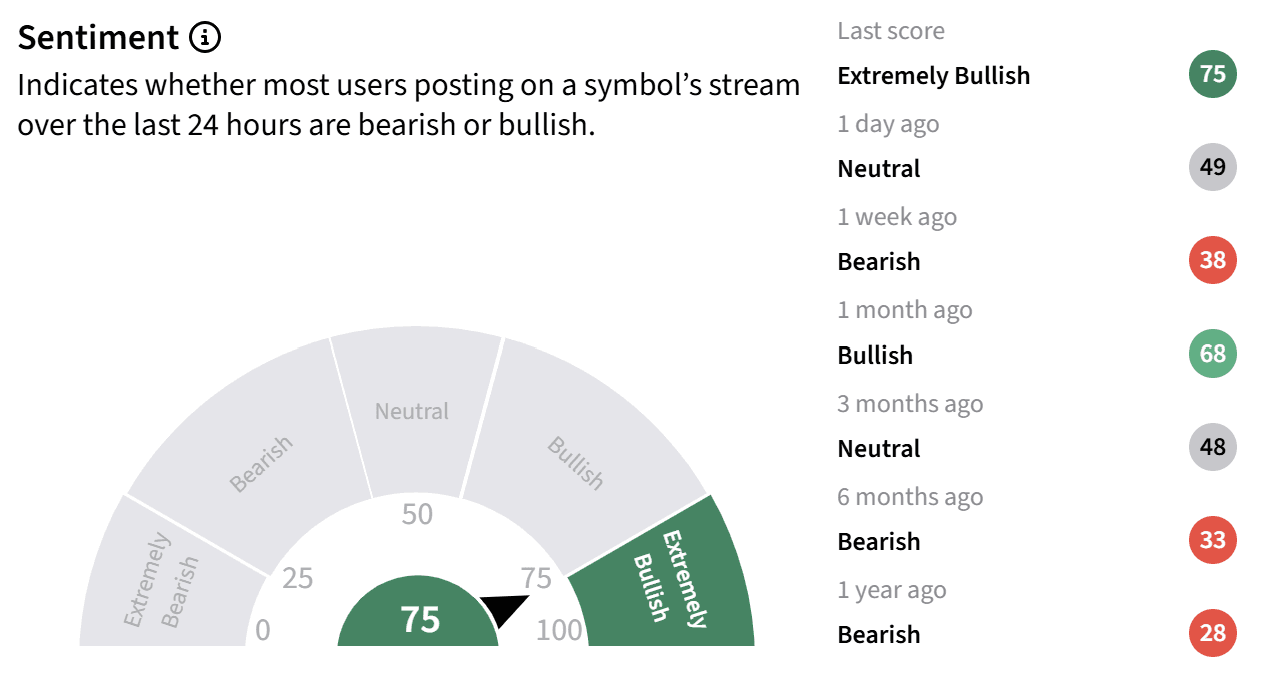
META stock fell almost 7% on Thursday, and was down nearly 1% in morning on Friday. On Stocktwits, retail sentiment around the Mark Zuckerberg-led company jumped to ‘extremely bullish’ from ‘neutral’ territory over the past day, accompanied by ‘high’ levels of chatter.
Why Ives Says Oracle Is ‘In The Toughest Spot’
Ives said the largest cloud providers can keep spending, because customers are waiting for capacity and will move to a rival if one can’t deliver. According to him, the risk is for companies like Oracle (ORCL) that are funding the build with borrowed money.
“That’s why Oracle right now is maybe in the toughest spot because they’re trying to be a hyperscaler, but they’re doing it on debt, and that’s why the stock reflects a lot of those negative concerns,” Ives stated.
Ives added that big companies like Microsoft (MSFT), Amazon (AMZN) and Alphabet’s Google (GOOG, GOOGL) understand they have a limited window, which he put at 12 to 18 months.
Ives said he expects next week’s hyperscaler earnings to calm the market, and that he sees Thursday’s reactions to Meta and SpaceX (SPCX) as a chance to buy. Alphabet and Microsoft report after the close on October 28, and Amazon reports October 29.
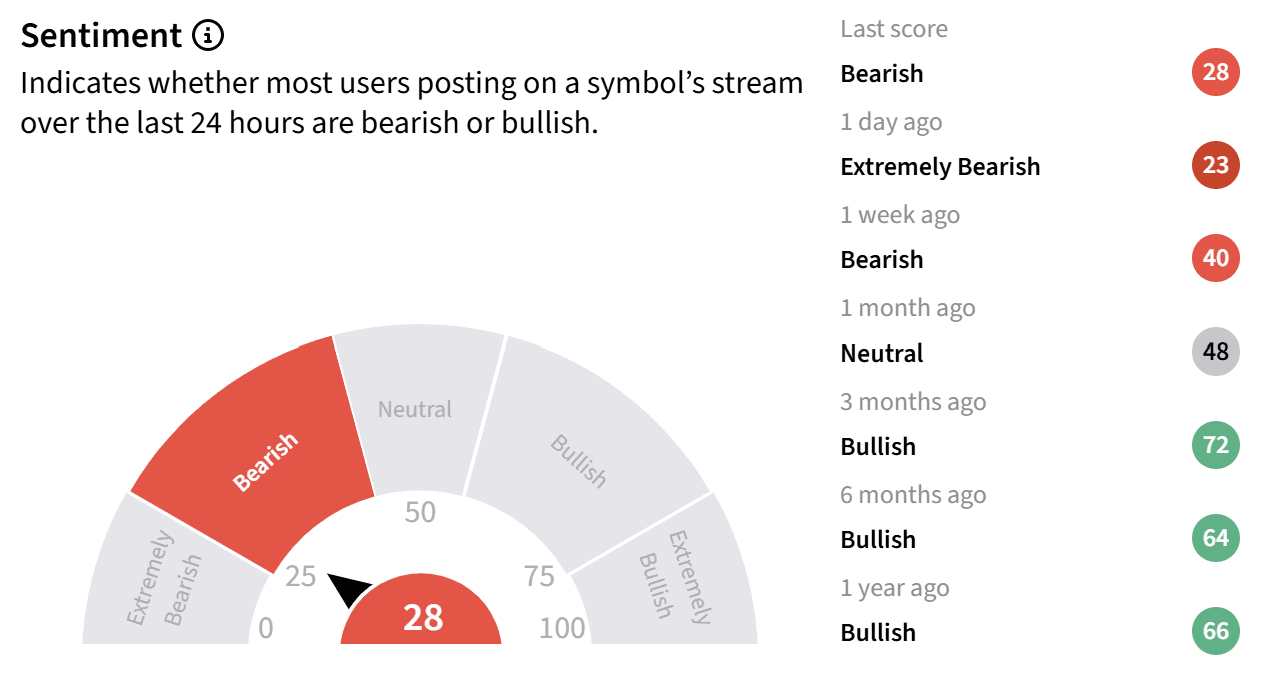
ORCL stock edged 0.5% lower at market open, with retail sentiment on Stocktwits around the company shifting to ‘bearish’ from ‘extremely bearish’ over the past day.
Dan Ives Says Neocloud Fears Overdone
According to Ives, neocloud companies are a source of extra capacity rather than a driver of demand. He said companies like CoreWeave (CRWV) and Nebius (NBIS) are consolidators.
“You almost need more neoclouds from a capacity perspective than we have today. I would argue the CoreWeaves, the Nebius, they’re more consolidators to some extent,” Ives stated.
According to the tech analyst, neocloud failures are unlikely to slow the “Vegas Strip 1955”-type build out happening in tech right now. He said the capacity would simply be absorbed and that even a sizable cutback would leave the buildout largely intact.
“If there’s some neo clouds on the lower end that go away, then that capacity ultimately gets bought up. So I don’t think that necessarily slows it down,” Ives stated. He added that every dollar of AI capital spending could generate another $5 to $6 in spending across the technology sector, benefiting companies such as Palantir (PLTR), Snowflake (SNOW), CrowdStrike (CRWD) and Palo Alto Networks (PANW).
The AI Build-Out Tug Of War
Ives said demand for AI was still rising, but the cost of funding it was weighing on stocks. “I think it’s a tug of war because on one hand, the demand has accelerated, I think about 30% over the last month,” he said. “But then [around] 20% of that is going to have to be ultimately financed via debt, capital raises.”
According to Wells Fargo, Nvidia (NVDA) Jensen Huang’s comments on Thursday about limited capital for neocloud providers added to concerns about credit availability. In an interview with CNBC on the sides of GTC Berlin, he said that the companies were facing a “scarcity of capital.”
Read also: MU, SNDK, SKHY Stocks Bounce After Thursday’s Markdown, But Strategists Split: ‘Great Buying Opportunity’ Versus ‘The Kospi Has Peaked’
For updates and corrections, email newsroom[at]stocktwits[dot]com.<
