
The company has had a whirlwind year, selling a stake in Kim K’s Skims, initiating a strategic review of its consumer beauty business, and now having a new interim CEO.
- On Monday, Coty named Procter & Gamble’s Global Skin and Personal Care Division President, Markus Strobel, as its new chairman and interim CEO.
- Coty, in late September, said it had started a strategic review of its consumer beauty business, which includes brands such as CoverGirl and Rimmel.
- Several brands in the consumer beauty segment, including Wella, were acquired by Coty in a $12.5 billion deal for P&G's beauty business.
Has the year been a rosy one for Coty? In just a word – no. The CoverGirl parent, which had seen a boom as part of the “Lipstick Effect” after the COVID-19 pandemic, is now struggling to retain customers and introduce products that appeal to a broader audience, including Gen Z.
And to pull itself out of the hole, Coty is now shaking things up at the top. Sue Nabi, the CEO of the company, who took the role in September 2020 during a time of peak pandemic disruption, had steered the company through a rough patch when customers shunned makeup and cosmetics purchases.
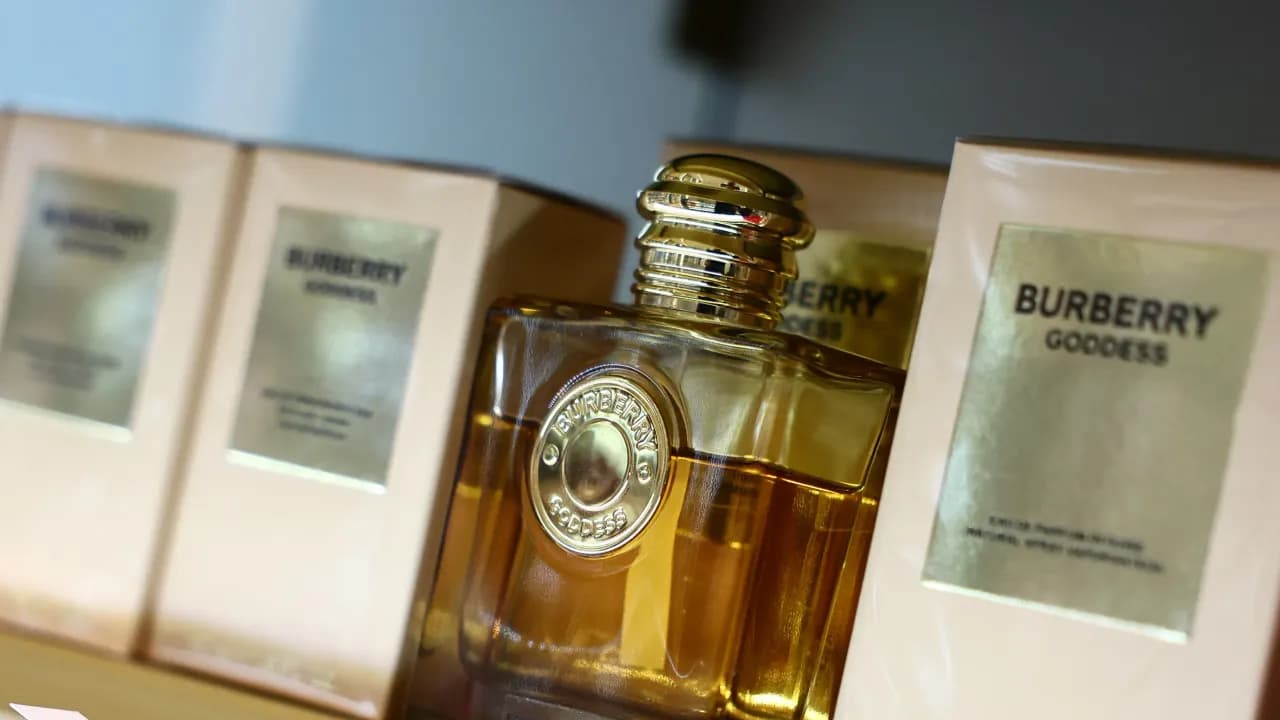
She has overseen the launch of one of Coty’s most sought-after perfumes: Burberry Goddess. But now, the growth witnessed under her has tapered off, with demand for mass-market products slowly declining, and Coty needs someone new at the helm to turn the business around. The cosmetic maker on Monday named a lifer at Procter & Gamble, Markus Strobel, as its new chairman and interim CEO.
Strobel also succeeds Peter Harf, who will retire from Coty’s Board after more than three decades of service.
Strobel’s History: A One Filled With Luxury Names
Strobel is a well-known executive in the luxury world, with a reputation for having worked with Procter & Gamble for 33 years and overseeing several fragrance brands. He is known for revitalizing SK-II into a leading prestige skincare brand in Asia.
During his tenure, Strobel held senior roles across P&G’s beauty & grooming spanning fine fragrance, hair care, and grooming. This included leading prestige brands like Gucci, Dolce & Gabbana, Valentino and Hugo Boss as part of his role to develop the fragrance segment.
Having worked at a global level at P&G, leading innovation, product supply, marketing, go-to-market strategy, and operational capabilities across North America, Greater China, Japan, Korea, and Europe, Strobel now faces a turnaround mandate as Coty's interim CEO.
How Is Coty Currently Faring?
To build on the strength of the fragrances business, Coty, in late September, said it had started a strategic review of its consumer beauty business, which includes brands such as CoverGirl and Rimmel.
Naming Strobel comes at a pivotal moment for the company, as it seeks to do away with brands that once made its name. But the consumer beauty business, which has mainly catered to the mass market, has been suffering from rising competition from even cheaper rivals such as Elf Beauty. Coty’s revenue growth has consistently declined in the last four quarters.
Demand has slowed for Coty’s products in general as middle- to lower-income consumers become more cautious about spending on cosmetics, amid rising product costs and tariff worries.
Several brands in the consumer beauty segment, including Wella, were acquired by Coty in a $12.5 billion deal for P&G's beauty business. Last week, Coty also said it sold its remaining 25.8% stake in hair care brand Wella to KKR for $750 million. The company, however, said that it had retained rights to a share of any future sale or initial public offering proceeds.
This was the second stake sale this year, following Coty’s earlier decision to sell its 20% stake in Kim Kardashian's beauty brand to her clothing line, SKIMS.
The Five Years Under Sue Nabi
Under Nabi, Coty launched products mainly in the fragrance category, which continues to resonate well and drive strong sales growth for the company. Burberry Goddess and Daisy of Marc Jacobs have become recent hits with consumers, pushing the company to focus more on its fragrance portfolio.
She was also instrumental in leading the company through the post-pandemic phase, when inflation that hit a decade's high failed to temper demand for cosmetics and several office workers turned to Coty’s products.
Coty’s stock, which had initially seen growth under Nabi, has fallen nearly 20% since her appointment in September 2020.
Evercore ISI on Monday said that CEO Nabi has been central to Coty's investment thesis. While the shares appear undervalued, the firm noted that it now lacks visibility into timing and catalysts for a potential value unlock. Evercore added that it expects the stock to remain undervalued and sees outperformance as “unlikely.”
How Are Stocktwits Users Reacting?
Retail sentiment on Coty improved to ‘neutral’ from ‘bearish’ territory a day ago, with message volumes at ‘extremely low’ levels, according to data from Stocktwits.
Sentiment on Estee Lauder dipped to ‘bearish’ from ‘neutral’ compared to a day ago, while on L’Oreal, the retail sentiment remained unchanged in the ‘neutral’ territory.
Shares of Coty have fallen nearly 55% so far this year, while Estee Lauder, under its new CEO, has seen the stock jump about 45%. U.S.-listed shares of L’Oreal have gained 23% year-to-date.
For updates and corrections, email newsroom[at]stocktwits[dot]com.<
