
The U.S. is set to formally exit the World Health Organization on Thursday.
- Gates spoke at the World Economic Forum in Davos.
- The withdrawal includes an estimated $260 million exit payment.
- The U.S. has traditionally provided around 18% of WHO’s total funding.
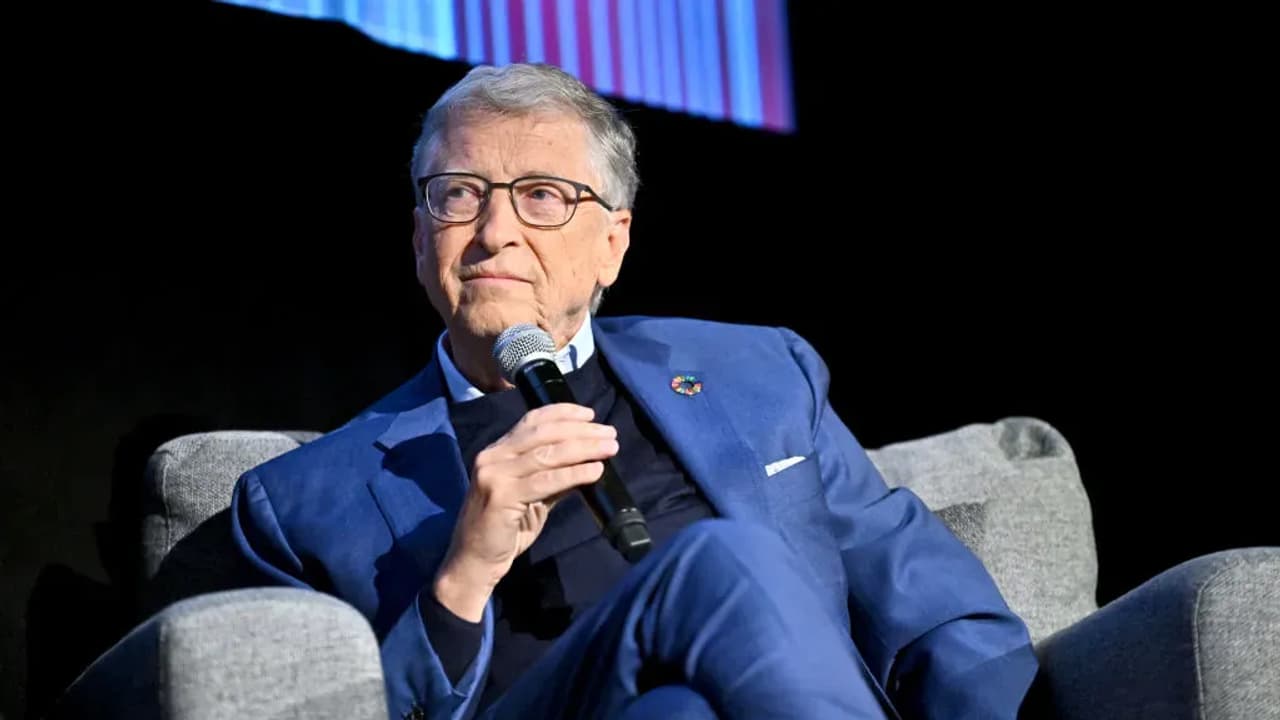
Microsoft co-founder and billionaire philanthropist Bill Gates said the U.S. is unlikely to rejoin the World Health Organization in the near term, even as the country prepares to formally exit the global health body.
Speaking at the World Economic Forum in Davos, Gates said he does not expect Washington to reconsider its decision anytime soon. “I don’t think the U.S. will be coming back to WHO in the near future,” he said, adding that he would continue to advocate for the organization. “The world needs the World Health Organization,” Reuters noted.
Trump Order And Unpaid Dues
The U.S. is due to officially leave the WHO on Thursday after President Donald Trump issued notice on the first day of his presidency in 2025. Under U.S. law, the country must provide one year’s notice and settle all outstanding fees before withdrawing. The WHO has said Washington still owes roughly $260 million for 2024 and 2025.
A U.S. State Department spokesperson told Reuters that the administration has paused future transfers of U.S. government funds, support, and resources to the agency, citing failures by the WHO in how it handled and shared information.
Lawrence Gostin, founding director of Georgetown University’s O’Neill Institute for Global Health Law, said the withdrawal violates U.S. law but is likely to proceed.
Impact On WHO Funding
The departure of its largest historical contributor has triggered a budget crisis at the WHO.
The U.S. has traditionally provided around 18% of the agency’s total funding. In response, the WHO said it has cut its management team in half, scaled back operations, and plans to reduce its workforce by about 25% by mid-year.
Gates Backs New AI Health Initiative
Meanwhile, the Gates Foundation announced Horizon1000, a $50 million initiative launched with OpenAI to expand the use of AI in healthcare centers across Africa.
The project aims to reach 1,000 primary care clinics and surrounding communities by 2028, starting in Rwanda, where healthcare staffing remains limited. Gates said the AI tools are intended to support health workers rather than replace them and could later expand to India.
How Did Stocktwits Users React?
On Stocktwits, retail sentiment toward the SPDR S&P 500 ETF Trust (SPY) was ‘extremely bearish’ amid ‘high’ message volume, while sentiment for the Invesco QQQ Trust (QQQ) was ‘bearish’ with ‘high’ message volume. Sentiment for the SPDR Dow Jones Industrial Average ETF Trust (DIA) stood at ‘neutral’ amid similarly ‘high’ message volume.
Over the past 12 months, SPY is up about 15%, QQQ is up roughly 18%, and DIA is up around 13%.
For updates and corrections, email newsroom[at]stocktwits[dot]com.<
