
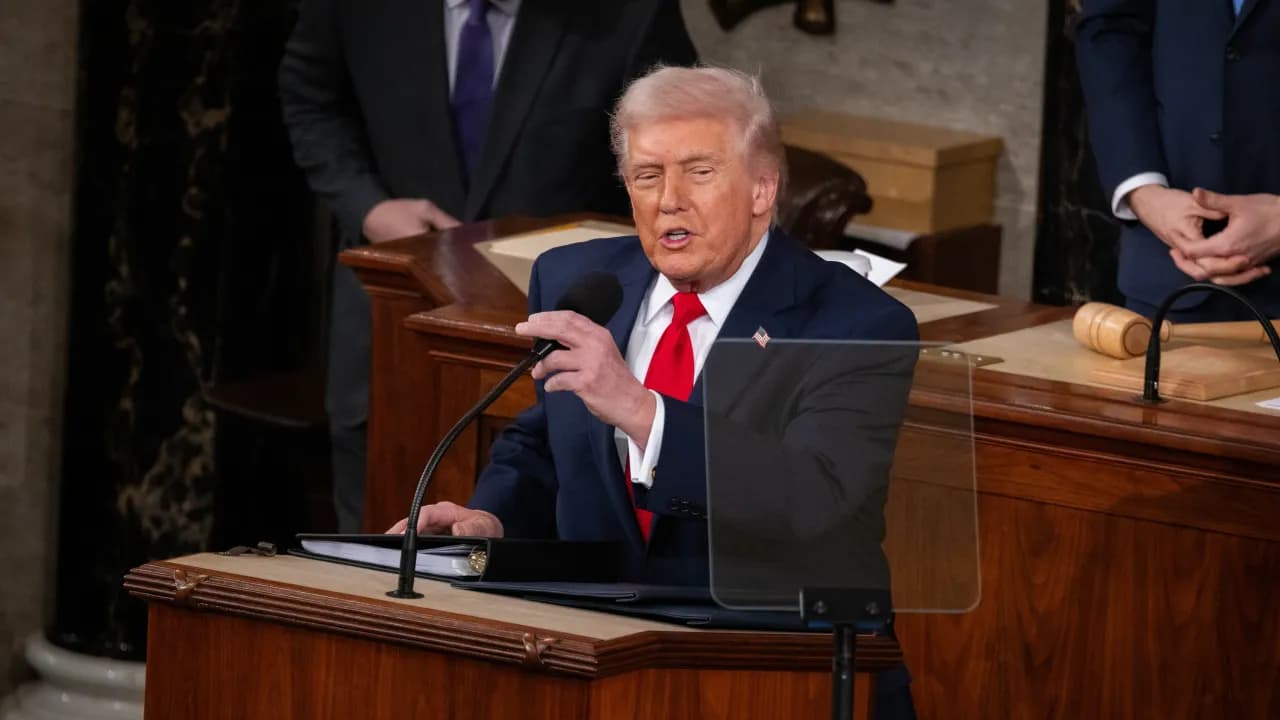
As Trump said that America would become the crypto capital of the world, the White House released his cybersecurity strategy on Friday, which included support for cryptocurrency.
- Space Force official Jason Lowery said the U.S. cyber strategy discussed implementing widespread blockchain technology.
- The White House cybersecurity strategy outlined six policy pillars for defending U.S. digital infrastructure.
- The document also emphasized AI security, post-quantum cryptography, and private-sector cooperation.
As geopolitical tensions intensified, many cybersecurity experts warned that cyber threats would increase. At this time, the Trump administration published a Cyber Strategy to combat any upcoming threats with cryptocurrencies and blockchain as a crucial part of it.
On Friday, U.S. Department of War executive Jason shared that supporting blockchain technology was now “officially” part of the country’s emerging technology agenda. Jason, who served as the Deputy Director of Technology and Innovations, commented on the White House's release of President Trump’s Cyber Strategy for America, which outlined its approach to cybersecurity and technological leadership.
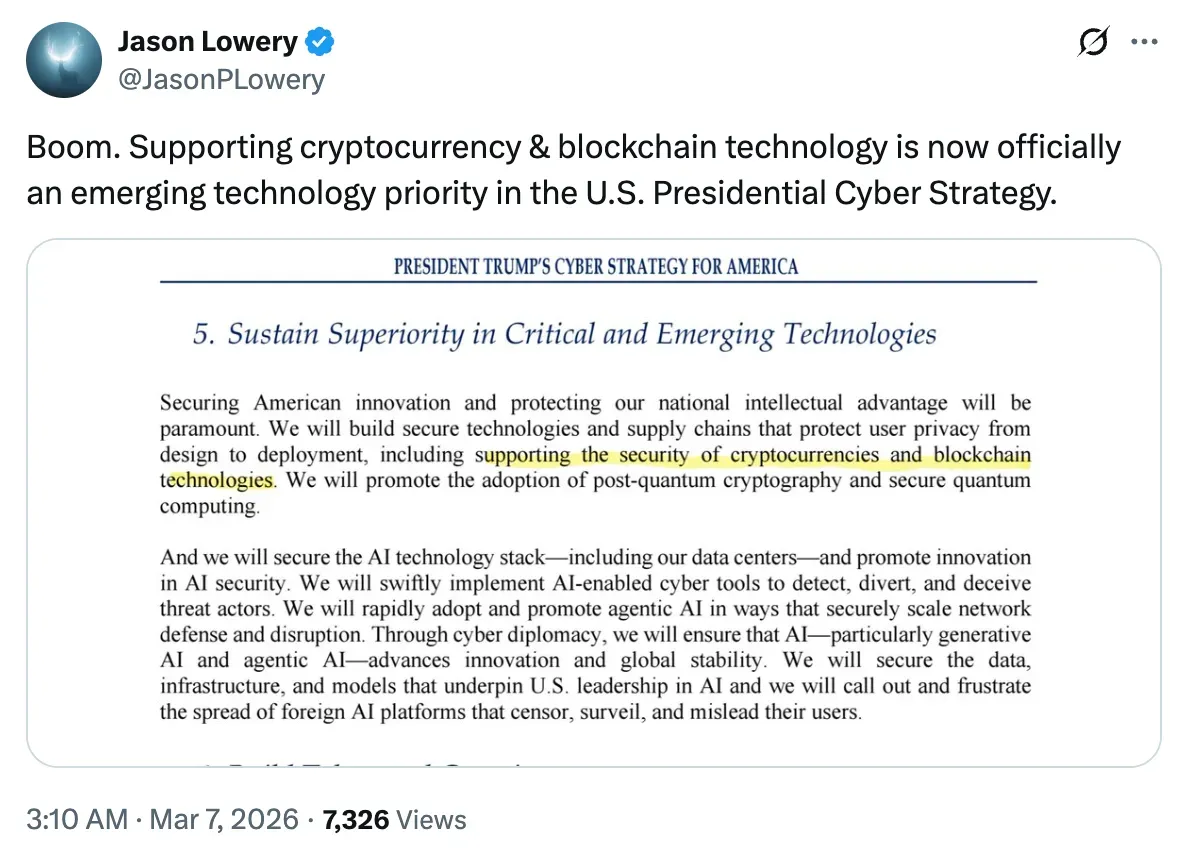
The 7-page document included a section focused on maintaining U.S. superiority in critical and emerging technologies. From design to implementation, the approach seeks to safeguard technologies and supply chains that preserve user privacy, including cryptocurrencies and blockchain technology. These efforts would also include adopting post-quantum cryptography and secure quantum computing.
According to reports, the US military uses blockchain to instantly verify the authenticity and condition of essential components. With blockchain, the military can cut downtime and lower mission-critical system failure risk.
US Plans To Lead On AI
The cybersecurity strategy highlighted artificial intelligence as a major focus of U.S. technological policy. The document explained that the government planned to expand the use of AI-based cybersecurity tools designed to detect and disrupt malicious cyber activity. It also described plans to promote the development of advanced AI systems that could strengthen network defense.
The document also outlined broader goals for defending U.S. interests in cyberspace. It stated that the administration would coordinate closely with the private sector and government agencies to strengthen cybersecurity capabilities and invest in emerging technologies.
This comes on the heels of the Pentagon’s clash with Anthropic, in which the tech giant was deemed a ‘supply chain risk'. Anthropic CEO Dario Amodei resisted the Pentagon's request to remove protections in their AI models for mass monitoring and fully autonomous weaponry. Amodei claimed that today's AI systems were too unpredictable to run autonomously and needed human control.
According to a CNBC report, the U.S. government's top cybersecurity agency is dealing with a cyber threat from Iran, where US infrastructure and businesses are reportedly under threat. This, many experts say, could lead to cyber warfare.
Read also: Biotech Stock QURE Once Tagged ‘Failed Product’ — CEO Sold Shares Days Before Rally
For updates and corrections, email newsroom[at]stocktwits[dot]com.<
