
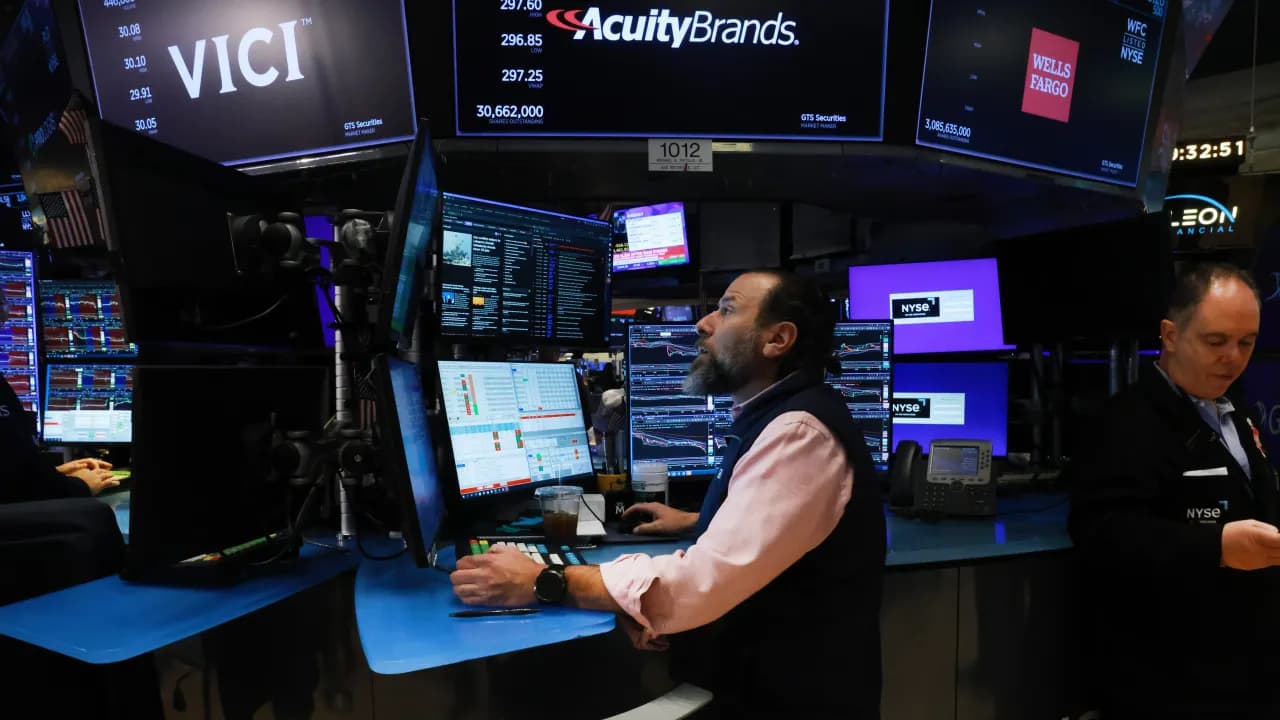
The weekend brought fresh risks for markets, with Trump reportedly rejecting Iran’s proposal to reopen the Strait of Hormuz while still expecting negotiations to resume this week.
- The 10-year Treasury yield reached 5.23% last week, its highest level since 2007, putting renewed pressure on rate-sensitive parts of the stock market.
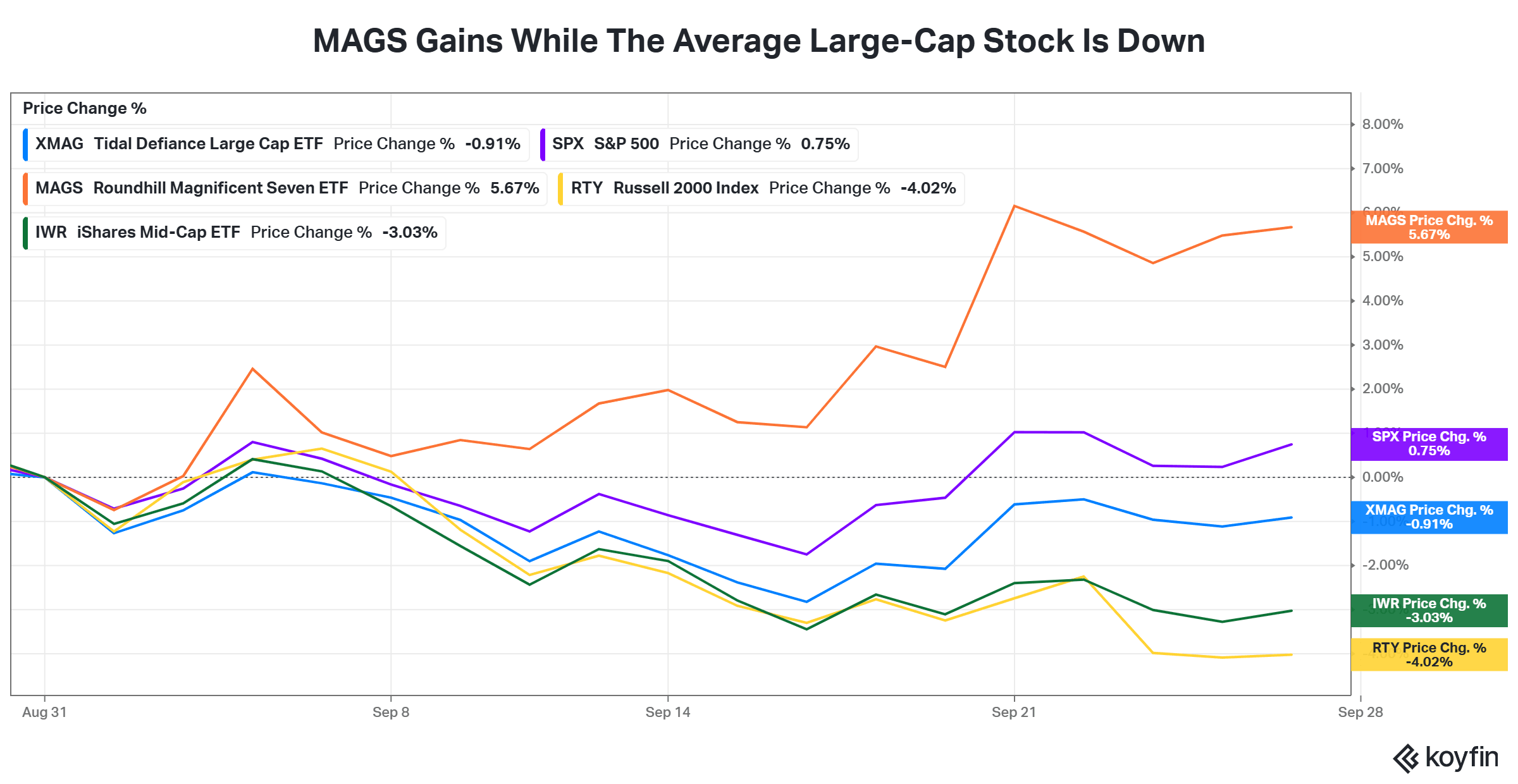
- September’s S&P 500 gain has been driven largely by the Magnificent Seven, while ex-Mag 7 large caps and small caps have lagged.
- PCE inflation, the September jobs report and Micron’s earnings this week will give investors several key data points on Fed policy.
U.S. stocks enter the final week of September with the S&P 500 near record highs, but three charts are showing an interesting setup: the 10-year Treasury yield is above 5%, September's gains remain concentrated in the Magnificent Seven, and oil prices are again approaching $100 a barrel.
The weekend added another layer of uncertainty after President Donald Trump reportedly rejected Iran's proposal to reopen the Strait of Hormuz, while negotiations with Tehran are expected to resume this week.
Here are three charts to watch as inflation, jobs data and Micron (MU) earnings land this week.
Treasury Yields Return To Pre-Crisis Levels
The 10-year Treasury yield rose to 5.205% early Monday, up about 4 basis points from Friday’s 5.165% close, according to Koyfin. The yield reached 5.23% during Friday’s session, its highest level since 2007 and since the 2008 financial crisis.
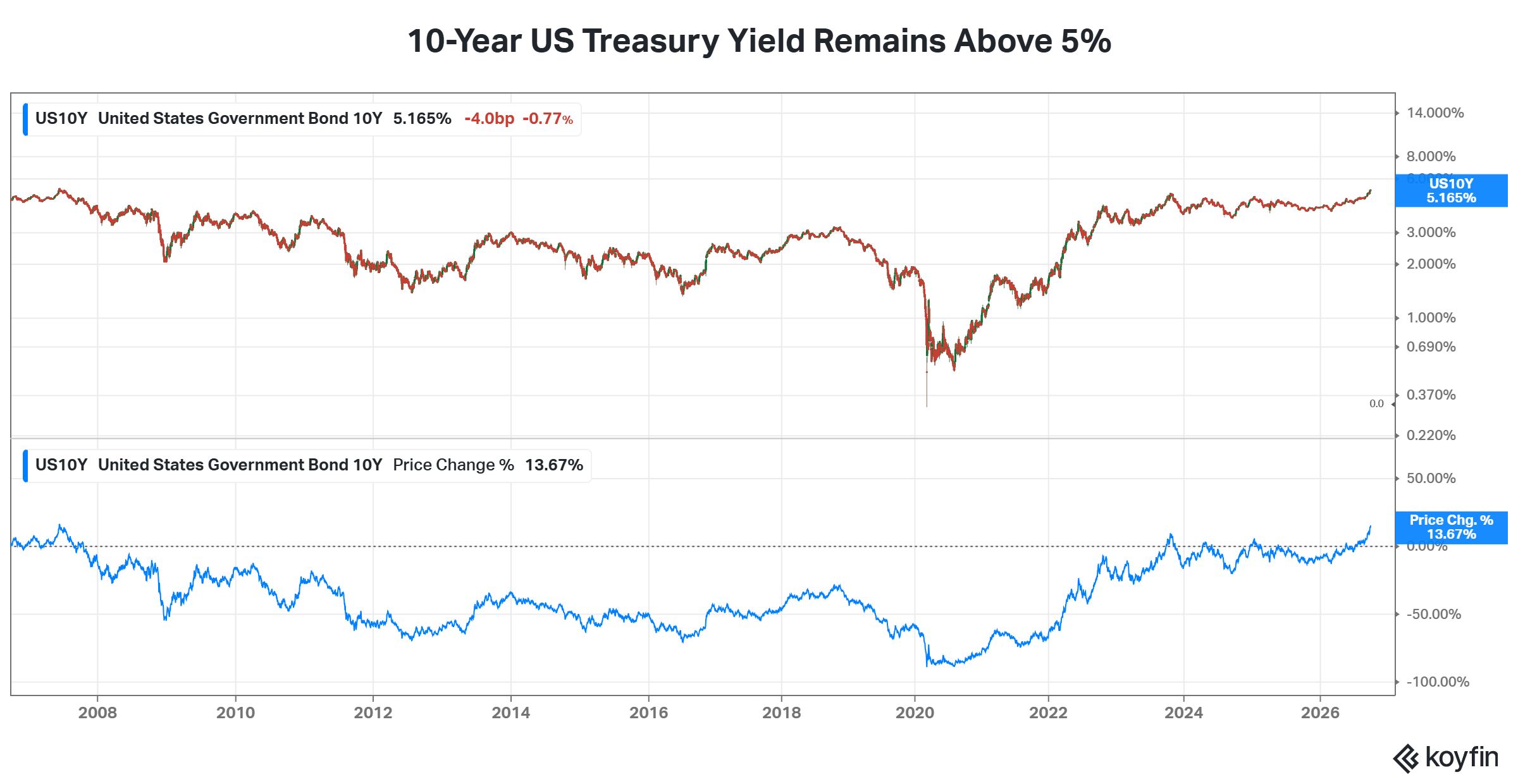
The yield’s rise accelerated last week. On Wednesday, it posted its biggest one-day increase since April 2025, while S&P Global’s flash PMI showed private-sector activity growing at its fastest pace in more than five years. Fed Governor Michael Barr said further rate increases are likely to be needed, and New York Fed President John Williams said Thursday that it is "reasonable" to expect another hike by year-end.
The Federal Reserve raised its benchmark interest rate by 25 basis points earlier this month to a range of 3.75% to 4.00% in a unanimous 12-0 decision. It was the first rate increase since July 2023. Sixteen of 18 Fed officials projected at least one more rate increase this year.
The CME FedWatch tool put the odds of an October rate hike at about 70% at the time of writing.
Macquarie’s Thierry Wizman told CNBC that heavy government and corporate bond issuance, including borrowing tied to AI investment, has become a larger driver of yields this year than inflation.
Mag 7 Gains Mask A Broader Market Pullback
The S&P 500 gained about 0.75% through Friday in September, but the headline number masks a wider gap between the largest technology stocks and the rest of the market.
The Roundhill Magnificent Seven ETF (MAGS), which provides equal-weight exposure to the seven companies commonly known as the Magnificent Seven, gained 5.67% for the month. The Defiance Large Cap ex-Magnificent Seven ETF (XMAG), which tracks the S&P 500 while excluding those seven companies, fell 0.91%.
That leaves a gap of roughly 6.6 percentage points between the two funds.
In pre-market trading on Monday, MAGS fell as much as 1%, while XMAG edged 0.2% lower amid broader market weakness. On Stocktwits, retail sentiment around MAGS remained in ‘bullish’ territory over the past week, and sentiment around XMAG trended in the ‘neutral’ zone.
MAGS jumped last Monday, when the S&P 500 rose 1.49% and the Nasdaq Composite reached a record close for the first time since June. Meta Platforms (META) climbed about 11% after its Muse AI agent reached the top of Apple’s App Store, while Advanced Micro Devices (AMD) gained about 10% and briefly pushed its market value above $1 trillion.
The Russell 2000 was down about 4.02% for September through Friday, while the iShares Russell Mid-Cap ETF (IWR) fell 3.03%. Both mid- and small-cap stocks initially moved with the broader market in early September, but sold off after mid-month and again late last week while MAGS held onto its gains.
IWR fell as much as 1.3% in pre-market trade on Monday, while the small-cap tracking iShares Russell 2000 ETF (IWM) moved around 0.7% lower. On Stocktwits, retail sentiment around IWR trended in ‘neutral’ territory over the past week and sentiment around IWM stayed in the ‘bullish’ zone.
Iran Adds Fresh Risk To An Already Inflationary Oil Market
The weekend added another layer of uncertainty for markets, with Trump rejecting Iran’s proposal to reopen the Strait of Hormuz within seven days. He told Axios that he expects negotiations with Tehran to resume this week.
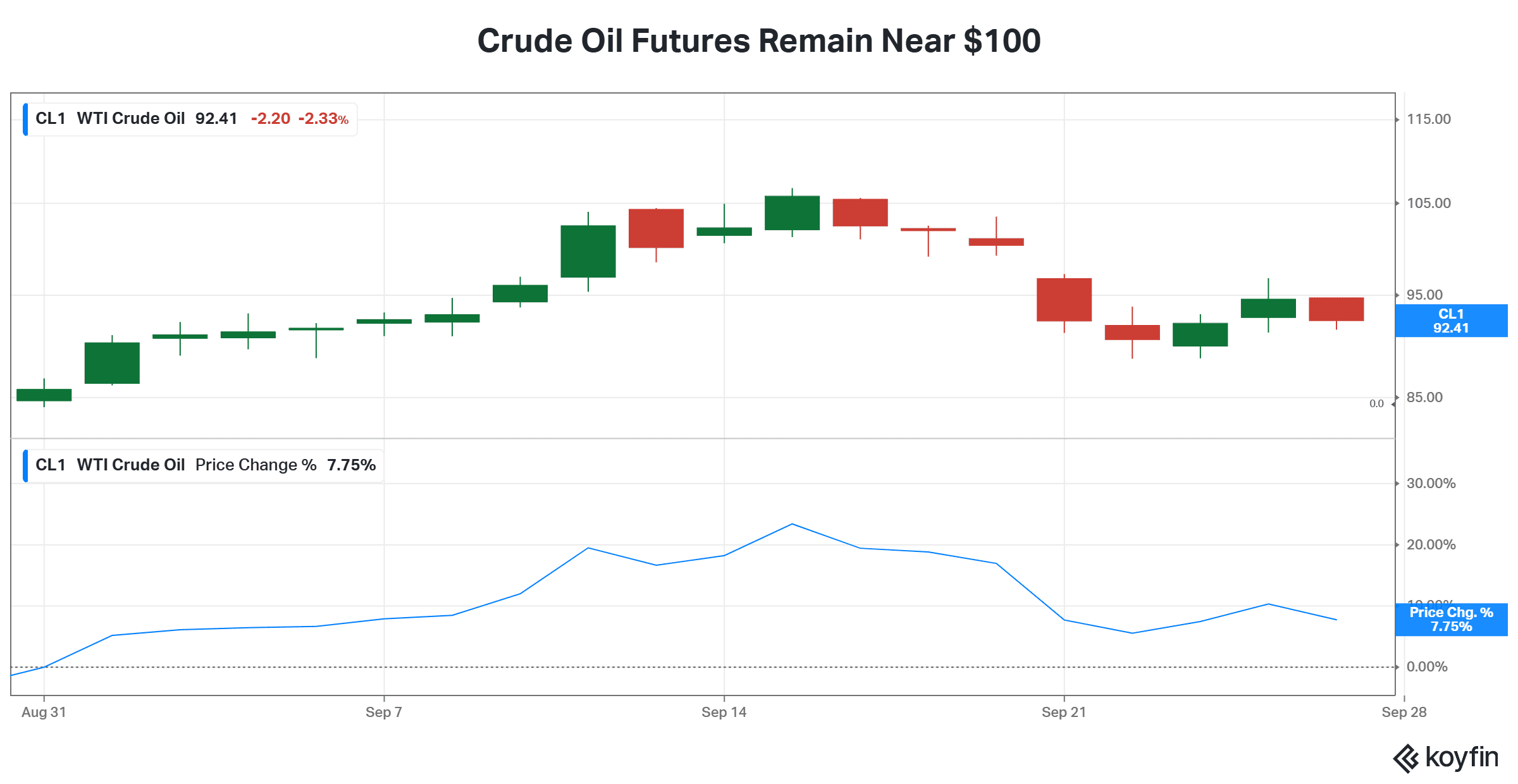
The development comes after oil prices fell last week on hopes of a potential deal. WTI closed at $92.41 a barrel Friday, but remains up 60.88% for the year and 33.48% over the past three months, according to Koyfin. The benchmark traded near $95.65 in pre-market trade on Monday, up about 3.5%.
The United States Oil Fund (USO) gained 3.7% in pre-market trade on Monday, with retail sentiment on Stocktwits falling to ‘bearish’ from ‘neutral’ territory over the past week. The ProShares Ultra Bloomberg Crude Oil (UCO), meanwhile, fell more than 4%, with retail sentiment trending ‘bullish’ over the past week.
The Week Ahead: Inflation, Jobs And Micron
The week brings a dense run of economic data and earnings. JOLTS job openings and consumer confidence are due Tuesday, followed Wednesday by ADP private payrolls, August PCE inflation, personal income and the third estimate of second-quarter GDP. Micron reports earnings after the close Wednesday.
Wall Street expects the company to report EPS of $31.59, up more than 900% from a year earlier, on revenue of $51.24 billion, an increase of more than 350%.
Thursday brings weekly jobless claims and ISM manufacturing data, while the September jobs report arrives Friday.
Read also: Cathie Wood Says AI Could Drive Global GDP Growth Above 7%, Calls It ‘Conservative’
For updates and corrections, email newsroom[at]stocktwits[dot]com.<
