
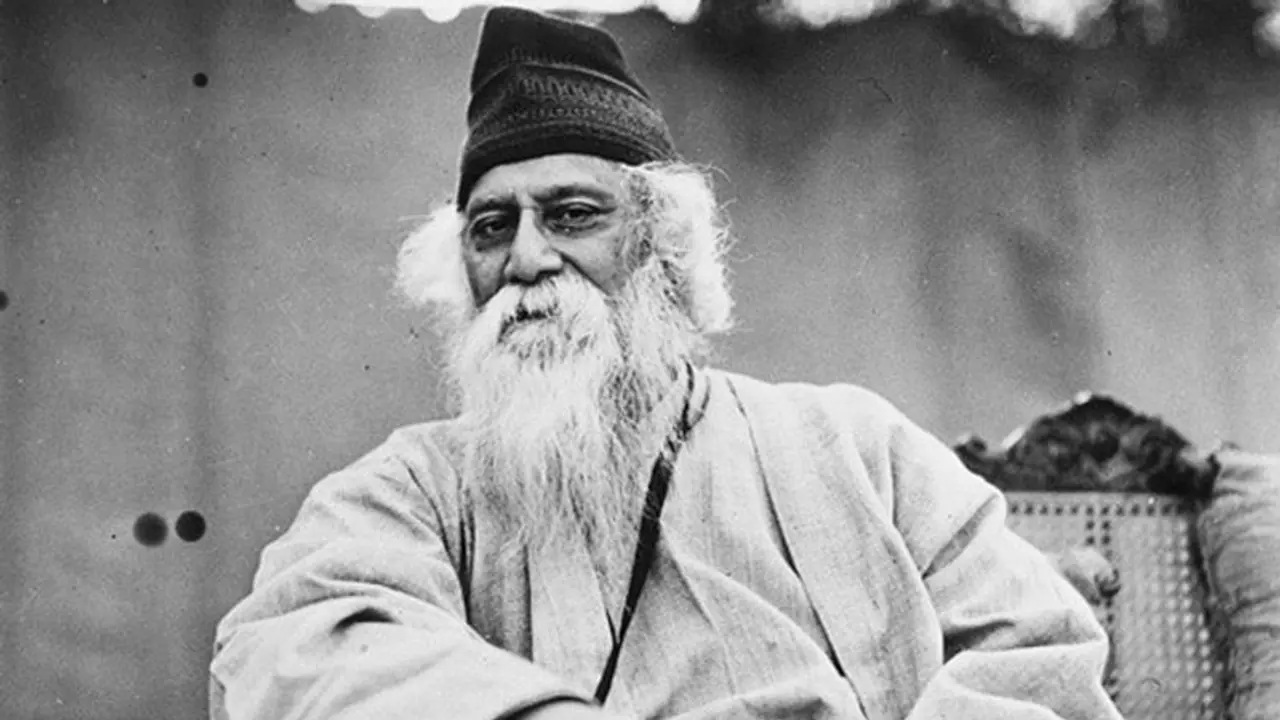
Rabindra Jayanti on May 7: Let us remember Tagore with some lines about humanism and idealism. In India, Tagore Jayanti or ‘ Poncheeshe Boishakh’ is celebrated as per the Bengali calendar– By Mahasweta Sarkar
Rabindranath Tagore, a poet of the world, a pride of India, a prodigy of Bengal and the patron of Shantiniketan, was born on May 7, 1861, in Kolkata. His ‘Song Offerings’ or ‘Gitanjali’, a collection of poems, won the Nobel Prize for Literature in 1913, and the was the first Indian to receive a Nobel Prize.
He established Visva-Bharati University at Shantiniketan, Bolpur to promote that art, music, and dance are integral to our learning process. He also championed the ideals of naturalism, humanism, internationalism and idealism.
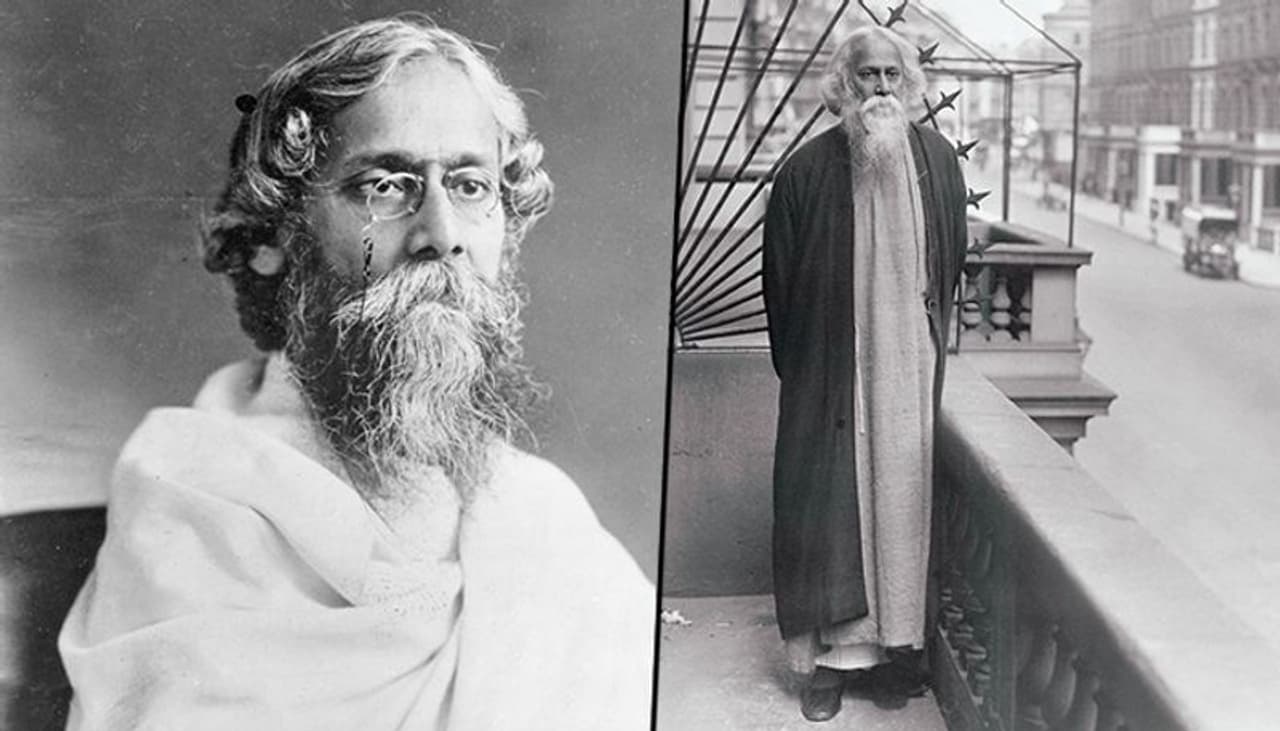
Here are some famous lines of Tagore to remember him by before his birthday:
1. “I slept and dreamt that life was joy. I awoke and saw that life was service. I acted and behold service was joy.”
Tagore’s ideals of humanism come out through these lines. He believed we must deliver ourselves to the service of mankind, and that to serve mankind is the greatest joy of one’s life.
2. “Faith is the bird that feels the light when the dawn is still dark.”
At the core of any being, lies faith. Life becomes worthless without faith. Faith is hope, it can restore back what life has lost.
3. “We come nearest to the great when we are great in humility.”
When we learn humility that is when we become great. Greatness is not achieved by awards or accolades, but by being humble. Real learned people know the importance of humility.
4. “You cannot cross the sea merely by standing and staring at the water.”
Ambition without action will lead one nowhere. If you have a dream, act upon it. If you do not start you will never reach your destination.
5. “Death is not extinguishing the light; it is only putting out the lamp because the dawn has come.”
Tagore believed that souls are eternal, they are born again and again. Hence, even if one dies, it is not the end. At the end of one life, there is the beginning of another.
6. “Everything comes to us that belongs to us if we create the capacity to receive it.”
If we are worthy, the things we seek will come to us naturally. Our dreams can come true. But to make that ambition a reality, one must work hard and prove one's value.
