
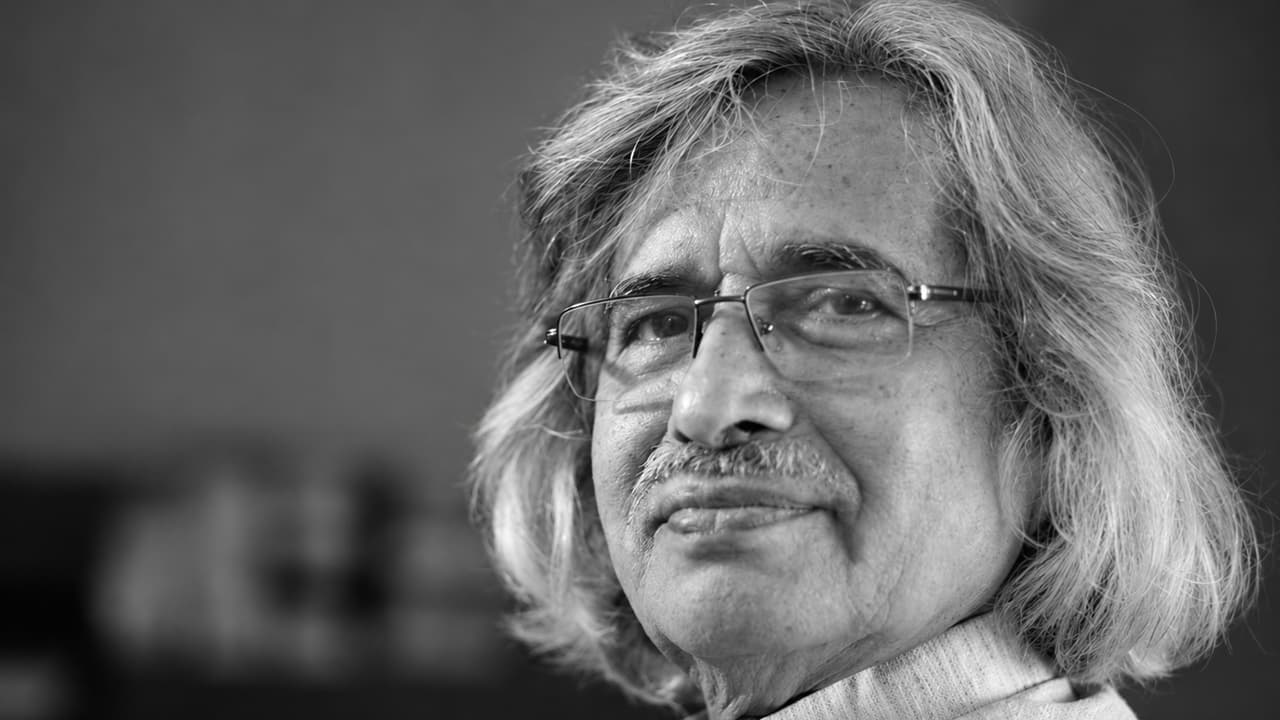
Renowned painter Jogen Chowdhury passed away at the age of 87. He will always be remembered for his unique art style, brilliant use of lines, and creations inspired by the soil and people of Bengal. His artworks will continue to inspire the coming generations.
Famous painter Jogen Chowdhury passed away on Sunday morning. He was 87 years old. His death has left a huge void in the world of modern Indian art. But does an artist's life end with his physical presence? For Jogen Chowdhury, the answer is simple. He will live on among future generations through his paintings, his unique strokes, and his brilliant use of colours.
Jogen Chowdhury was born into a zamindar family in Faridpur, undivided Bengal. His childhood environment played a big role in shaping the artist inside him. Right from his early days, he had a deep interest in nature, human life, and folk art around him. He had to move to Kolkata when he was just eight or nine years old. He faced financial struggles later in life, but his love for art never faded. As a child, he used to collect pictures of famous artworks from different magazines. These included Abanindranath Tagore's 'Passing of Shah Jahan' and Pablo Picasso's 'White Dove'. These pictures helped him understand art better. He also kept trying to paint on his own. His talent for art was visible right from his school days.
Later on, Jogen Chowdhury studied at the Art College. After passing out from there, he joined the French cultural institute, Alliance Française. But he had to take up a teaching job midway to support his family. However, his dream of pursuing art did not stop there. He got a scholarship to study abroad, left his job, and travelled to Paris. This legendary artist used every opportunity in life to enrich his creative skills. The uniqueness of his lines was a major feature of his paintings. He did not like to restrict himself to traditional rules or perfect structures. He never decided in advance how his lines would move or what the final picture would look like. Instead, he found new expressions while he was painting.
He explained his thought process in an interview and mentioned that he never knew where his hand would go when he sat down to paint. His lines moved slowly, almost as if they were connected to the earth. This natural flow and personal touch made his art completely different from others.
His childhood memories were deeply connected to his art. The rural life of Faridpur, potters making clay idols, the movement of ants, colourful insects on tree leaves, village fairs, theatre, and jatra—everything left a lasting impact on his mind. These experiences came back in different forms in his artworks later in life. In an interview, Jogen Chowdhury said that his memories of Faridpur often came back to him, almost like living pictures. He felt that if he had not experienced that childhood environment, he might never have developed such a deep connection with art.
This world of memories became the main foundation of his art. His personal experiences, social reality, human emotions, and his observation of the world around him mixed together to create a unique artistic language. That is why his paintings do not just show a scene, but they also capture different layers of feelings. Perhaps the biggest success of an artist lies right here—turning his own time, memories, and experiences into art that goes beyond personal limits and connects with everyone. Jogen Chowdhury was truly unique in this aspect. His work will make artists think differently, raise questions in the minds of art lovers, and inspire future creators. The artist's life has ended, but his creative journey will never stop. Jogen Chowdhury will not draw new lines on a canvas anymore, but his paintings will always carry the experience, memories, and feelings of a long artistic life. This rich legacy will keep him alive forever in the history of modern Indian art.
