Explore BISC, a tiny brain chip creating a high-speed, wireless link to computers. This next-gen brain-computer interface aims to restore vision, treat epilepsy and more.
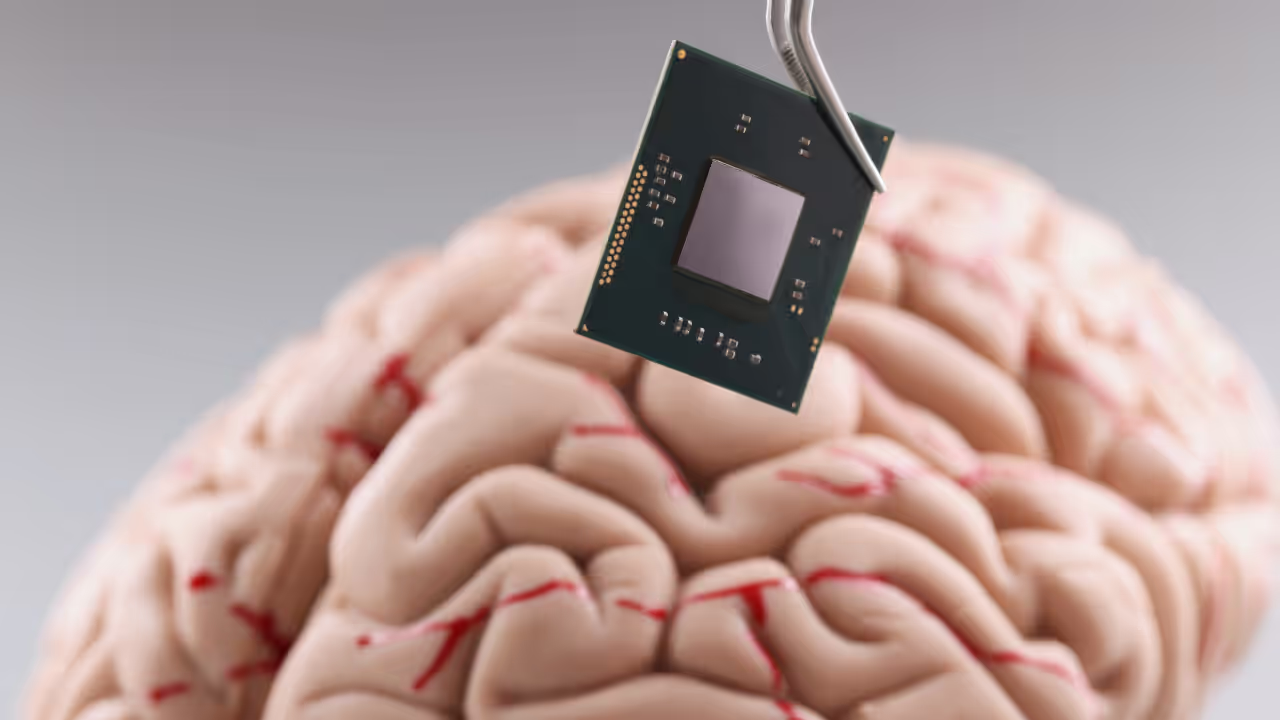
A new, small brain implant has the potential to change the way humans use computers and offer new ways to treat conditions like epilepsy, spinal injuries, ALS, stroke, and even blindness. By creating a fast link between the brain and computers, the device could help control seizures and help restore movement, speech, and vision.
It was developed through a partnership between Columbia University, NewYork-Presbyterian Hospital, Stanford University, and the University of Pennsylvania. The device is a type of brain-computer interface (BCI). At its core is a single silicon chip that connects the brain to computers wirelessly and quickly. The system is named the Biological Interface System to Cortex, or BISC.
This study, published in Nature Electronics, explains BISC’s design, which includes the tiny implant, a wearable relay station, and software that makes the whole system work.
Related Articles

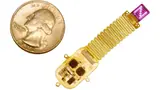
Ken Shepard, a professor of electrical engineering and biomedical engineering at Columbia University, says, “Most implantable systems are built around a canister of electronics that occupies enormous volumes of space inside the body. Our implant is a single integrated circuit chip that is so thin that it can slide into the space between the brain and the skull, resting on the brain like a piece of wet tissue paper.”
Turning the Brain into a High-Speed Interface
Shepard worked with Andreas S Tolias, a professor at Stanford University, who specializes in training AI systems to understand large brain data. Tolias explains that BISC allows for fast, minimally invasive communication with AI and other devices. This could support adaptive prosthetics and treat disorders like epilepsy.
Dr Brett Youngerman, a neurosurgeon at NewYork-Presbyterian/Columbia University, was the main clinical partner for the project. The team recently received a grant to test BISC in cases of drug-resistant epilepsy. Youngerman says that the goal of any brain-computer interface is to maximize the flow of information while keeping the surgery as simple as possible and BISC does both.
Next-Generation Brain-Computer Interfaces
BCIs work by connecting to the electrical signals that neurons use to communicate. Most current medical BCIs require several separate parts like amplifiers, converters, and transmitters that are placed in a large implant, often in the skull or chest, with wires connecting to the brain.
BISC is different. The whole system is on a single chip made of complementary metal-oxide-semiconductor (CMOS) technology, just 50 micrometres thick and less than 1/1000th the size of standard implants. The chip measures about 3 mm³, is flexible, and can curve to fit the brain’s surface. It has 65,536 electrodes, 1,024 recording channels, and 16,384 stimulation channels, allowing it to capture and send large amounts of data.
The chip includes a radio transmitter, wireless power system, digital controls, and electronics for recording and stimulating the brain. Its external relay station provides power and communicates with the chip at speeds of 100 Mbps, more than 100 times faster than other wireless BCIs. The relay station works like a specialized WiFi device, connecting the implant to any computer.
BISC also has its own instruction set and software, letting machine-learning and AI systems interpret complex brain signals, such as intentions and perceptions.
Commercial Development and AI Integration
Extensive tests on the brain’s motor and visual areas, led by Tolias and Bijan Pesaran of the University of Pennsylvania, have shown BISC’s potential.
Pesaran says, “The extreme miniaturization by BISC is very exciting as a platform for new generations of implantable technologies that also interface with the brain with other modalities such as light and sound.”
To bring the technology to real-world use, researchers co-founded Kampto Neurotech, a startup producing research-ready versions of the chip and preparing it for human testing. As AI continues to develop, BCIs like BISC could not only help patients regain lost abilities but also possibly enhance normal brain function.