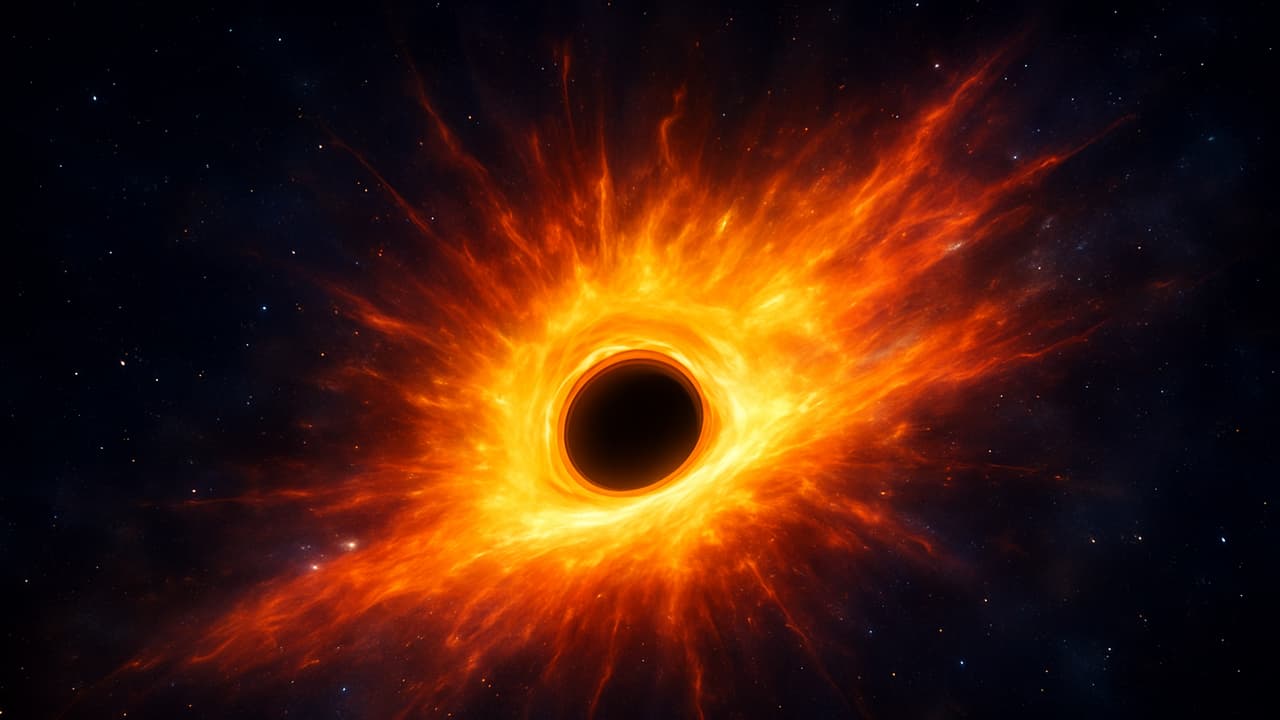
Scientists may have detected the first primordial black holes formed just after the Big Bang. A tiny, unusual gravitational wave signal from LIGO and Virgo hints at ancient black hole mergers that could explain dark matter and reshape cosmology.
Scientists may have detected the first real evidence of primordial black holes, tiny, impossibly dense objects believed to have formed fractions of a second after the Big Bang. On November 12, the LIGO and Virgo gravitational wave observatories picked up an unusual signal: a black hole like merger far too small to be created by any known star. If the signal is genuine and not an instrument glitch, it could be the “smoking gun” physicists have been chasing for decades.
Why These Tiny Giants Matter
Typical black holes form when massive stars collapse. But the objects behind this new signal are lighter than the smallest stellar remnants, yet just as compact. This points to a different origin story one where early-universe energy fluctuations collapsed into miniature black holes smaller than atoms, but with the mass of a star. Such primordial black holes are especially exciting because they are one of the strongest candidates for dark matter, the invisible substance that shapes galaxies.
Cautious Optimism and What Comes Next
Although researchers are thrilled, they’re not celebrating just yet. The event carries a relatively high “false alarm rate,” meaning the signal could still be noise. The ultimate confirmation would be more detections of similar lightweight mergers. With major upgrades coming to LIGO and Virgo, scientists hope these next few years will finally reveal whether primordial black holes truly exist and whether they’ve been hiding in the universe’s shadows since time began.