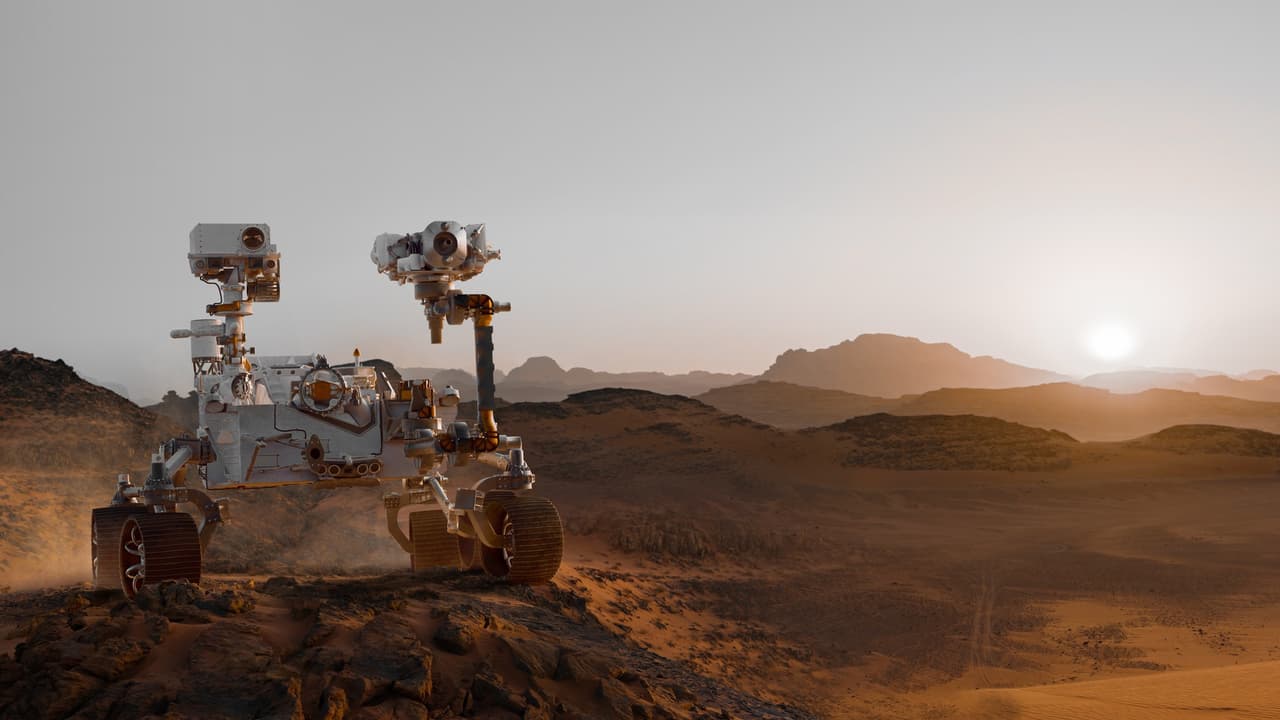
Scientists have identified shallow water ice beneath Mars’ surface in a mid-latitude region that could support future human landings. The ice may provide water, oxygen, fuel, and clues about whether Mars once supported life.
For decades, landing humans on Mars has been one of space exploration’s biggest challenges. Beyond the sheer distance, astronauts will need water, oxygen, fuel, and reliable power without regular resupply from Earth. Now, new research suggests one region on the Red Planet could offer exactly what future explorers need to survive and thrive.
A study led by University of Mississippi researchers has identified signs of water ice lying just beneath the Martian surface. The findings point to a location that balances sunlight, temperature, and accessibility qualities that make it a strong candidate for humanity’s first footsteps on another planet.
A Hidden Ice Reserve Beneath the Red Dust
Using high-resolution orbital images, scientists detected evidence of water ice less than a meter below the surface in a region known as Amazonis Planitia. This area sits in Mars’ mid-latitudes, a zone that receives enough sunlight for solar power while remaining cold enough to preserve ice close to the surface.
Related Articles

Shallow ice is a major advantage. Unlike deeply buried deposits, it could be accessed with simpler tools, reducing the need to transport massive amounts of water from Earth. This strategy, called in-situ resource utilization, is considered essential for long-term human missions.
Why This Spot Could Support Human Life
Water ice isn’t just about drinking water. It can be split into oxygen for breathing and hydrogen for fuel, making it a cornerstone resource for sustained exploration. On Mars, where a round trip to Earth would take months, self-sufficiency is critical.
The research team identified surface features such as exposed ice in small craters and distinctive polygon-shaped ground—that strongly suggest frozen water just below the surface. Together, these clues paint a picture of a landing site that could support extended human stays rather than brief visits.
More Than Survival: A Window Into Mars’ Past
Beyond human survival, the ice may also preserve secrets about Mars’ history. On Earth, ice can trap and protect signs of past life for thousands of years. If Mars ever hosted microbial life, shallow ice deposits could be one of the best places to look for lingering evidence.
What Comes Next
While the evidence is compelling, confirmation will require future missions. Scientists hope radar studies, followed by robotic landers or rovers, will directly sample the ice to determine its purity and extent. Only then can mission planners be confident this region is ready for human explorers. The study is published in the Journal of Geophysical Research: Planets.