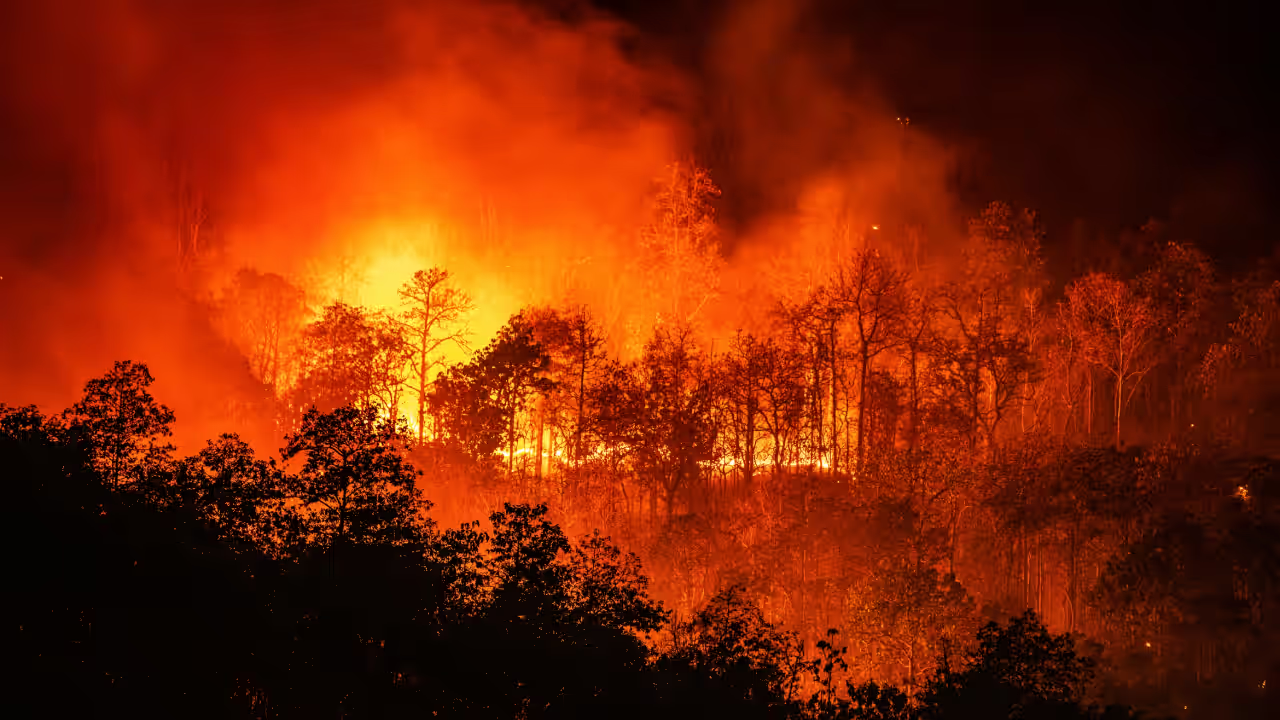
Climate disasters cost the world over $120 billion in 2025. Explore a new report on the rising financial impact of extreme weather and the urgent need for action.
Climate disasters cost the world over USD 120 billion in 2025. Heatwaves, wildfires, droughts, and powerful storms caused more than USD 120 billion in damage worldwide, according to a new report on the rising cost of climate change. The study shows that extreme weather is becoming more frequent, more destructive, and more expensive.
The report was produced by the UK-based charity Christian Aid. It links the growing scale of climate disasters to continued reliance on fossil fuels and slow political action. It also points out that many of these losses could have been reduced if stronger steps had been taken earlier to cut greenhouse gas emissions.
Costly Disasters Across the Globe
The report identified the ten most expensive climate-related disasters of the year. Each caused more than USD 1 billion in damage, with total losses exceeding USD 122 billion. These figures are mostly based on insured losses, which means the real cost is likely much higher. Damage to homes, livelihoods, and public services in poorer regions is often not fully recorded, and the human toll is even harder to measure.
Related Articles

The United States was hit hardest in financial terms. Wildfires in California were the single most expensive event of the year, causing around USD 60 billion in damage and leading to the deaths of more than 400 people.
Southeast Asia experienced severe cyclones and flooding in November, which caused an estimated USD 25 billion in losses. These disasters affected several countries, including Thailand, Indonesia, Sri Lanka, Vietnam, and Malaysia, and claimed more than 1,700 lives.
China also suffered major flooding that displaced thousands of people, caused nearly USD 12 billion in damage, and resulted in dozens of deaths.
No Region Was Spared
The report shows that climate disasters affected every populated region of the world in 2025. Severe drought struck Brazil, while Spain and Portugal faced destructive summer wildfires. Australia and Réunion Island were hit by powerful cyclones early in the year.
Asia accounted for four of the six costliest disasters. Flooding in India and Pakistan killed more than 1,860 people. In Pakistan alone, over seven million people were affected, with losses reaching up to USD 6 billion. Typhoons in the Philippines caused more than USD 5 billion in damage and forced over 1.4 million people from their homes.
Heavy Impact on Poorer Countries
While richer countries often report higher financial losses because of higher property values and widespread insurance, many of the most devastating events occurred in poorer nations. These countries have contributed very little to global climate change but have fewer resources to cope with its effects.
Flooding in Nigeria and the Democratic Republic of Congo affected thousands of people and may have caused up to 700 deaths in Nigeria alone. Ongoing drought across Iran and parts of West Asia led to a severe water crisis, threatening millions of people in Tehran with possible evacuation.
Some events were also unusual. Scotland experienced record-breaking heat that sparked wildfires in its highlands, burning tens of thousands of hectares. Japan faced an extreme year with both heavy snowstorms and unprecedented heatwaves.
Warning Signs for the Future
The report also highlighted worrying changes in Antarctica and the world’s oceans. Sea temperatures reached record highs, and coral bleaching was recorded off the coast of Western Australia, posing serious risks to marine life.
Overall, the findings underline the urgent need to reduce carbon emissions, move faster towards renewable energy, and provide financial support to vulnerable communities. The report warns that without immediate action, climate disasters will become even more severe, with the poorest people continuing to suffer the most.