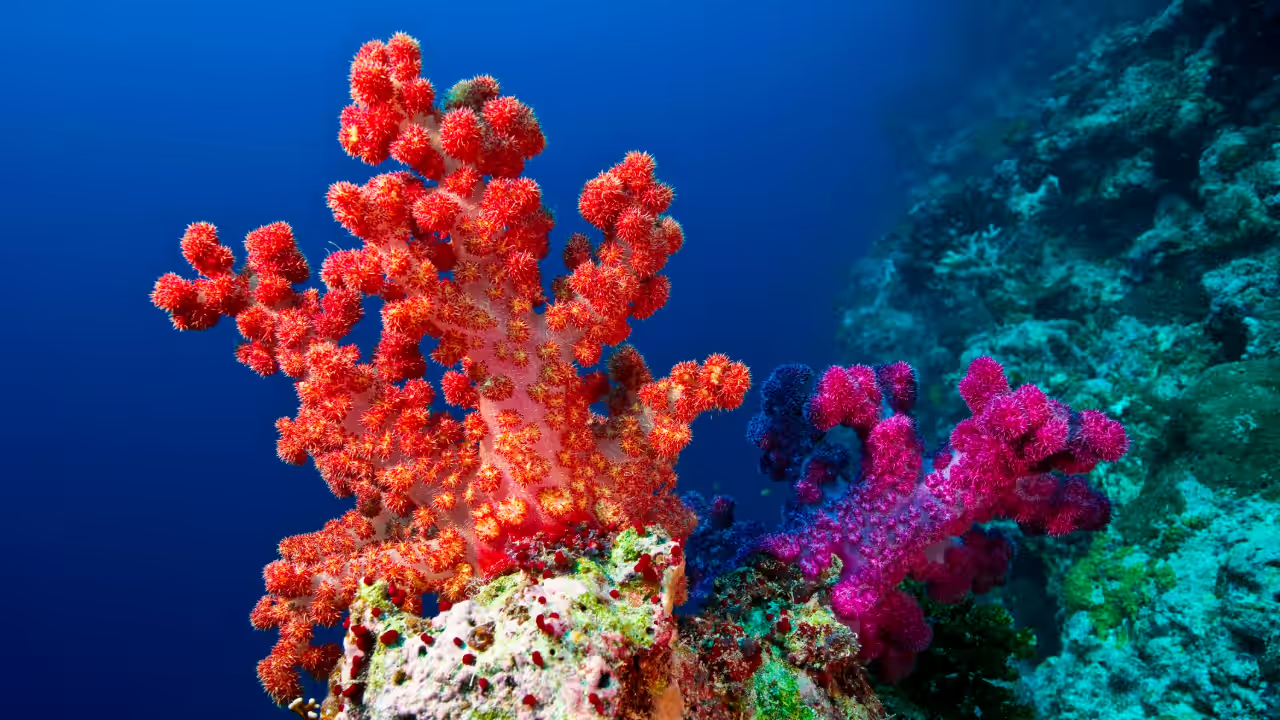
Coral reefs face a global tipping point from mass bleaching caused by climate change and El Niño. Discover why 2026 could be critical and what actions can save them.
Coral reefs occupy less than one percent of the ocean floor, yet they provide a home for nearly a quarter of all marine species. Many creatures, including fish and crustaceans, rely on reefs for food, protection, and breeding. Although they are vital, these ecosystems are very sensitive. Scientists estimate that between 30 and 50 percent of tropical coral reefs have already been lost or damaged over the past few decades.
There is a growing concern about the future of coral reefs. Samantha Garrard, a senior marine ecosystem services researcher at Plymouth Marine Laboratory, wrote in The Conversation that the world may be reaching a critical point. She warned that warm-water coral could face a global tipping point beyond which recovery may be impossible, even for the hardiest species.
Recent Heatwaves and Bleaching
These concerns have increased due to extreme ocean heatwaves in 2023 and 2024. Coral bleaching was reported in more than 80 countries, marking one of the largest bleaching events ever recorded. Scientists are worried that another temperature spike in 2026 could push already weakened reefs past their limits.
Related Articles

A major factor in this risk is a natural climate pattern in the Pacific called the El Niño-Southern Oscillation. During El Niño events, sea temperatures rise across large parts of the tropics, putting stress on coral reefs. The latest El Niño was particularly strong and affected more than 80 percent of the world’s reefs, exposing them to bleaching levels.
Tipping Point Explanation
In the past, reefs often had cooler years during La Niña events, which allowed for recovery. However, climate change is altering this pattern. El Niño events are getting stronger and more frequent, while the cooling periods are becoming shorter and less effective. If another El Niño happens in 2026, it may arrive too early for reefs to recover from previous damage.
Scientists use the concept of tipping points to explain this danger. These are moments when ecosystems change abruptly and permanently. Identifying these points is hard because reefs vary by location, depth, and species. Short-term events like heatwaves can mask long-term decline, especially as global temperatures continue to rise.
Local vs Global Collapse
A complete collapse of coral reefs worldwide in 2026 is unlikely. However, many areas face serious threats. Some reefs have already reached a point where recovery is no longer possible. If extreme heat returns across the tropics, the loss of coral could be significant.
When reefs begin to fail, the changes are often dramatic. Bleaching happens when water becomes too warm, causing corals to expel the tiny algae that live inside them and provide energy and colour. The coral turns white and, if the heat lasts too long, it can die. Heat-sensitive species are often the first to disappear.
Algae Takeover and Long-Term Damage
Once corals die, fast-growing algae often take over, making it hard for young corals to settle and grow. This can lock reefs into a degraded state that lasts for many years. In many cases, reefs do not fully recover.
Not all corals react the same way to heat. Some regions have shown surprising resilience. Corals in places like the Gulf of Aqaba and parts of Madagascar have fared better than expected during recent heatwaves. Deeper reefs, found around 30 to 50 metres below the surface, may also offer refuge, protected by cooler water layers and potentially helping restore damaged shallower reefs.
Other Human Pressures
Heat is not the only threat to corals. Pollution, overfishing, and coastal development weaken reefs and increase the likelihood of bleaching. Reducing these pressures can support recovery. Around the Mesoamerican Reef, improved fisheries management has helped fish populations bounce back, supporting parts of the reef even after bleaching.
Future Action
Ocean acidification adds another challenge. As the sea absorbs more carbon dioxide, corals struggle to build strong skeletons, slowing growth and weakening reefs. To give coral reefs a chance of surviving this century, urgent action is needed. Reducing carbon emissions is crucial to limit warming. At the same time, local threats must be addressed, and new restoration efforts, including breeding heat-tolerant corals, should be part of future conservation strategies.