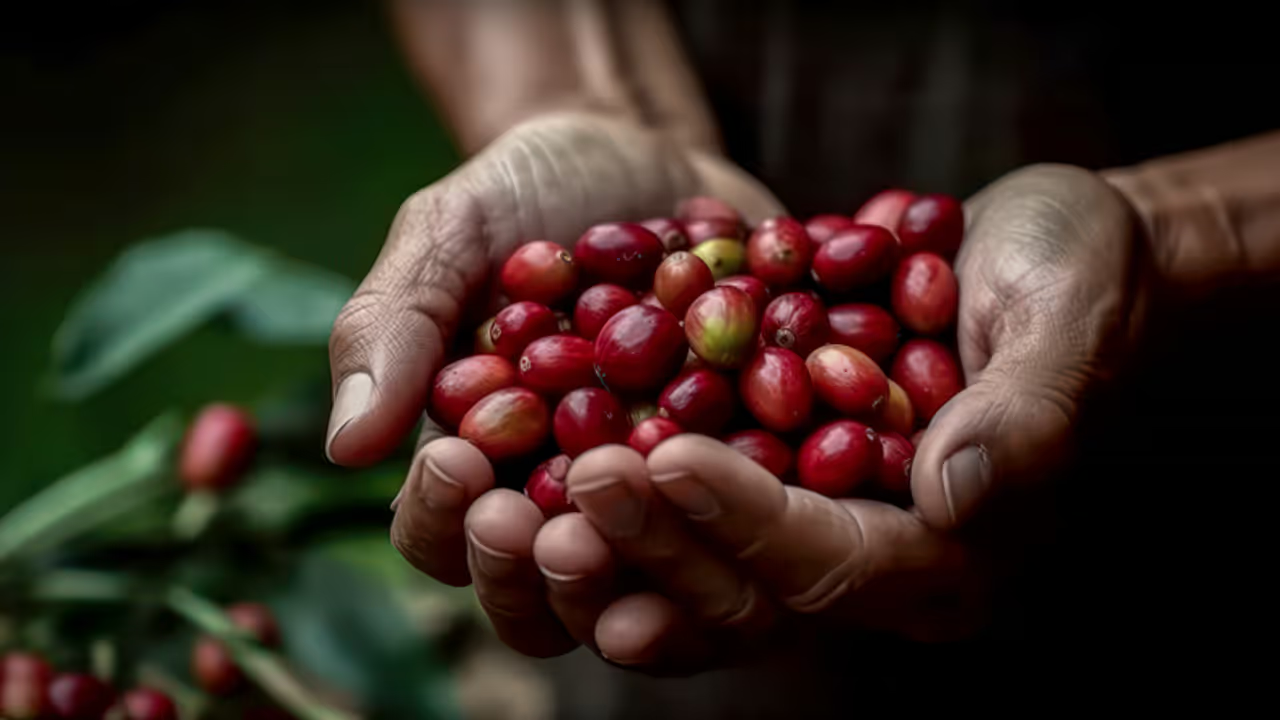
Colombia is turning climate change into a catalyst for innovation in agriculture. Through climate-smart farming, shade-grown coffee, policy reforms and carbon capture, the country offers a global model for sustainable agricultural development.
Climate change is threatening agriculture worldwide, but Colombia’s coffee industry is showing how it can also spark transformation. As weather becomes more extreme and unpredictable, Colombian farmers are adopting sustainable methods to protect their crops and the planet, says World Economic Forum report.
Colombia is the world’s third-largest coffee producer, with about 2.5 million people depending on the crop. Rising temperatures and irregular rainfall could reduce suitable coffee-growing areas by 50% by 2050. But instead of giving in to decline, Colombia is fighting back with innovation.
Farming with the forest
In Colombia’s hilly coffee zones, many farmers now grow coffee under native tree canopies. These "shade-grown" coffee systems mimic natural forests. The trees help cool the environment, protect soil, and attract birds that eat harmful pests.
Related Articles

This method also reduces the need for chemical fertilisers. For instance, Inga trees fix nitrogen in the soil. This approach creates a cooler microclimate that helps coffee plants survive heat waves and droughts.
Researching resilient plants
Colombia is investing in agricultural science to stay ahead of climate change. The country’s National Coffee Research Centre (Cenicafé) has bred new types of coffee plants that resist disease and tolerate higher temperatures.
One such variety, the "Cenicafé 1" hybrid, can produce high-quality coffee even in changing weather. Millions of these seedlings have been shared with farmers to future-proof their crops.
Cleaner coffee processing
Traditionally, processing coffee used huge amounts of water and polluted nearby rivers. To address this, Colombia has introduced eco-friendly wet mills, which use much less water and recycle coffee waste.
By 2018, one-third of Colombian coffee farms had adopted these systems, saving billions of litres of water and cutting pollution.
Carbon sinks on coffee farms
Colombian coffee farms are not just adapting to climate change, they're helping fight it. Studies show they absorb five times more carbon than they release. Trees and soil store carbon, making these farms important carbon sinks.
Shade coffee farms balance production with environmental care, proving that economic crops can also protect the climate.
National and global collaboration
Colombia's progress is supported by strong government policies and public-private partnerships. In 2021, the country launched the "Coffee, Forest & Climate Agreement," uniting farmers, government agencies, exporters, and international donors. This agreement focuses on:
- Promoting climate-smart agroforestry
- Restoring forests around coffee farms
- Reducing greenhouse gas emissions
It aligns with Colombia's broader environmental policies, including a National Agroecology Policy introduced in 2023. This policy supports organic inputs, crop diversity, and indigenous knowledge.
Government support and finance
Colombia also offers farmers financial and technical help. Extension services and loans encourage sustainable practices. In some areas, agroforestry is required to receive subsidies.
Global partners, such as the UN's BioCarbon Fund, are helping channel climate finance into local farming efforts. These combined efforts make sustainable farming more accessible to smallholders.
A model for the world
Colombia’s coffee and cacao industries show that climate change doesn't just bring threats. It also pushes agriculture toward innovation and sustainability. The lessons from Colombia can be applied to other regions, especially tropical and mountainous areas.
With clear policies, scientific research, smart farming, and international cooperation, Colombia is proving that agriculture can adapt, and even thrive, in the face of climate change.
In this way, the country has become a "living laboratory" for sustainable farming, where economic production meets climate action. It is a powerful example for the rest of the world.