
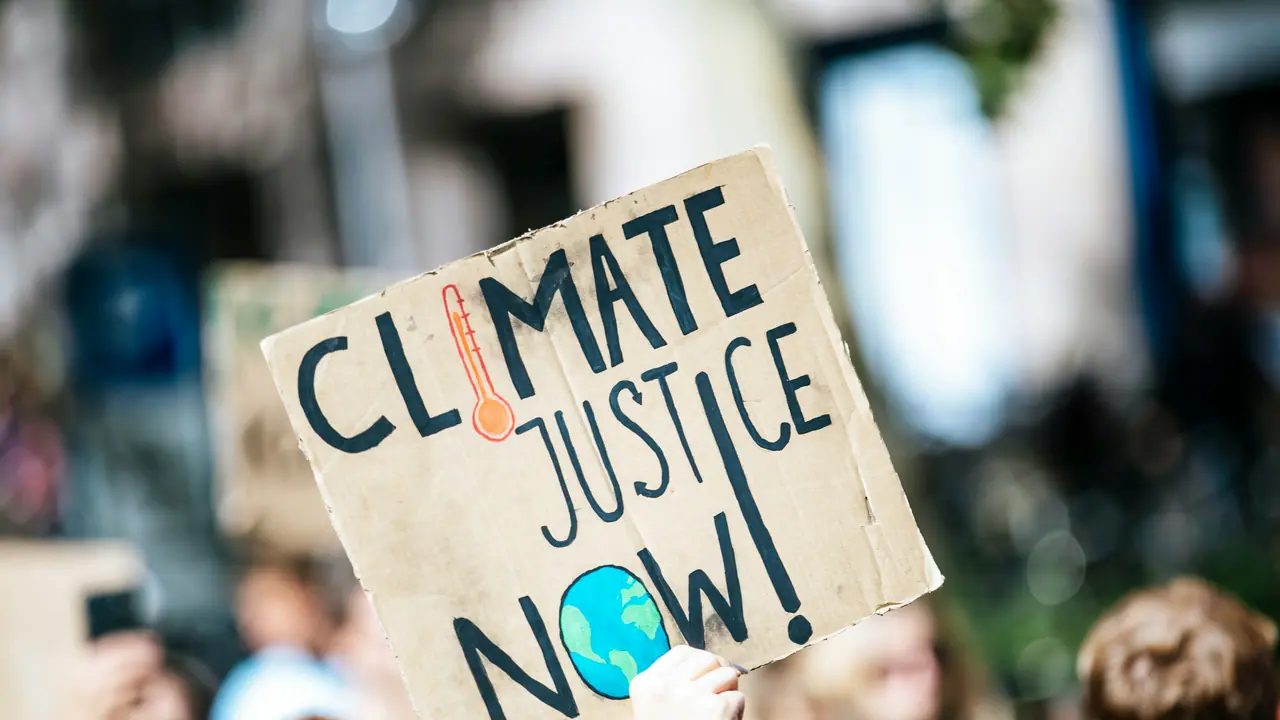
Thousands gathered in Antalya as the climate summit continued indoors. Their march brought together campaigners from different movements, raising questions about who controls resources and who pays for environmental damage.
Thousands of climate campaigners took their demands beyond the negotiating rooms of COP31 on November 14, marching through Antalya, Türkiye, in a colourful protest. The procession brought together environmental groups, trade unions and civil society organisations calling for action on fossil fuels, corporate power, forest destruction and economic inequality.
Flags, painted banners, large street installations and costumed performers filled the city centre as demonstrators chanted against the interests and decisions they said were driving environmental damage. The march unfolded alongside formal climate negotiations, where government representatives were discussing finance, emissions and national commitments.
The demonstrators argued that tackling climate change requires more than cutting greenhouse gas emissions or investing in cleaner technology. They said the transition must also address who controls land, water and energy, who profits from natural resources and who bears the consequences of environmental destruction.
The November 14 procession marked the opening of the People’s Climate Summit, a parallel gathering scheduled to run until November 18. Organisers said more than 130 organisations would take part in around 150 events, bringing participants from 34 countries. The march included groups campaigning on fossil fuels, forest protection, workers’ rights, food systems, gender equality and peace.
Alongside calls to end fossil fuel use and protect forests, campaigners sought finance for communities already experiencing climate impacts. Other banners challenged nuclear power, private control of electricity and the influence of large corporations over natural resources.
Campaigners connect climate action with economic and social justice

For many participants, the move to cleaner energy must not simply transfer control from one powerful industry to another. They want communities to have a stronger voice in decisions over the resources on which they depend. One banner warned against allowing public power to become private profit, while other messages called for forests to be protected from commercial exploitation.
Campaigners said businesses should answer for environmental harm and that public decisions should not put commercial interests ahead of community rights. Their criticism of corporate influence centred on accountability and the need to protect communities.
Calls for funding to address loss and damage were also prominent. They reflected the concern that countries and communities that have contributed relatively little to global warming can face severe consequences while having fewer resources to recover homes, livelihoods and infrastructure after disasters. Although the international Fund for Responding to Loss and Damage was established as a step forward, the United Nations climate body's October 2026 report on the fund showed that available money remained far below the scale of need.
For protesters, asking major polluters to pay is therefore a question of responsibility. They argued that countries and companies that benefited most from decades of fossil fuel use should not leave poorer nations and vulnerable communities to shoulder the costs of climate-related destruction.
A banner carried by an Indonesian women’s organisation brought these concerns into focus, demanding an end to forest and land burning for large-scale oil palm plantations. The message highlighted the consequences of commercial land use for people who depend on forests.
A 2026 analysis by WALHI, the Indonesian Forum for the Environment, found that nearly half of the fire hotspots examined were located within the operating areas of forestry and oil palm companies. The findings point to concerns about corporate land use and the enforcement of environmental laws.
The protesters challenged the idea that forests should be valued mainly for their ability to balance carbon emissions. They highlighted forests’ roles in supporting biodiversity, regulating water, protecting communities and sustaining livelihoods, arguing that plantations cannot be treated as replacements for natural ecosystems.
Trade unions brought workers’ concerns into the march. Their messages focused on protecting jobs and rights as economies move away from coal, oil and gas. The transition will affect industries, employment and local economies, campaigners said, and workers should not be left to bear its costs while governments and businesses receive its benefits.
The International Labour Organization's guidelines for a just transition call for decent work, social security, training and meaningful consultation to be considered alongside environmental change. These protections are central to the campaign for a fair shift to a cleaner economy.
The procession brought together groups with different priorities, but their messages converged around the links between climate change, power, rights and economic justice.








