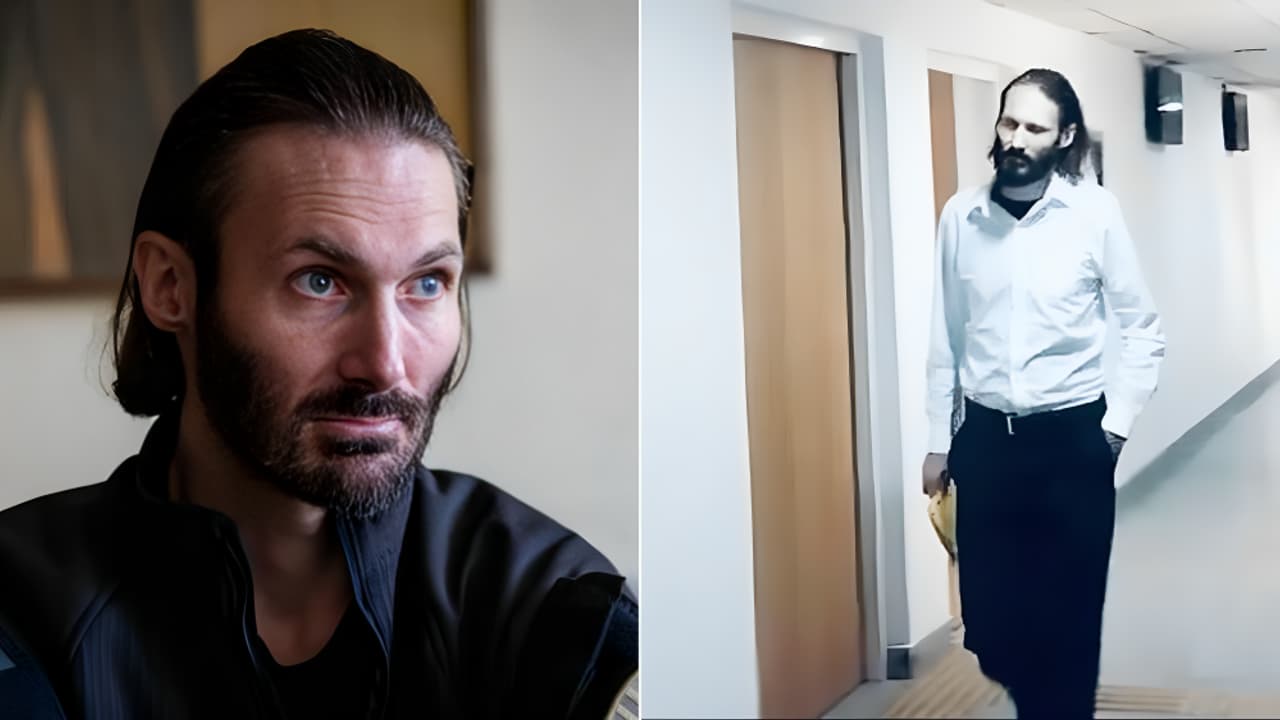
Matthew Aaron VanDyke appeared before Delhi’s Rouse Avenue Court after returning from the US, where he had travelled to meet his family. VanDyke is an accused in the Myanmar training camp case, in which the NIA alleges that foreign nationals trained armed groups in drone warfare.
US national Matthew Aaron VanDyke appeared before the National Investigation Agency (NIA) court at Delhi's Rouse Avenue Court on Friday, October 23, after returning from the United States, where he had been allowed to travel for a month to meet his family. He is an accused in the Myanmar training camp case, which involves allegations that foreign nationals trained ethnic armed groups in drone warfare.
VanDyke’s appearance follows a court order directing him to return to India and appear before it within 72 hours of his arrival. The court had permitted him to visit the US in September, subject to conditions linked to the ongoing investigation.
Related Articles

Who is Matthew Aaron VanDyke?
Matthew Aaron VanDyke is an American documentary filmmaker, journalist and security commentator who became known for his involvement in conflicts in Libya and Syria. He has also worked as a war correspondent and founded Sons of Liberty International, an organisation that says it provides non-lethal assistance to groups fighting against extremist organisations.
VanDyke travelled extensively across North Africa and the Middle East before becoming involved in the Libyan uprising against Muammar Gaddafi in 2011. He joined forces fighting Gaddafi’s government, was captured and spent nearly six months as a prisoner before escaping and returning to the conflict.
His experiences in Libya later became the subject of the documentary Point and Shoot. He also directed Not Anymore: A Story of Revolution, a documentary about the conflict in Syria.
His background in conflict zones and security-related work has drawn attention following his arrest in India in connection with the alleged training of armed groups in Myanmar.
Why was VanDyke arrested in India?
The NIA arrested VanDyke and six Ukrainian nationals on March 13, 2026, in connection with the alleged Myanmar training camp operation. The agency initially invoked provisions of the Unlawful Activities (Prevention) Act (UAPA).
According to the NIA’s allegations, the seven foreign nationals entered Myanmar illegally through Mizoram without valid travel documents. The agency claimed that they took part in a pre-planned training programme for ethnic armed groups fighting Myanmar’s military junta.
The NIA further alleged that the group provided training in drone warfare, drone operations, assembly and jamming technology over nearly three months. The groups named in the allegations included the Chin National Front (CNF) and the Kachin Independence Army (KIA).
Investigators also alleged that members of the CNF provided logistical support and that a commander of a Myanmar-based rebel group arranged funding for the operation. These are allegations made by the investigating agency and are not established findings of guilt.
Why did the court grant him bail?
The NIA filed its chargesheet on September 8, naming VanDyke and the six Ukrainians under Sections 21 and 23 of the Immigration and Foreigners Act, 2025, without invoking UAPA provisions in that chargesheet. The agency said its investigation into possible UAPA offences was continuing.
On September 18, a special NIA court granted VanDyke default bail after noting that the agency had not completed its UAPA investigation within the prescribed 180-day period. The court held that an incomplete chargesheet could not be used to deny him the statutory relief.
VanDyke subsequently paid Rs 5.5 lakh in compounding charges for the alleged immigration violations, according to media reports.
The court later allowed him and the six Ukrainian nationals to travel to their respective countries for a month to meet their families, subject to conditions.
As of Friday, the six Ukrainians had not returned to India, according to people familiar with the development. The NIA’s investigation into the case remains significant, and further legal proceedings may follow.
(With inputs from agencies)