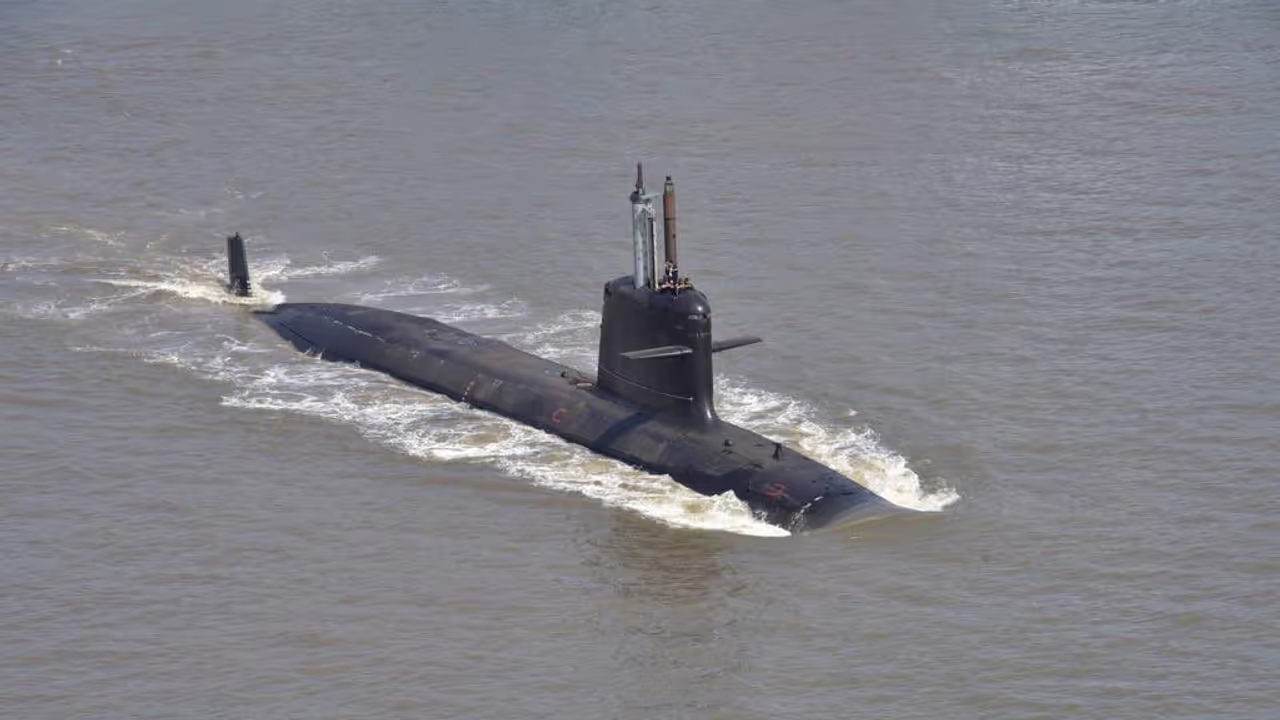
India will retrofit INS Khanderi, the second Kalvari-class submarine, with an indigenous Air-Independent Propulsion (AIP) system developed by DRDO by December 2026. The fuel-cell based module will allow the submarine to remain underwater for weeks without surfacing, significantly improving stealth and endurance.
New Delhi: In a significant boost to India’s underwater warfare capabilities, the second submarine of the Kalvari-class, INS Khanderi, is set to be retrofitted with an indigenously developed Air-Independent Propulsion (AIP) system by the end of 2026.
According to senior defence sources familiar with the programme, “The system has undergone extensive shore-based trials and has met the required benchmarks. Integration work on the second submarine is expected to be completed before December 2026.”
A top source in the DRDO told Asianet Newsable English: “We will be handing over the ‘energy module’ system to the Mazagaon Dockyards Limited in next 3-4 months.” The energy module will be installed within the submarine’s hull during the refit period, when INS Khanderi will be docked.
Related Articles

As per the sources, initial sea trials are expected to commence between July-August 2027, with the full refit process expected to conclude by beginning of 2028,” the official added.
About AIP system
The AIP system was originally meant for INS Kalvari, the first of the Indian Navy’s six Kalvari-class diesel-electric submarines, but since the system was not ready the submarine is currently being refitted.
The AIP module, developed by the Defence Research and Development Organisation (DRDO), has been in advanced stages of testing and is now cleared for integration aboard INS Khanderi, the second submarine of the Project 75 submarine fleet, the sources said, speaking on condition of anonymity.
AIP technology allows conventional diesel-electric submarines to remain submerged for significantly longer durations – potentially several weeks – without surfacing to recharge batteries, dramatically enhancing stealth and operational endurance.
Current diesel-electric submarines must snorkel periodically, making them vulnerable to detection. Without an AIP system, a submarine needs to surface every four to five days to recharge its batteries.
With its integration into the submarines, India will join an elite club of nations that have indigenously developed fuel cell-based submarine AIP technology.
This technology is environmentally friendly, as its only by-product is clean water that can be safely discharged into the ocean.
DRDO’s Pune-based Naval Materials Research Laboratory (NMRL) has developed a fuel-cell-based AIP system using phosphoric acid fuel cell technology, marking a major milestone for Indian naval engineering.
The Kalvari-class submarine – built at Mazagon Dock Shipbuilders Limited (MDL) in Mumbai under collaboration with French naval group Naval Group – consists of six submarines, with all six now commissioned into the Indian Navy.
The Indian submarine fleet currently has 16 conventional submarines. Apart from the six recently built submarines, the rest are over 30 years old and approaching their decommissioning date.