
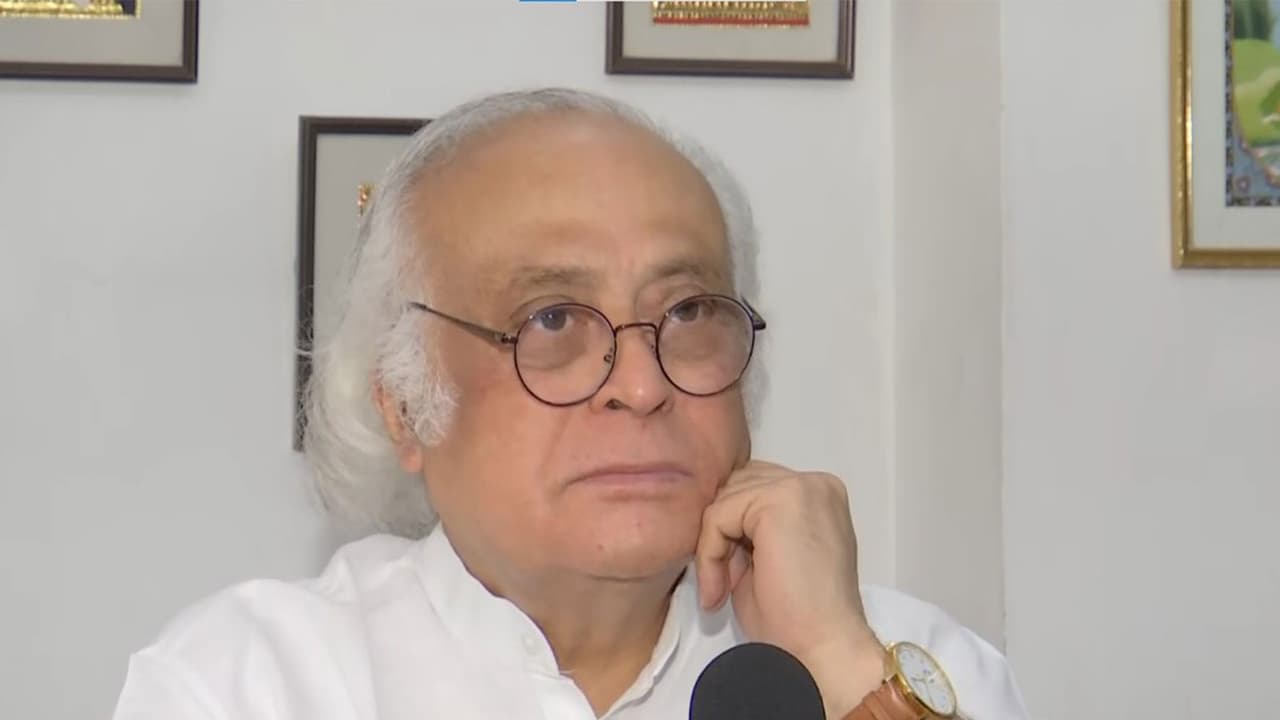
Congress' Jairam Ramesh termed the US 30-day waiver for India to buy Russian oil an 'attack on sovereignty'. He called the US Treasury's statement 'catastrophic' and questioned the silence of PM Modi and the Centre over the issue.
Congress Slams US Waiver as 'Attack on Sovereignty'
Senior Congress leader Jairam Ramesh on Friday said that the US's 30-day waiver permitting India to buy Russian oil was an attack on the country's sovereignty. He questioned the silence of the Centre and Prime Minister Narendra Modi over the issue, saying that the statement issued by US Treasury Secretary Scott Bessent was "extremely catastrophic". He also questioned the Prime Minister for not speaking up on the targeted assassinations of Iranian leaders, including Ayatollah Ali Khamenei. "It is not shocking that America is happy with the trade deal. As per the trade deal, we are decreasing the import tax, especially in the agricultural sector. They (the US) are increasing it. The statement issued by the US Treasury Secretary regarding Russian oil is extremely catastrophic. From where and when to buy oil should be the decision of our government. It is an issue of sovereignty. Who is America to tell us that you can buy for 30 days and after that you are not permitted," Ramesh told ANI.
"Why are our Prime Minister, External Affairs Minister, and Petroleum Minister silent? This is an attack on our sovereignty. An American Minister says that we are granting permission to India to buy oil from Russia for 30 days. In 1971, the same language was used by Nixon and Kissinger. Indira Gandhi gave them a fitting reply. In present times, the Prime Minister goes to Israel after which the attack on Iran happens," he added.
Opposition to Raise Issues in Parliament
Ramesh, Congress Rajya Sabha MP, said that the opposition will raise issues of trade deals and farmers' interests in the upcoming session of Parliament.
"The US-Israel joint attack carried out targeted assassinations of Iranian leaders. However, our PM is silent on it. We will raise these issues in the Parliament. We will raise the issue of the trade deal and farmers' interests. Washington informs about the promises made by the government," the Congress leader said.
Labelling PM Modi as "afraid and nervous", Ramesh said that the opposition has demanded a debate on the workings of the Foreign Ministry. "When Operation Sindoor was stopped, Marco Rubio made the announcement. Whether we would buy oil from Russia, we get the information from Washington. What kind of government is this? The Prime Minister is afraid and nervous. What secrets does America have? Where is his 56-inch chest? We need a debate on this as per the rules. The opposition has demanded a debate on the Foreign Ministry's workings," Ramesh said.
US Policy and Geopolitical Context
His remarks come after US Treasury Secretary Scott Bessent on Thursday (local time) announced the 30-day waiver allowing India to purchase Russian oil to enable oil flow into the global market. Bessent announced a short-term measure to counter Iran during the conflict in West Asia, which has severely affected the Gulf countries supplying crude oil.
The US is shifting its trade policy with India, prioritising American interests under the "America First" framework. US Deputy Secretary of State Christopher Landau at the Raisina Dialogue in New Delhi stated that the US won't grant India the same concessions it gave China 20 years ago, aiming to prevent India from becoming a rival. He emphasised that any trade deal must be fair to both countries, protecting American interests while recognising India's needs. Landau clarified that "America First" doesn't mean isolationism, but rather cooperation with partners like India. The deal could unlock significant economic potential for both countries.
The 30-day temporary waiver by the US Treasury Department comes at a time when India continues to face potential risks linked to energy supply disruptions in the Middle East region amid escalating tensions after the February 28 US-Israel military strike on Iran, which resulted in the death of its Supreme Leader, Ayatollah Ali Khamenei and other senior figures.
India sources nearly 40 per cent of its oil imports from the region, with a significant portion transported through the strategically important Strait of Hormuz. (ANI)
(Except for the headline, this story has not been edited by Asianet Newsable English staff and is published from a syndicated feed.)