India’s muted stance in the Middle East war raises questions. While officially neutral, New Delhi’s actions suggest tacit support for Washington and Tel Aviv, marking a possible shift in its grand strategy.
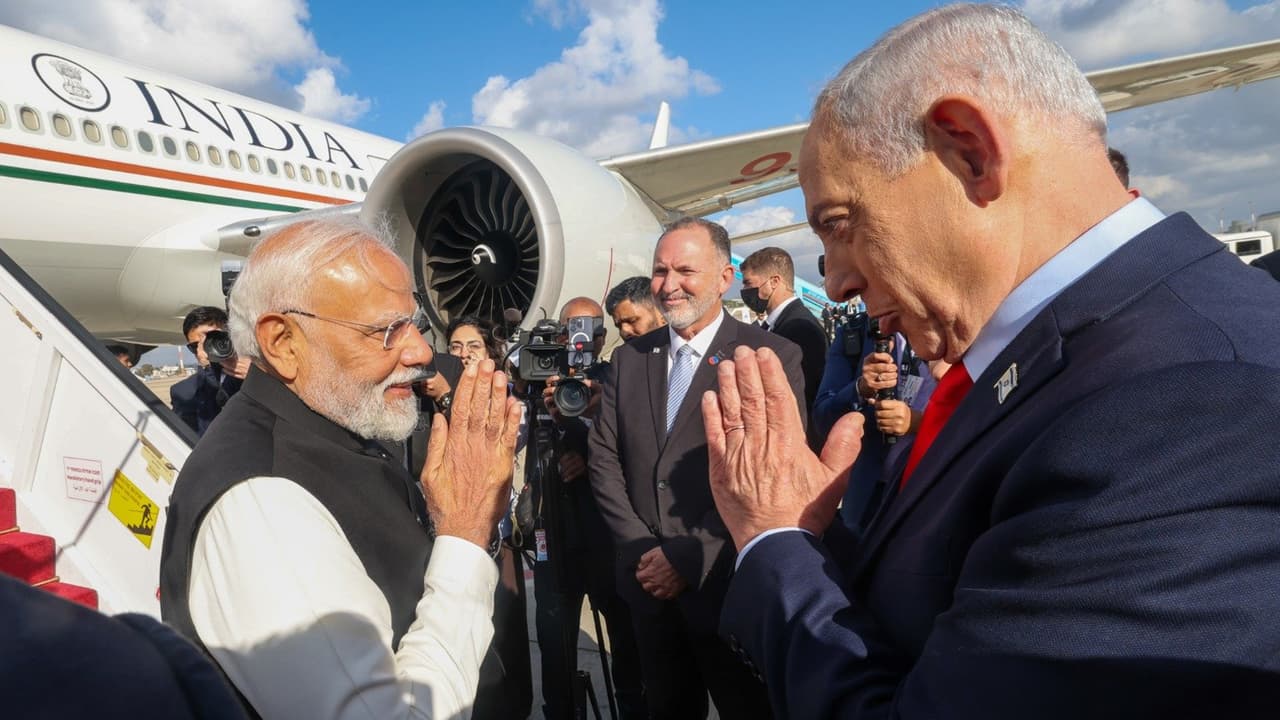
India has officially declared neutrality in the current Middle East conflict, but its actions tell a different story. Prime Minister Narendra Modi visited Tel Aviv just two days before the war began. New Delhi refrained from commenting on the U.S. Navy sinking an Iranian warship that had just returned from an Indian multilateral exercise.

It also ignored Tehran’s request to coordinate a BRICS intervention, despite India currently holding the chair of the group. Most significantly, India has repeatedly condemned Iranian attacks on Arab states but has not criticized Israeli-U.S. strikes on Iran.
At first glance, this decision may appear unsurprising. In 2022, India refused to denounce Russian aggression in Ukraine. It continued its close relationship with Moscow and profited by purchasing Russian oil at discounted rates, avoiding Western sanctions. In the present conflict, India’s immediate interests tilt away from Iran.
Related Articles

It has a strategic partnership with the United States, defense ties with Israel, and extensive economic interests in the Arab states. By contrast, India’s energy imports from Iran are negligible, and it has neither major investments nor a significant immigrant population there.
A Contradiction In Grand Strategy
From the perspective of Indian grand strategy, however, the two cases are contradictory. In 2022, India’s lean toward Russia aligned with its goal of promoting a multipolar world. By refusing to join U.S.-led sanctions, New Delhi sought to ensure Russia was not isolated or forced into deeper dependence on China. India calculated that Russia’s continuance as an independent actor would ensure greater diffusion of power in the international system, which would be more conducive to preserving its strategic autonomy.
India’s silence in the current war is a clear inversion of this principle. If the United States succeeds in effecting regime change in Tehran, or at least significantly degrading its capabilities, the direct consequence would be greater concentration of power in U.S. hands. This outcome would diffuse against the promotion of multipolarity.
Historically, New Delhi has been more vocal in criticizing unchecked assertions of American power compared to those of other major actors. India denounced the U.S. war in Vietnam in the 1960s, its support for remnants of the Khmer Rouge in Cambodia in the 1980s, and its invasion of Iraq in 2003.
By contrast, New Delhi was hesitant in calling out the Soviet Union for its invasions of Hungary in 1956, Czechoslovakia in 1968, and Afghanistan in 1979. Even in recent years, India expressed muted disapproval of the U.S.-led intervention in Libya in 2011, while tolerating Russia’s annexation of Crimea in 2014 and China’s suppression of Hong Kong protests in 2020.
India’s wariness of American power is not merely a legacy of anti-colonial idealism. It is rooted in a grand strategic vision. As the most powerful actor in the world, the United States poses a singular risk to India’s strategic autonomy. Accordingly, India has preferred some constraints on U.S. hegemony. Even as New Delhi has forged a strategic partnership with Washington to meet the common threat of China, it has continued to promote multipolarity and resisted becoming too dependent on the United States.
Possible Explanations For The Shift
So what explains India’s turnabout in the current war? Three explanations suggest themselves. First, the policy establishment may have been overwhelmed by the pace of events. There is evidence that the government was taken by surprise by the fallout. The conflict arrived on the heels of a year-long struggle to manage relations with Washington under Donald Trump.
In the past year, India and the U.S. clashed over immigration, disagreed on Trump’s role in mediating an India-Pakistan ceasefire, and engaged in a months-long tariff standoff. Geopolitical volatility combined with the precarious state of relations may have resulted in a confused response by a government caught on the back foot.
Second, bruised by diplomatic setbacks, New Delhi may have decided to turn inward. In the last decade, the Modi government has leveraged the narrative of India’s rise to earn political mileage at home and abroad. However, recent rows with Trump created awkward situations, reminding the government that foreign policy carries domestic consequences. It is possible that New Delhi has decided to put its great power ambitions on hold and assume a low-key role in world politics for now.
Finally, the Iran war may be an early indicator of a major shift in India’s grand strategy. New Delhi may have decided to lend greater support to U.S. hegemony, stepping away from its pursuit of multipolarity. Its reasoning could be transactional, support exchanged for security and economic concessions from Washington.
Or perhaps India believes the United States is in irreversible decline. Such an assessment flips the basic tenets of Indian grand strategy. China then becomes the most significant threat to Indian autonomy because it is on its way to becoming the predominant power in Asia. It follows that Indian interests are best served by propping up U.S. power.
During the Cold War, unease with American dominance drove India closer to the Soviet Union, the weaker superpower. A similar calculation in the face of a rising China may have led India to conclude that the best means of maintaining balance is to embrace a diminishing United States more tightly. Only time will tell what factors are driving India’s decision-making, but major shifts may be afoot.