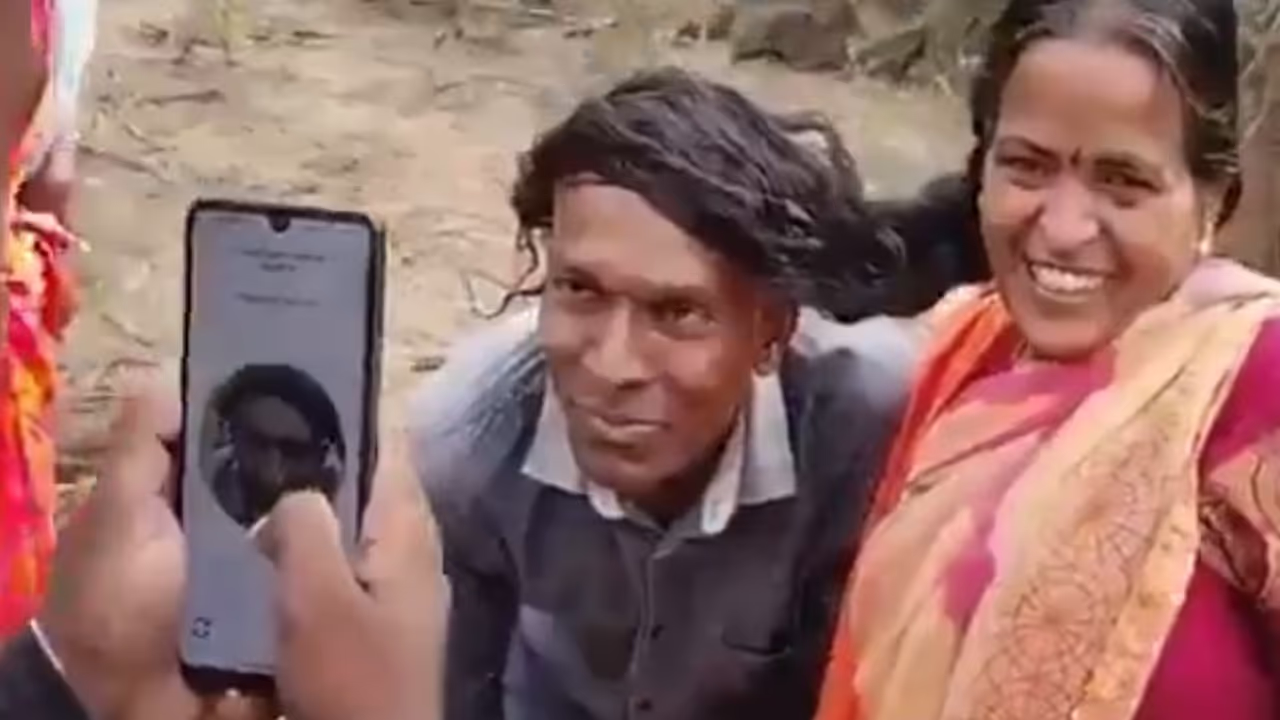
A Telangana labourer under the MGNREGA scheme was unable to mark his attendance after a facial recognition app failed to identify his newly shaved head. The issue was amusingly resolved when a female coworker covered his head with her hair, allowing the system to successfully recognise him.
A Telangana labourer was unable to mark his attendance under the MGNREGA scheme after a facial recognition app failed to identify him because he had shaved his head, leading to an unusual fix involving a fellow coworker's hair. The Mahabubabad area, where the government recently implemented a facial recognition-based attendance system for workers hired under the Mahatma Gandhi National Rural Employment Guarantee Act (MGNREGA), is where the event was discovered. As part of a religious rite, Srinivas, a worker from Komatipalli village in Inugurthi mandal, recently went to the Kondagattu Anjaneya Swamy Temple and gave his hair.
When Srinivas returned to work on Thursday with a shaved head, an unexpected problem emerged. The system frequently failed to recognise the worksite supervisor when he tried to use the face recognition software to record his attendance. The technology was unable to match his new look with his prior profile following the drastic change in haircut, leaving the site workers perplexed.
The situation then took an amusing turn when a woman labourer at the worksite stepped in with an improvised solution. She covered Srinivas's shaved head with her hair as the supervisor tried another scan using the attendance app, according to reports of the event. This time, he was successfully recognised and his visit was noted by the face recognition system.
Related Articles

Watch Viral Video
The unconventional solution attracted notice right away, and although many found comedy in the scenario, it also raised more general concerns about the dependability of face recognition systems in circumstances involving appearance alterations.
The incident also highlighted potential flaws in the technology being employed, especially in situations where physical changes—even transient ones—may obstruct precise identification.