
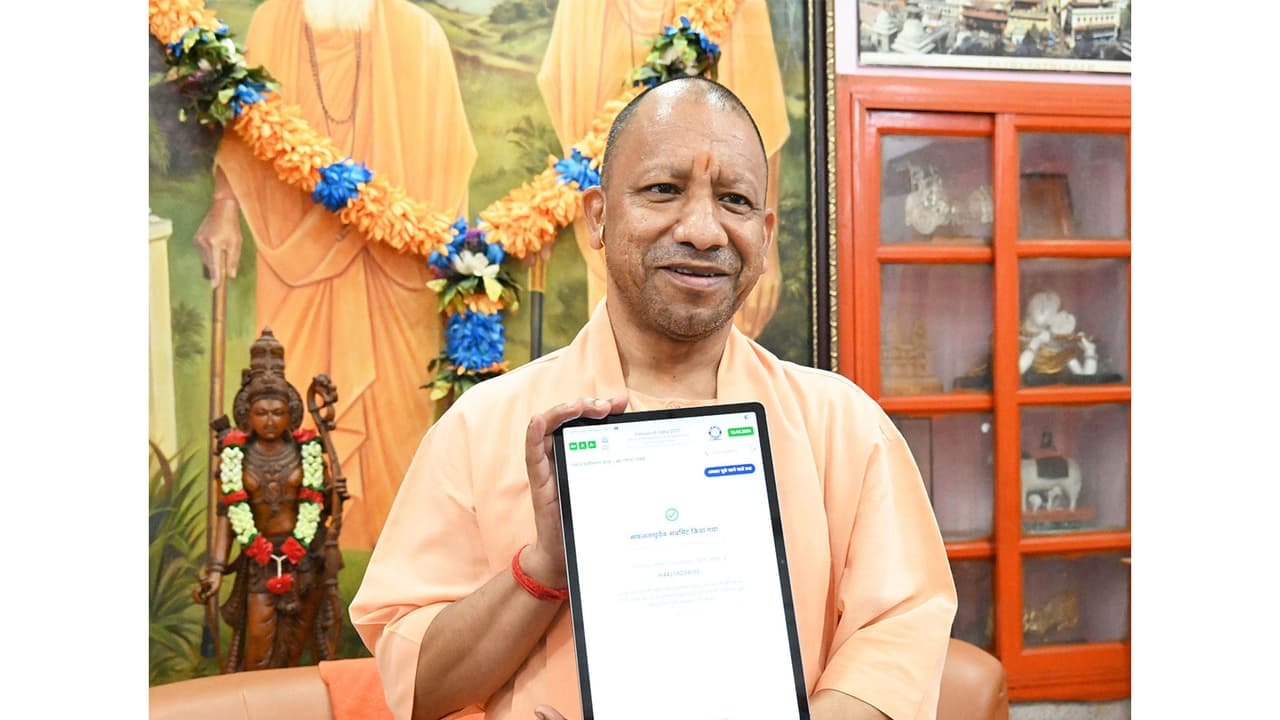
Uttar Pradesh CM Yogi Adityanath filled the online 'self-enumeration' form for the Census-2027 in Gorakhpur. He urged all residents to participate in the digital process, calling it a foundation for holistic and planned national development.
Uttar Pradesh Chief Minister Yogi Adityanath on Saturday filled the online form for the 'Self-Enumeration' part of the first phase of the ongoing digital census in the state. During his visit to Gorakhpur, he filled out the digital/online form for the census in the state.

CM Yogi's Appeal to Residents
Sharing a post on X, CM Yogi appealed to all residents of the state to actively participate in this important national campaign through digital self-enumeration. "Today, I feel immensely proud for having completed the digital 'self-enumeration' process under Census-2027 at Shri Gorakhnath Temple, Gorakhpur, thereby ensuring my participation in this national campaign. This census is not merely about counting the population but also serves as a strong foundation for holistic, inclusive, and planned development. I appeal to all residents of the state to actively participate in this important national campaign through digital self-enumeration," CM Yogi wrote. https://x.com/myogiadityanath/status/2055676255371174217
About Census 2027
The Census 2027, the 16th census since the exercise began and the 8th after independence, marks a significant step with digital integration and strengthened data security. The government has approved an outlay of Rs 11,718.24 crore, with the process to be conducted in two phases -- house listing between April and September 2026, followed by population enumeration in February 2027.
Census is the process of collecting, compiling, analysing, and disseminating demographic, social, cultural and economic data relating to all persons in the country or a designated area. The wealth of information collected through the census makes it the richest source of data for planners, administrators, research scholars and other data users.
According to the government, the census serves as a critical foundation for governance, enabling informed decision-making across political, social, and economic domains. Census data enables informed policy making that is inclusive, targeted, and aligned with the diverse needs of the population.
History of Census in India
The earliest references to conducting a census in the country can be found in Kautilya's Arthashastra (321-296 BC) and later in the writings of Abul Fazl in 'Ain-e-Akbari' during the days of Akbar. The first modern population census in India was conducted between 1865 and 1872, though it didn't happen simultaneously across all regions. India conducted its first synchronous census in 1881. Since then, the Indian census has been providing reliable, time-tested data on various aspects of the population through extensive exercises held every 10 years. Each successive census refined its methods, increased coverage, and modified questions to better understand the population.
Digital Integration and Legal Framework
Census 2027 will be the largest census exercise in the world and marks a major step forward with digital integration, strengthened data security, and streamlining processes, reinforcing evidence-based policymaking. It introduces several pioneering features, including mobile-based data collection, near real-time monitoring through the Census Management & Monitoring System (CMMS) portal, an optional self-enumeration facility, and extensive use of geo-referenced jurisdictions. Comprehensive caste enumeration will be done during the Population Enumeration phase.
The Census 2027 is anchored in a robust institutional and administrative framework that ensures consistency, credibility, and nationwide uniformity in data collection. Post-independence, the Census is governed by the Census Act, 1948, and the Census Rules, 1990, ensuring a strong legal and institutional framework. (ANI)
(Except for the headline, this story has not been edited by Asianet Newsable English staff and is published from a syndicated feed.)