
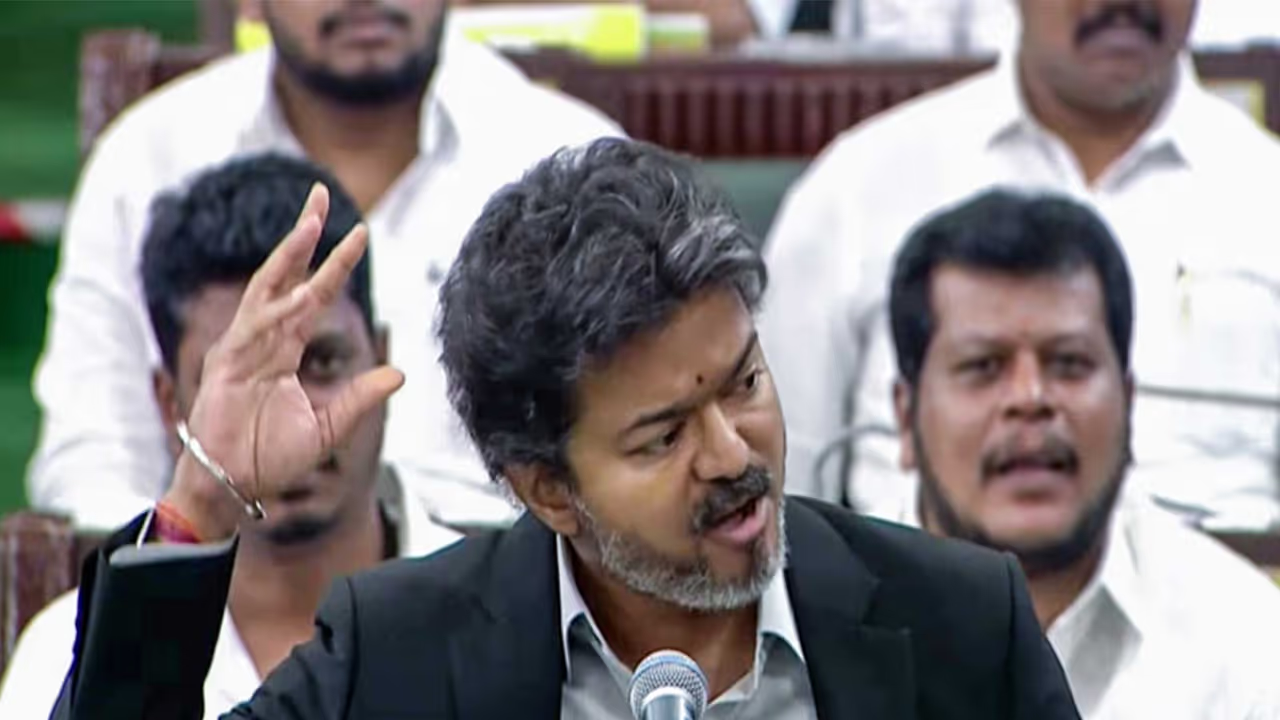
A debate on law and order in the Tamil Nadu Assembly turned into a political clash, with the DMK staging a walkout. CM C Joseph Vijay's corruption allegations against the previous DMK govt led to the walkout after Udhayanidhi Stalin was denied a reply.
A heated exchange in the Tamil Nadu Assembly on Monday ended with the DMK staging a walkout after Leader of Opposition Udhayanidhi Stalin was not allowed to immediately respond to Chief Minister C Joseph Vijay’s allegations against the previous DMK government.
The walkout came after Vijay turned a debate on the Home Department and law and order into a broader political attack on the DMK, citing Enforcement Directorate material, the Sarkaria Commission and alleged corruption during previous regimes. Udhayanidhi sought permission to respond to the allegations, but amid disruptions in the House, the Speaker did not allow an immediate reply. The confrontation quickly became the defining political moment of the day.
The episode gave Vijay an immediate advantage in the political narrative, but also handed the DMK a counterargument: that serious allegations were made without allowing the Opposition to respond from the floor of the House.
CM Vijay turns debate into attack on DMK
Vijay initially defended his government’s approach to law and order, referring to police vacancies, modernisation, digitalisation, crime prevention and the need to keep political interference away from policing. He then shifted the focus to the previous DMK administration.
Citing material associated with the Enforcement Directorate, Vijay alleged that documents referred to the collection of “party funds” linked to government contracts and named senior DMK leaders in the allegations. He also referred to alleged irregularities involving government departments and TASMAC.
Vijay further invoked the Sarkaria Commission report while referring to corruption allegations from the DMK’s earlier period in office. Politically, the strategy was significant. Instead of allowing the Opposition to focus entirely on the performance of the present government, Vijay redirected the debate towards the DMK’s record. The political question changed from “What has Vijay’s government done?” to “What happened under the DMK?”
Udhayanidhi Stalin refutes allegations
Udhayanidhi Stalin rejected Vijay’s accusations and questioned their evidentiary basis. He argued that investigative agency references cannot automatically be treated as proof of guilt and accused Vijay of avoiding questions about his own government’s performance.
Controversy over remarks against women
CM Vijay also criticised derogatory political remarks against women and invoked former Chief Minister J Jayalalithaa and the 1989 Assembly episode. The comments came amid a recent controversy involving remarks attributed to Udhayanidhi Stalin concerning actor Trisha, an issue whose interpretation has been disputed by the DMK.
The political impact of Monday’s speech may be immediate, but governance will provide the longer-term test. Vijay has spoken about police recruitment, modernisation, digitalisation, crime prevention, women’s safety and reducing political interference. The DMK has challenged Vijay to substantiate his allegations, while Vijay’s government will continue to face questions about its own performance.
(Except for the headline, this story has not been edited by Asianetnews Editorial staff and is published from a syndicated feed.)