
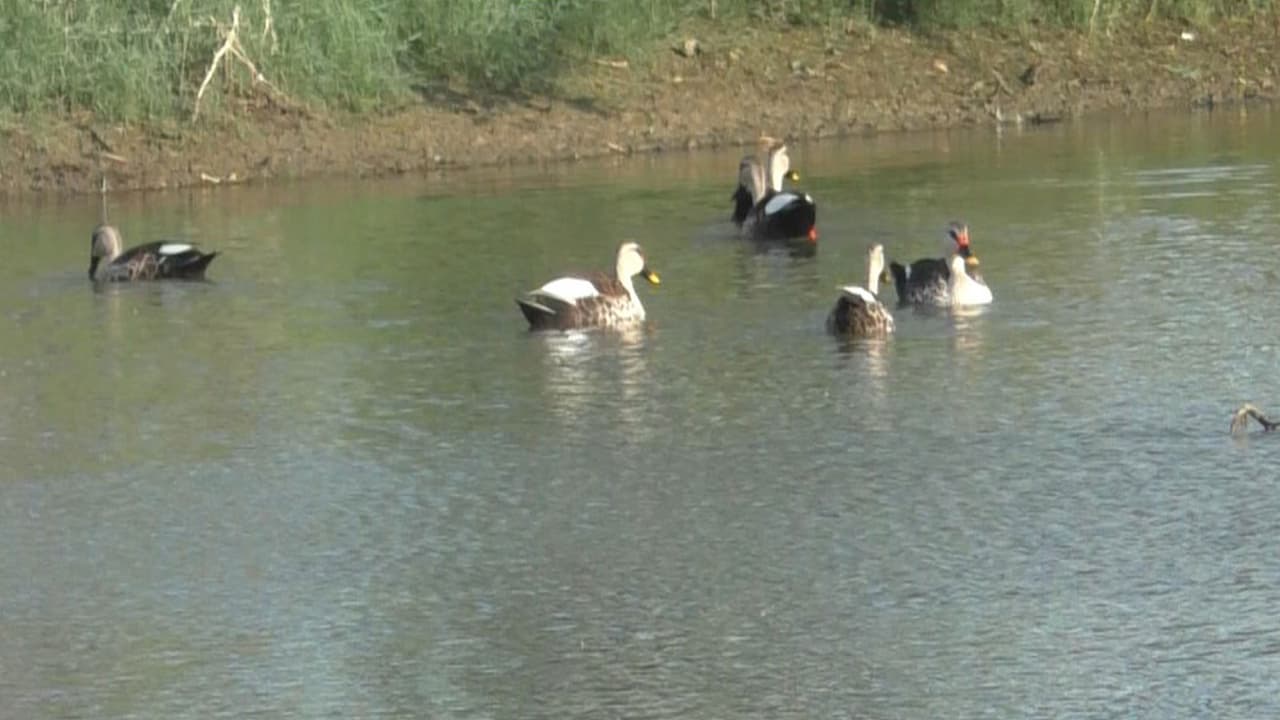
Large numbers of Indian Spot-billed Ducks are being seen in Thoothukudi's wetlands. Their presence is considered a positive indicator of a healthy and vibrant aquatic ecosystem, drawing the attention of bird enthusiasts and nature lovers.
Indian Spot-billed Ducks are currently being seen in large numbers across the salt pans, lakes, and other wetland areas of the Thoothukudi district, drawing the attention of bird enthusiasts and nature lovers.
The presence of these birds, which live in harmony with natural ecosystems, is considered an indication that the aquatic environment in these areas remains healthy and vibrant.
Characteristics and Habitat
Indian Spot-billed Ducks can be easily identified by their distinctive appearance. In particular, the yellow-tipped bill and the characteristic spotted markings on the bill serve as key identifying features. With brown and grey-toned feathers covering their bodies and a calm appearance, these birds are commonly seen moving around water bodies either in pairs or in small groups.
These ducks generally prefer calm water bodies, marshlands, and areas with standing water as their habitat. They feed on small aquatic organisms, aquatic plants, plant seeds, and naturally available food sources. As a result, they are considered to play an important role in the food chain of wetland ecosystems.
An Indicator of Ecological Health
The arrival of Indian Spot-billed Ducks is not merely the appearance of another bird species; it is viewed as a natural indicator that the region's ecological balance and biodiversity are being maintained. It is noteworthy that these birds tend to return only when pollution levels remain low and environmental conditions continue to support wildlife.
Environmental enthusiasts have further emphasised that protecting the salt pans and natural wetlands of the Thoothukudi district is essential for ensuring the continued arrival of these birds and for sustaining biodiversity. If local communities and authorities work together to conserve these natural habitats, opportunities to witness such remarkable bird species in their natural environment are expected to increase in the future.
(Except for the headline, this story has not been edited by Asianet Newsable English staff and is published from a syndicated feed.)