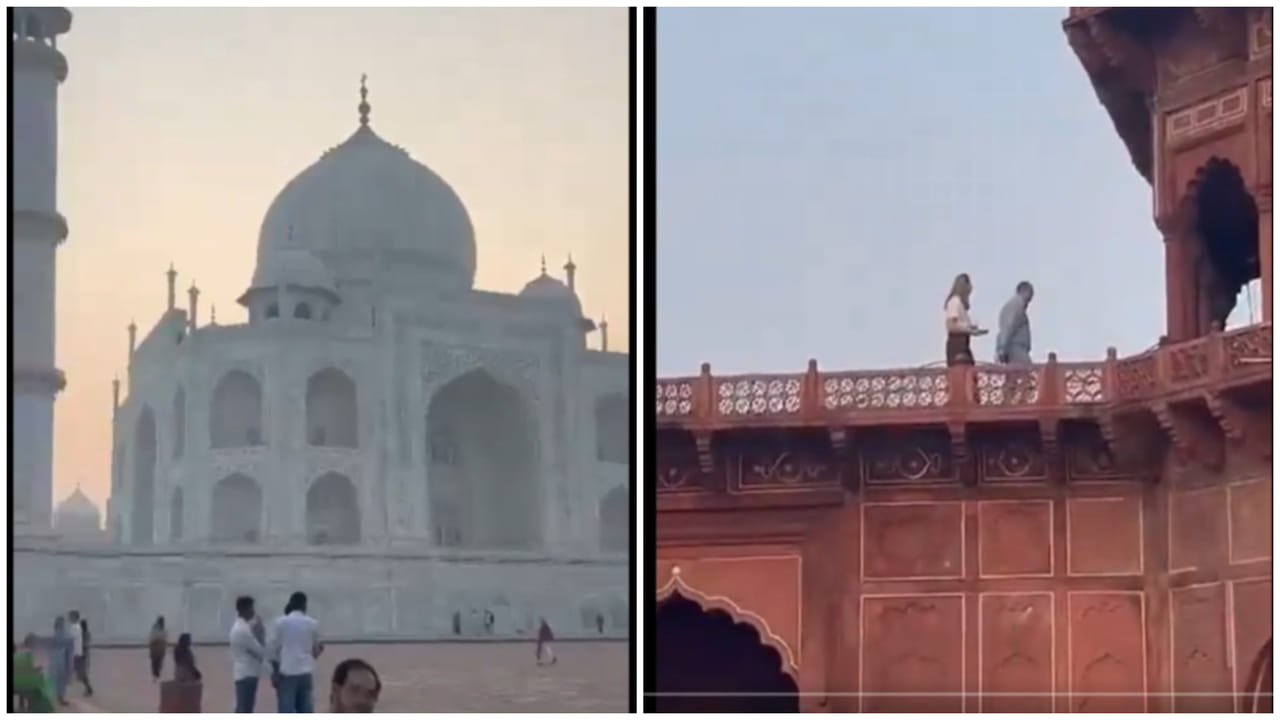
Security arrangements at the iconic Taj Mahal in Agra have come under the scanner after two foreign tourists allegedly breached a restricted zone and climbed onto the rooftop of Tower Number Four, raising serious questions about surveillance.
Security arrangements at the iconic Taj Mahal in Agra have come under the scanner after two foreign tourists allegedly breached a restricted zone and climbed onto the rooftop of Tower Number Four, raising serious questions about surveillance at one of India's most heavily guarded monuments.
The tourists reportedly accessed the rooftop near the Shahi Mosque, where an anti-drone system has been installed to monitor unauthorised aerial activity around the monument. They remained on the rooftop for some time, clicking photographs, without being noticed by security personnel.
The security lapse came to light on Wednesday evening after a video showing the two tourists on the restricted rooftop went viral on social media. Following the video's circulation, security agencies swung into action and brought the tourists down from the tower.
Related Articles

The incident has triggered concerns as the structure falls within the monument's restricted red zone and houses a sensitive anti-drone surveillance system designed to detect drone activity in the prohibited airspace surrounding the Taj Mahal.
Tahiruddin Tahir, chairman of the Urs Committee, expressed serious concern over the breach and questioned how two foreign visitors managed to access such a sensitive location despite the security restrictions and arrangements in place.
Dr Smita Kumar, superintending archaeologist with the Archaeological Survey of India (ASI), has sought a detailed report from the Central Industrial Security Force (CISF) regarding the security breach.
According to ACP Taj Security Yatendra Nagar, the CISF informed him that the tourists had accessed a pathway beside the mosque and climbed the tower because they were unaware of the restrictions. They were immediately brought down, he said.
Nagar added that no action was taken against the tourists as they had not deliberately violated the security arrangements.
Pre-Wedding Photoshoots Also Raise Security Concerns
The latest breach has once again put the Taj Mahal's security and monitoring mechanisms under scrutiny, with questions being raised over how visitors manage to access restricted areas despite the presence of security personnel.
The incident has also revived concerns over pre-wedding photoshoots allegedly being conducted inside the monument despite existing restrictions.
Such photoshoots have reportedly continued within the Taj Mahal complex despite claims of stringent security measures and restrictions on unauthorised photography and filming activities. This has raised questions about the agencies responsible for monitoring visitor activities and whether violations are being effectively prevented.
Concerns have also emerged over possible revenue losses for the ASI, which regulates activities at the monument, if unauthorised commercial photoshoots continue without proper permissions or payments.
The latest incident has therefore brought attention to the enforcement of security restrictions at the UNESCO World Heritage Site, particularly in sensitive areas equipped with specialised surveillance systems.