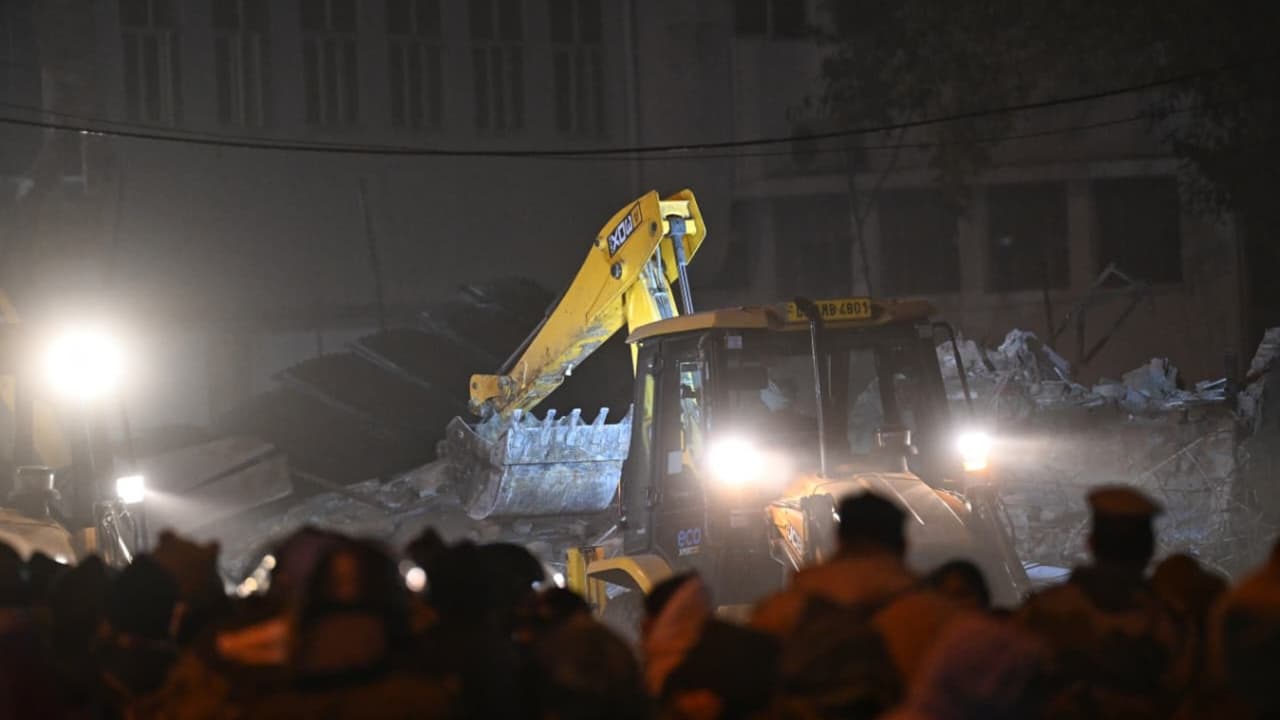
Per a court order, Delhi's Municipal Corporation demolished illegal structures near a mosque in Old Delhi's Turkman Gate area. The pre-dawn drive sparked clashes, with residents pelting stones at police, who used tear gas in response.
A pre-dawn demolition drive by the Municipal Corporation of Delhi (MCD) near the Faiz-e-Elahi Mosque in the historic Turkman Gate area of Old Delhi triggered protests and clashes on Wednesday, as authorities sought to clear unauthorised encroachments following a Delhi High Court order.
The operation, which began around 1 a.m., involved around 17 bulldozers deployed to raze illegal constructions adjacent to the mosque and graveyard near Ramlila Maidan. Despite extensive planning and heavy police deployment, residents and local stakeholders expressed strong resistance, leading to sporadic stone-pelting incidents.
According to Delhi Police, about 25–30 people hurled stones at law enforcement personnel, resulting in minor injuries to five police officers. To disperse the crowd and maintain order, police teams resorted to tear gas and measured use of force. “We had to use tear gas to control the situation,” senior officer Nidhin Valsan told PTI, adding that the situation was later “100 per cent under control”.
Related Articles

Delhi High Court order
The demolition followed a High Court order from November 2025 that gave the civic authorities and the Public Works Department three months to clear nearly 38,940 sq ft of encroachments near Turkman Gate. While the mosque structure itself was not targeted, portions of a road, footpath, banquet hall, parking area and a dispensary were among the spaces cleared.
Efforts to build confidence and prevent unrest included coordination meetings with local representatives and heightened law and order measures, dividing the area into nine zones overseen by senior police. “Minimal and measured use of force” ensured the situation did not escalate further, officials said.
The episode underscores the sensitivity of demolition drives in densely populated heritage areas, balancing judicial directives, civic governance and community sentiment in one of Delhi’s oldest neighbourhoods.