
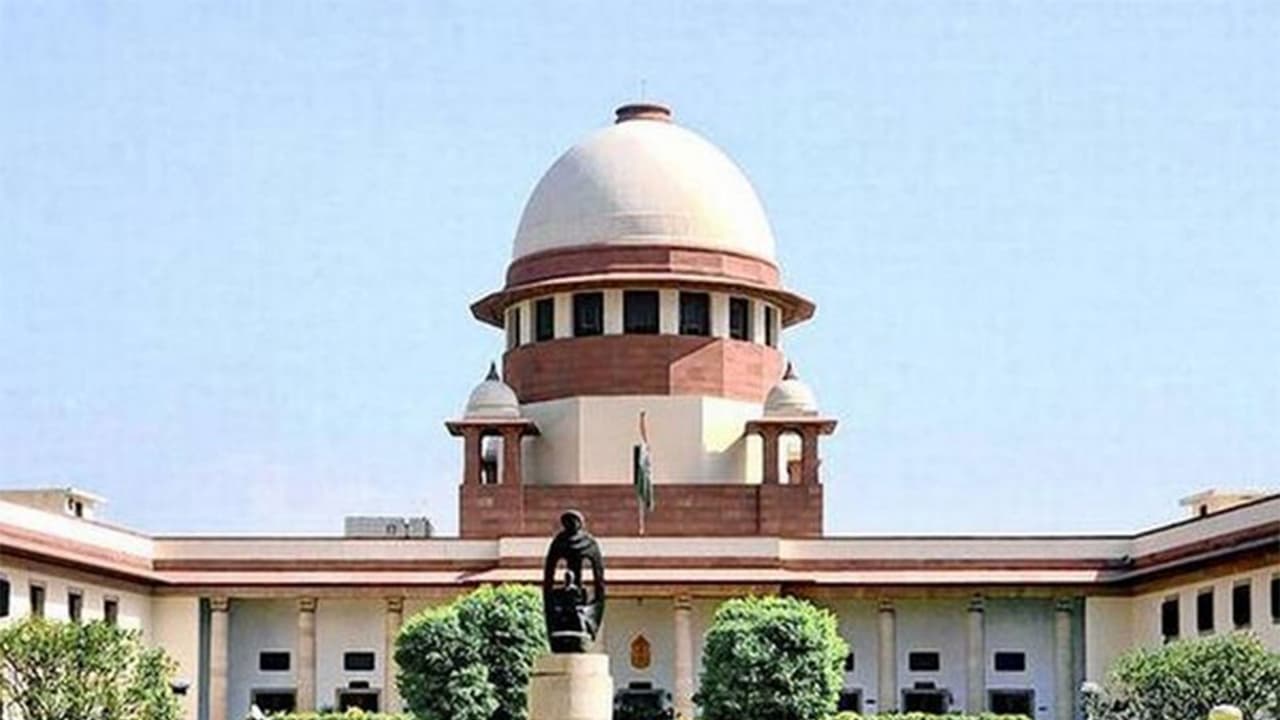
The Supreme Court declined to pass directions on AITC's plea against deploying only Central govt staff as counting supervisors in the West Bengal polls, disposing of the plea after the ECI assured that state govt employees would also be included.
The Supreme Court on Saturday declined to pass any directions on a plea filed by the All India Trinamool Congress (AITC) challenging the Calcutta High Court order, which had rejected its petition against the alleged deployment of only Central government employees as voter counting supervisors in the West Bengal assembly election.
A special Bench of Justices P.S. Narasimha and Joymalya Bagchi was constituted on a Saturday to hear the matter urgently, as vote counting is scheduled to begin on May 4, and the petitioner argued that any delay would render the plea infructuous.
After hearing both sides, the Court declined to issue any directions in the case. It recorded the submission of the ECI that its April 13 circular would be implemented in full. The Court noted that this includes the deployment of State government employees along with Central government and PSU personnel in the vote counting process, as claimed by AITC. The Bench, therefore, disposed of the matter without passing further orders, except reiterating the statement made by the ECI's counsel.
AITC's Plea and Allegations
The dispute arises from a communication dated April 13, 2026, issued by the Additional Chief Electoral Officer, West Bengal, which directed that at least one among the counting supervisor or counting assistant at each table must be a Central Government or Central PSU employee for the Assembly election vote counting.
AITC challenged this direction as arbitrary, without jurisdiction, discriminatory, and giving rise to a reasonable apprehension of bias. It argued that the Bharatiya Janata Party, being in power at the Centre, exercises administrative control over such personnel. The party also contended that the directive was applied only to West Bengal, unlike other states holding elections simultaneously, thereby violating the principle of free and fair elections.
The party further argued that the ECI already has a comprehensive framework for vote counting, including the appointment of micro-observers--usually Central/PSU employees--to ensure transparency. Despite this, the April 13 communication introduced an additional requirement without any clear material basis, relying only on vague apprehensions of irregularities.
AITC also questioned the authority of the Additional Chief Electoral Officer to issue such a directive, arguing that under Article 324 of the Constitution, only the Election Commission has the power to frame such policy decisions. It pointed out that the communication did not disclose any approval or legal basis from the Commission.
The party further submitted that the directive disproportionately increases the presence of Central Government personnel at counting tables without any balancing mechanism, thereby affecting neutrality and creating an apprehension of bias. It also raised concerns over the timing of the circular, stating that it was issued after the election announcement and just before polling began, suggesting possible mala fide intent.
Court Proceedings and Final Order
Earlier, the Calcutta High Court had dismissed AITC's writ petition, terming the apprehension of bias "impossible to believe" and directing the party to pursue an election petition after the declaration of results. The High Court had also held that the ECI is empowered to appoint counting personnel from either Central or State services.
Arguments Before the Supreme Court
During the hearing before the Supreme Court, Senior Advocate Kapil Sibal, appearing for AITC, argued that the April 13 circular was disclosed to the petitioner only on April 29. He termed the lack of disclosure improper, stating, "This is not how the process works." Sibal contended that the authorities appeared to be acting on an unfounded apprehension that irregularities would occur at every booth. He reiterated that micro-observers are already appointed, making the additional deployment of only Central/PSU supervisors unnecessary.
However, though the AITC had challenged the said Circular in its petition, during the hearing today, it only sought strict compliance of the said Circular. Sibal questioned why the petitioner party was not informed earlier about the alleged decision to deploy Central government nominees and argued that the ECI was not following its own circulars. He also raised concerns about transparency, submitting that CCTV footage is preserved for only 45 days.
The Court, however, observed that all personnel involved in vote counting -- whether from the Centre or the State -- function under the supervision of the Election Commission. It also remarked that the argument regarding proportional representation is being made by the petitioners as if a new "fallacy" had arisen. In response, the ECI submitted that the Returning Officer, who is a State government official, has overarching control over the counting process and is responsible for selecting counting staff and supervisors. Taking note of the ECI's assurance, the Court concluded the proceedings without issuing further directions. (ANI)
(Except for the headline, this story has not been edited by Asianet Newsable English staff and is published from a syndicated feed.)