
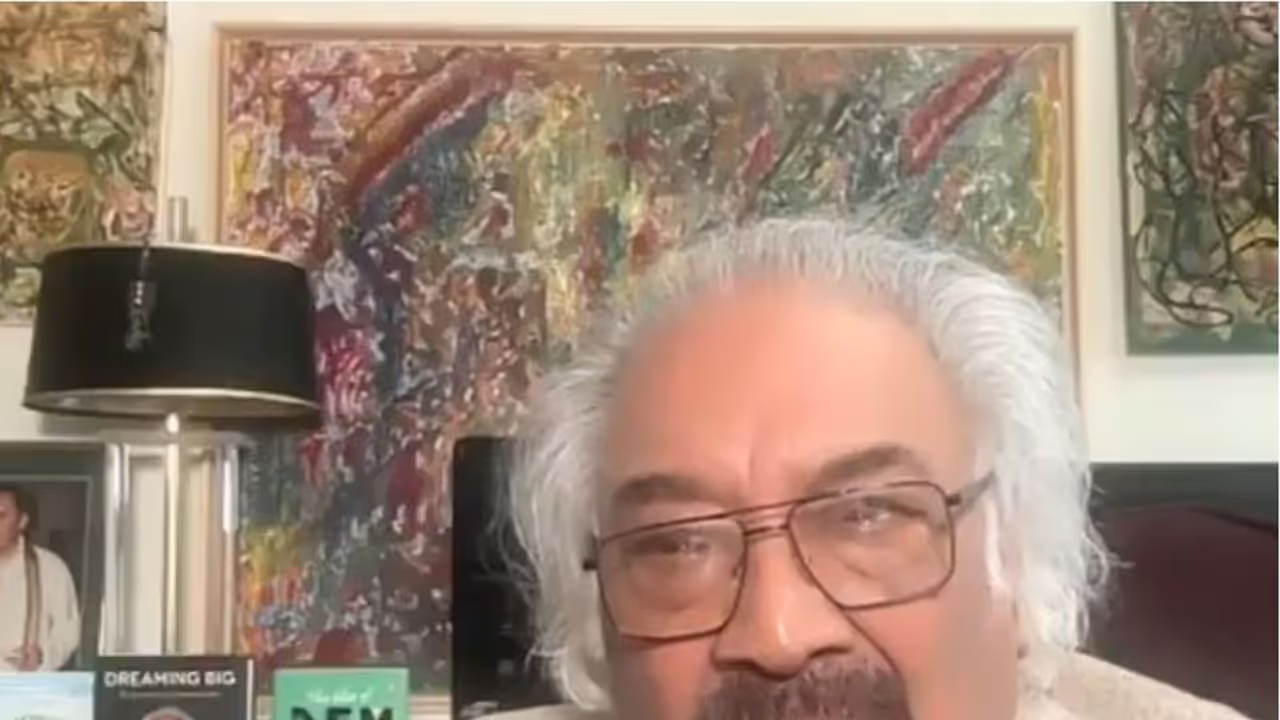
Sam Pitroda announces the Bharat Summit 2026, focusing on global democratic challenges, the impact of AI, and the need for political accountability while criticizing current governance and supporting Rahul Gandhi's call for open public debates.
Concerns Over Global Democratic Erosion
Indian Overseas Congress (IOC) Chairman Sam Pitroda raised concerns over the alleged erosion of democratic institutions across the world, claiming that electoral processes, restrictions on civil society and media manipulation have undermined the fundamental principles of democracy, while calling for inclusive dialogue and greater political accountability ahead of the Bharat Summit 2026.
Talking to ANI about the summit, Pitroda said the Bharat Summit 2026, to be held at the Hyderabad International Convention Centre (HICC), will bring together representatives from around 70 countries for discussions on the state of democracy globally and the challenges facing democratic institutions. He said, “Bharat Summit is a collaboration of various people. We all came together to have a broader conversation on the state of democracy globally. Progressive Alliance is a group of roughly 100 countries’ democratic parties. Democracy, in many ways, has been hijacked in many countries. The way it has been hijacked is through the election process. Two institutions are captured. Civil society is not allowed to operate. The media is manipulated, and the core idea of democracy is threatened because everything comes from the top and not from the bottom. Democracy has to be inclusive. Young people know this very well. The powerful and rich have come together. They have forgotten their job to take care of those at the bottom of the economic pyramid: minorities, tribals in India, OBC, and in some countries, women. ”
The Impact of AI and Need for Redesign
Pitroda said the rise of artificial intelligence would bring significant changes and require democracies to rethink their functioning. He added that the summit would discuss several issues concerning democracy, with the Leader of the Opposition delivering the valedictory address. “With the rise of AI, a lot of things are going to change. Democracy will have to be redesigned. We are at a crossroads in human history. It will discuss many issues of importance to democracy. There will be people from 70 different countries. There will be almost 600 to 700 people. The leader of the opposition will be giving a valedictory address. It is an important event,” he said.
Emphasising the need for meaningful dialogue, Pitroda said democracy should be treated as a global public good and should be based on equality, freedom of expression and mutual respect. “The message is going to be loud and clear: democracy is a larger global public good. It requires that you have meaningful discussion, dialogue and not personal attacks. Democracy requires you to treat people with equality, including women; gender equality and democracy requires freedom to speak and move. How can you have democracy when everybody is lying? Just personal attacks,” said Pitroda.
Political Criticism and Calls for Accountability
He also criticised Prime Minister Narendra Modi’s remarks about Congress leader Rahul Gandhi at an international conference, saying he expected the Prime Minister to maintain dignity and respect towards political opponents. “I was very surprised when the Prime Minister of India, at a global international conference organised by NDTV, was criticising Rahul Gandhi on a global platform. That is not my image of my Prime Minister. I want a dignified leader who has a certain level of tolerance, goodwill, and respect for others. I feel so sad, but what can you do? If I say something, they will attack me too. We have lost the kind of respect we used to have for each other, and the whole environment is very toxic. That is not good for democracy,” Pitroda said.
On the INDIA bloc rally held on November 1 and Rahul Gandhi’s challenge to Prime Minister Modi for a public debate, Pitroda questioned why such discussions could not take place in Parliament or before the public. “You should have had a discussion in parliament earlier. Why didn’t you do it before? Rahul’s challenge is saying, ‘Let’s have a public debate in front of the public.’ What is the problem? Why can’t the prime minister have a conversation?” he questioned.
Pitroda said leaders should be willing to acknowledge when they do not have an immediate answer and seek expert advice to address national issues such as air pollution in Delhi and examination paper leaks. He said, “Say, ‘I don’t have the answer for this, but we will get the experts and will solve the problem for the nation. If Delhi pollution is a national problem, we have got to deal with it. If exam leaks are a national problem, we have to deal with it’. I see very little meaningful conversation about development. Why can’t we have a big conversation in civil society on elections, on TV debates, but you will have a conversation with politicians.”
Backing Rahul Gandhi’s demand for a debate, Pitroda said the Congress leader had continued to raise issues concerning young people, OBCs, Dalits, minorities, tribals and economically weaker sections despite facing personal attacks. “Rahul Gandhi has been personally attacked with thousands of crores of investment in media. Even if you are his opposition, you have to respect that the man is standing up with pride. Two, he has the courage to speak up; he may make one or two mistakes, as all of us do. So what? But he is standing for the right cause… He is articulating the needs of the young. He is worried about OBC, Dalits, minorities, tribals, poor people. He is concerned about inequality in India and concentration of wealth,” he said.
Pitroda also raised concerns over air pollution in Delhi and examination-related issues, arguing that political parties should work together and focus on addressing present-day problems rather than shifting the discussion to the past. “Look at the air in Delhi. For the last 15 years, we have been talking about this. As soon as you say that, somebody will say, ‘But what happened in the Congress era?’ That is not the issue. The issue is what is happening today. Do not talk about the air in 1947. The environmental situation in Delhi has been pretty bad for the last maybe 15 to 20 years. Can we collectively come together and solve the problem? classic example is these exams. (ANI)
(Except for the headline, this story has not been edited by Asianetnews Editorial staff and is published from a syndicated feed.)








