
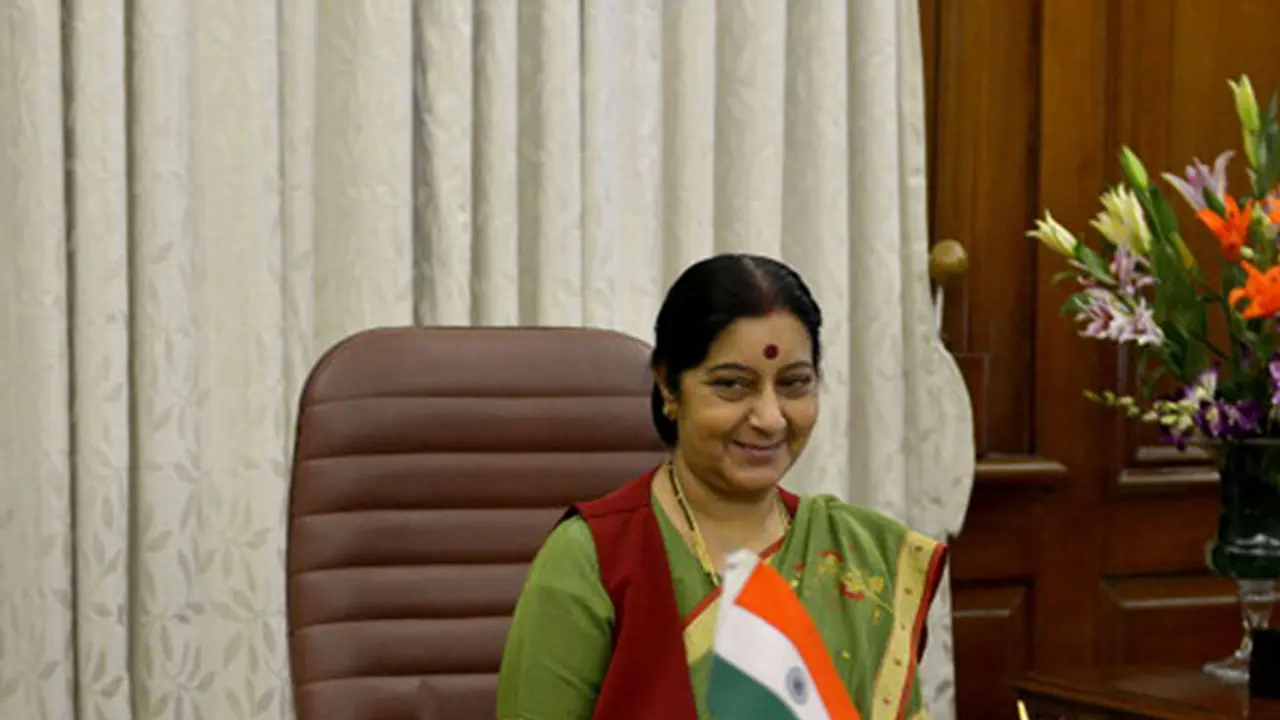
Social media has changed the face of journalism so much that individual tweets make news now. Sushma Swaraj’s recent warning to Amazon won her applause and criticism. Twitter gives politicians a credible platform to reach out to the middle class.
That social media has changed the face of journalism is something both media professionals and laypersons agree on. Not just has the nature of news dissemination changed, tweets by any celebrity or decision maker are themselves primetime news now — often for a matter of days at a time.
If External Affairs Minister Sushma Swaraj made the news recently for getting Amazon Canada to stop the sales of doormats with the Indian Flag on it, a senior bureaucrat got into a bit of a fix for continuing the tirade against Amazon. Both received bouquets and brickbats for raising the issue.
So, why do we Indians get worked up about everything a “notable” utters on Twitter? The likes of Subramanian Swamy have managed to stay relevant in Indian politics, despite having little visible public support, given his loyal Twitter following. Swamy’s “patriotic Tweeple” have faithfully consumed his tweets on corruption allegations and conspiracies centred on Sonia Gandhi. But how many of his claims have been proved in a court of law? And how many of them have significantly changed the direction of government policy?
Can we really expect politicians, in keeping with the probity of their constitutional office, to only mouth bland niceties on birthdays and other major events? While that is a good ideal to aspire to, it goes against the very nature of the beast that social media has become. Politicians such as Narendra Modi and Donald Trump can safely attribute much of their popularity with the middle class due to their use of social media.
The parallel media system allows these leaders to not only reach out to supporters but also understand the pulse of the people — something the mainstream media is increasingly becoming incapable of, as recent election results in India and the U.S. have shown. Social media helps a maverick politician like Arvind Kejriwal rally his base, even if it means calling the Prime Minister a psychopath. He would otherwise stand little chance of standing up to the wide-ranging and well-oiled propaganda machinery of the BJP and Congress.
As social media penetration increases, we can expect more bravado and outrage from our politicians in the days ahead. Unless these activities openly incite violence or hatred, we have to recognise that such expressions as a part of a changing political and social culture. So India, take a deep breath and don’t waste so much time nitpicking every comment made on Twitter.
