
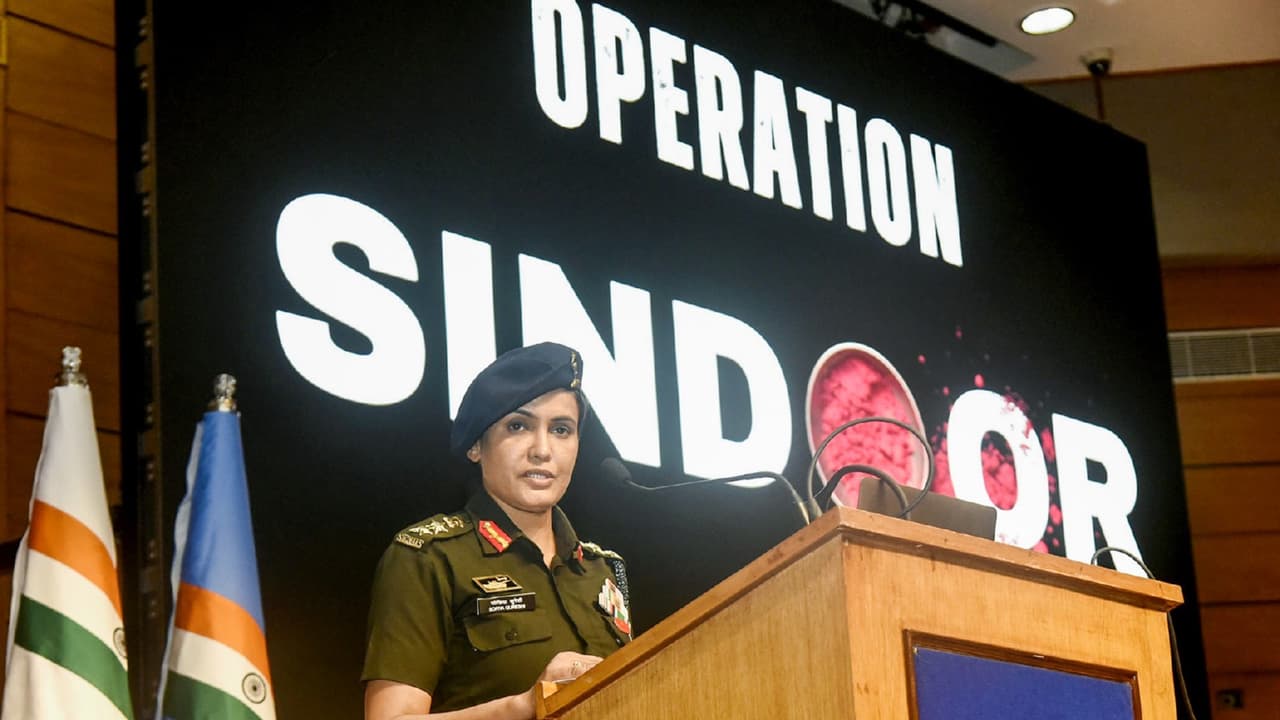
India marks the first anniversary of Operation Sindoor, a multi-domain surgical strike against Pakistan-based terror hubs. The 88-hour operation, a response to the Pahalgam attack, combined kinetic strikes with cyber and information warfare.
New Delhi [India], May 7 (ANI): India on Thursday marked the first anniversary of Operation Sindoor, a military masterclass that redefined modern conflict. Initiated in response to the tragic April 22, 2025, terror attack in Pahalgam, where 26 civilians were targeted for their faith, this operation was not merely a retaliation; it was a calibrated, multi-domain surgical strike that lasted exactly 3.5 days (88 hours) and changed the rules of engagement in South Asia.
While the kinetic strikes made the headlines, the invisible war fought in the digital trenches was arguably the operation's most critical "shield." Faced with national outrage, the Indian government opted for a response that was "measured, non-escalatory, but devastatingly precise."
A Multi-Domain Masterclass
Addressing a joint press conference on the first anniversary of one of India's most resilient anti-terror operations, former Director General of Military Operations (DGMO) Lieutenant General Rajiv Ghai reflected on the multi-domain coordination that helped India make its stance against terrorism on a global level. He emphasised India's information dominance as well as missile precision, decimating Pak terror hubs and disinformation campaign on social media.
While the Rafales were in the air, India's cyber units were executing a "Search and Destroy" mission against digital threats. "Finally, the operation placed enormous responsibility on every arm of the state. Intelligence agencies provided the accurate information that is so critical to precision targeting. Cyber and electronic warfare units maintained information dominance. The government managed the international environment as well as the internal security and public reassurance. The armed forces executed the kinetic phase with discipline, precision and minimal collateral impact. This multi-agency, multi-domain coordination will remain the template for future operations," the Lt Gen said.
Countering Digital Disinformation
Within hours of the strikes, AI-generated videos of Indian leaders and "staged" civilian casualties began flooding social media. India's Defence Cyber Agency (DCyA) and private tech partners utilised real-time detection algorithms to flag and de-rank these deepfakes before they could incite domestic unrest.
The government shifted from a "silent reactive" mode to proactive transparency. By releasing "declassified-light" satellite imagery and telemetry data through official channels within 12 hours, they preempted the "video game footage" propaganda that had plagued previous operations.
An estimated 10 million cyber intrusions and DDoS attacks were launched from across the border during those 108 hours. India's proactive blocking of 4,500+ bot-coordinated handles ensured that misinformation regarding the Pahalgam victims. He further said Operation Sindoor was a tri-service effort integrating land, air and maritime capabilities with real-time coordination and intelligence sharing.
Indigenous Capability and Tri-Service Integration
He added that nine standoff precision strikes, seven by the Indian Army and two by the Indian Air Force, were carried out with total surprise, targeting terror hubs in Pakistan-occupied Jammu and Kashmir and deep inside Pakistan. "The Operation also showcased indigenous capability. A significant percentage of the weapon systems, munitions, rockets and missiles, sensors and electronic warfare suits that were employed were developed and produced in India. The BrahMos, Akash, advanced surveillance and targeting systems, along with homegrown ammunition and spares, all played a decisive role. Indigenous equipment meant not only self-reliance but the flexibility to tailor these to our operational requirements, sustain and maintain supply chains and to respond with speed and confidence," Lt Gen Ghai said.
"Operation Sindoor was also a joint tri-service effort. It integrated land, air and maritime capabilities with shared situational awareness, common operation, intelligence pictures and real-time decision making. Standoff Precision strikes, nine in all, seven executed by the Indian army and two by the Indian Air Force, were timed to perfection, achieved total surprise and inflicted maximum damage in each established hub deep in Pakistan-occupied Jammu and Kashmir and heartland Pakistan, signalling that no sanctuary is safe," he further added.
Operational Details and Strategic Levers
The Operation began following the statement from the Ministry of Defence at 1:44 AM on the intervening night of May 6-May 7, which confirmed that the Indian Armed Forces had carried out precision strikes on nine terror-linked sites. The statement, however, had made one line clear from the beginning that no Pakistani military installations were targeted, and the action was "focused, measured and non-escalatory in nature."
Operation Sindoor also integrated non-kinetic "soft-warfare" that hit harder than any bomb. By holding the Indus Waters Treaty in abeyance, India utilised its hydraulic leverage to signal that the cost of state-sponsored terror would be economic and existential, not just military.
Perspectives from the Services
Meanwhile, Deputy Chief of Air Staff Air Marshal Awadesh Kumar Bharati said that when the first strike was carried out, it symbolised the determination and resolve of the Indian people. According to him, the action represented partial justice for the families of the victims of the Pahalgam attack and similar incidents in the past.
He emphasised that Pakistan had failed to inflict any significant damage on Indian military or civilian infrastructure. Air Marshal Bharti also dismissed all repeated victory rhetoric by Pakistan, stressing that it is "measured by hard facts." "We struck and decimated their 9 terrorist camps on 7th May. The proof is there for everybody to see. We struck 11 of their airfields. We destroyed 13 of their aircraft either on the ground or in the air, including one high-value airborne asset at a record distance of 300 kilometres plus. They (Pakistan) have not been able to inflict any major damage on our side. Neither any military infrastructure nor much of the civilian structures... Whatever they may say, remember narratives and rhetoric do not give you victory. Victory is measured by hard facts," Air Marshal Bharti said.
Addressing questions on the cessation of hostilities, the Air Marshal said India's operations were aimed at terrorist infrastructure and were completed after achieving objectives. Director General Naval Operations, Vice Admiral AN Pramod, said that Operation Sindoor demonstrated India's capability to strike terror infrastructure deep inside Pakistan and effectively "called the bluff" on Pakistan's nuclear threats.
"By striking the terror hubs in the heart of Pakistan using long-range precision weapons, India effectively called the bluff on Pakistan's nuclear blackmail," Vice Admiral Pramod said. "As the campaign unfolded, forward deployment of the Indian Navy compelled Pakistani naval and air units to enter a defensive posture largely confined to harbours or operating close to their coastline," he added.
Political Acclaim and National Pride
Minister of State for External Affairs, Pabitra Margherita, on Thursday lauded the valour of the armed forces and highlighted how the world witnessed that those who threaten India's peace and security can never escape the reach of our forces.In a post on X, he called Operation Sindoor a defining chapter in India's fight against terror, showcasing the unmatched precision, courage and decisive strength of our Armed Forces."This historic operation reflected the seamless coordination between our intelligence agencies, strategic leadership and military forces, as India struck terror infrastructure across the border with unwavering resolve in response to the heinous Pahalgam attack. The world has witnessed that those who threaten India's peace and security can never escape the reach of our forces", he said.
Earlier in the day, various political leaders paid tribute to those killed in the Pahalgam attack and recalled the valour of our armed forces during Operation Sindoor. Prime Minister Narendra Modi said Operation Sindoor reflected India's firm response against terrorism and reaffirmed the country's commitment to protecting national security. The Prime Minister praised the courage, precision and professionalism of the Indian armed forces in responding to the Pahalgam terror attack.
In a post on X, PM Modi wrote, "A year ago, our armed forces displayed unparalleled courage, precision and resolve during Operation Sindoor. They gave a fitting response to those who dared to attack innocent Indians at Pahalgam. The entire nation salutes our forces for their valour. Operation Sindoor reflected India's firm response against terrorism and an unwavering commitment to safeguarding national security."
President Droupadi Murmu on Thursday praised the armed forces for their strong action against terrorism and their role in safeguarding national security. She said Operation Sindoor stands as a strong example of India's resolve against terrorism and those threatening the country's sovereignty and citizens. In a post on X, the official account of President Murmu shared, "Operation Sindoor stands as a defining testament to India's unwavering resolve against terrorism and all forces that threaten our sovereignty and the safety of our citizens. The extraordinary success of this Mission reflects the unmatched courage and determination of our Armed Forces."
Vice President C P Radhakrishnan said that Operation Sindoor marked a defining moment when India responded firmly to terror forces and terror-sponsoring states attempting to disturb the country's peace, unity and sovereignty. The Vice President praised the courage and valour of the armed forces and reiterated India's commitment to combating terrorism.In a post on X, the official account of the Vice President posted, "The unwavering courage and valour of our Armed Forces ensured that terror networks were effectively targeted and dismantled. Their sacrifice and commitment remain a source of pride for every citizen."
Meanwhile, Defence Minister Rajnath Singh on Thursday participated in the release of a documentary on Operation Sindoor at the Headquarters of South Western Command in Jaipur. The Defence Minister also attended a briefing during the Joint Commanders' Conference at the headquarters. CDS General Anil Chauhan, Army Chief General Upendra Dwivedi, Navy Chief Admiral Dinesh K Tripathi, and Air Force Chief Air Chief Marshal Amar Preet Singh also graced the event.
Union Home Minister Amit Shah on Thursday hailed Operation Sindoor as an "epochal mission" that demonstrated India's military strength and resolve, saying the operation would continue to send a strong message to enemies targeting the country. In a post on X marking one year of the operation, Shah said Operation Sindoor reflected the combined strength of India's armed forces, intelligence agencies and political leadership.
"#OperationSindoor stands as an epochal mission of India that will always remind our enemies of the infallible striking power of our armed forces. History will remember it as the day of the precise striking power of our armed forces, meticulous intelligence of our agencies, and resolute political will rising together as one to destroy each and every address of terror across the border that dared to cast an evil shadow on our citizens at Pahalgam. This day will continue to bring the dreadful message to our enemies that no matter where they hide, they cannot escape. They are always within our sight and the fierce wrath of our firepower. On this day, I salute the unparalleled valour of our forces," Shah stated.
Additionally, Minister of State for External Affairs, Pabitra Margherita, lauded the valour of the armed forces and highlighted how the world witnessed that those who threaten India's peace and security can never escape the reach of our forces. In a post on X, he called Operation Sindoor a defining chapter in India's fight against terror, showcasing the unmatched precision, courage and decisive strength of our Armed Forces."This historic operation reflected the seamless coordination between our intelligence agencies, strategic leadership and military forces, as India struck terror infrastructure across the border with unwavering resolve in response to the heinous Pahalgam attack. The world has witnessed that those who threaten India's peace and security can never escape the reach of our forces", he said. MoS Margherita further said, "I salute the extraordinary valour and dedication of our Armed Forces. I also urge everyone to update their display pictures across social media with the image shared below, as a tribute to our brave soldiers and in honour of #OperationSindoor."
Operation Summary and Continued Stance
In Operation Sindoor, launched on May 7, 2025, India successfully destroyed nine major terror launchpads in Pakistan and Pakistan-occupied Jammu and Kashmir (PoJK), targeting Lashkar-e-Taiba, Jaish-e-Mohammed, and Hizbul Mujahideen facilities. Indian armed forces killed over 100 terrorists in action. Pakistan responded with drone attacks and shelling, which led to a four-day conflict between the two neighbouring countries. India showed formidable defence and conducted retaliatory strikes, destroying Radar installations in Lahore and Radar facilities near Gurjanwala. On May 10, a cessation of hostilities was declared after Pakistan's DGMO contacted his Indian counterpart, Lieutenant General Rajiv Ghai. However, Operation Sindoor has not ended. The Government of India has maintained its stance that only the "88-hour" phase has concluded. Operation Sindoor shall live as long as the terror breathes. (ANI)
(Except for the headline, this story has not been edited by Asianet Newsable English staff and is published from a syndicated feed.)