
Health authorities in Odisha's Khordha district are investigating a jaundice outbreak at Jawahar Navodaya Vidyalaya, where 54 students tested positive. Officials have stepped up preventive measures while the health minister says the situation is stabilising.
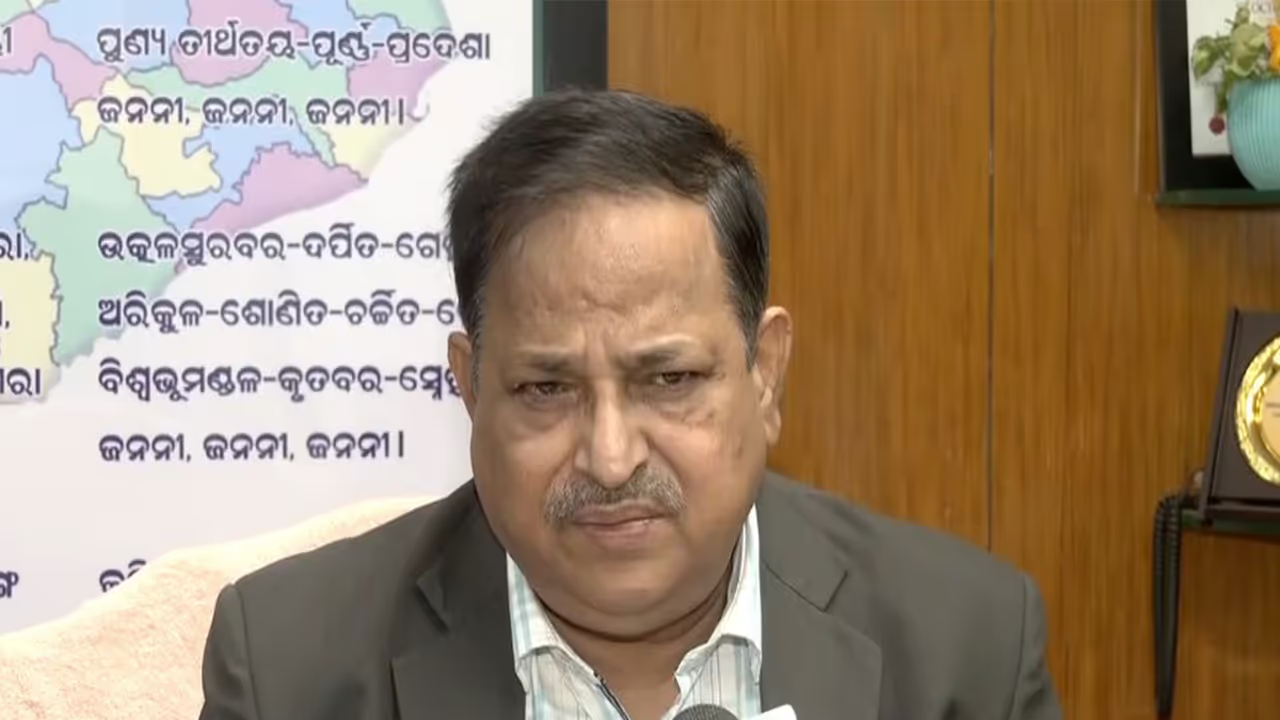
Amid rising jaundice infections among students of Jawahar Navodaya Vidyalaya (JNV) in Khordha district, Odisha's Public Health Director Dr. Nilakantha Mishra, on Wednesday, said health authorities are actively investigating the situation and have stepped up preventive measures to contain the spread. "Our teams are visiting schools and doing inspections. We are testing and finding out how it spread in school, and preventive measures are being taken," Dr Mishra told ANI on Wednesday, as concerns grew following multiple positive cases reported from the residential school.
State Health Minister Mukesh Mahaling on Monday assured the public that the health crisis at a residential school in Khurda is stabilising, with dozens of affected students currently recovering after a sudden rise in jaundice cases.
Central and District Teams Investigate Source
Following reports of a jaundice outbreak at Jawahar Navodaya Vidyalaya in Gurujang, the central team arrived to identify the source of infection and ensure student safety on campus.
Health authorities on Tuesday inspected and reviewed the suspected jaundice outbreak at the Jawahar Navodaya Vidyalaya (JNV) located in Gurujanga village of Khordha district, after a rise in cases among students raised concerns.
New Food Safety Guidelines Issued
Senior officials, including Chief District Medical Officer (CDMO) Sanjay Roy and District Public Health Officer Dr Ranjan Mitra, visited the campus to assess the situation and oversee preventive measures after 54 students' blood samples tested positive for jaundice as of January 6, 2026. While the kitchen and overall cleanliness were found satisfactory, officials issued additional guidelines for food handlers. "We have given them some guidelines to follow, such as requiring that food handlers and cooks wear separate slippers. They will not wear their house slippers inside. They will wear gloves, caps, masks, and aprons while cooking and serving food," Mitra said, adding that the source of infection is still under investigation and could be linked to water, food, or both. (ANI)
(Except for the headline, this story has not been edited by Asianet Newsable English staff and is published from a syndicated feed.)