
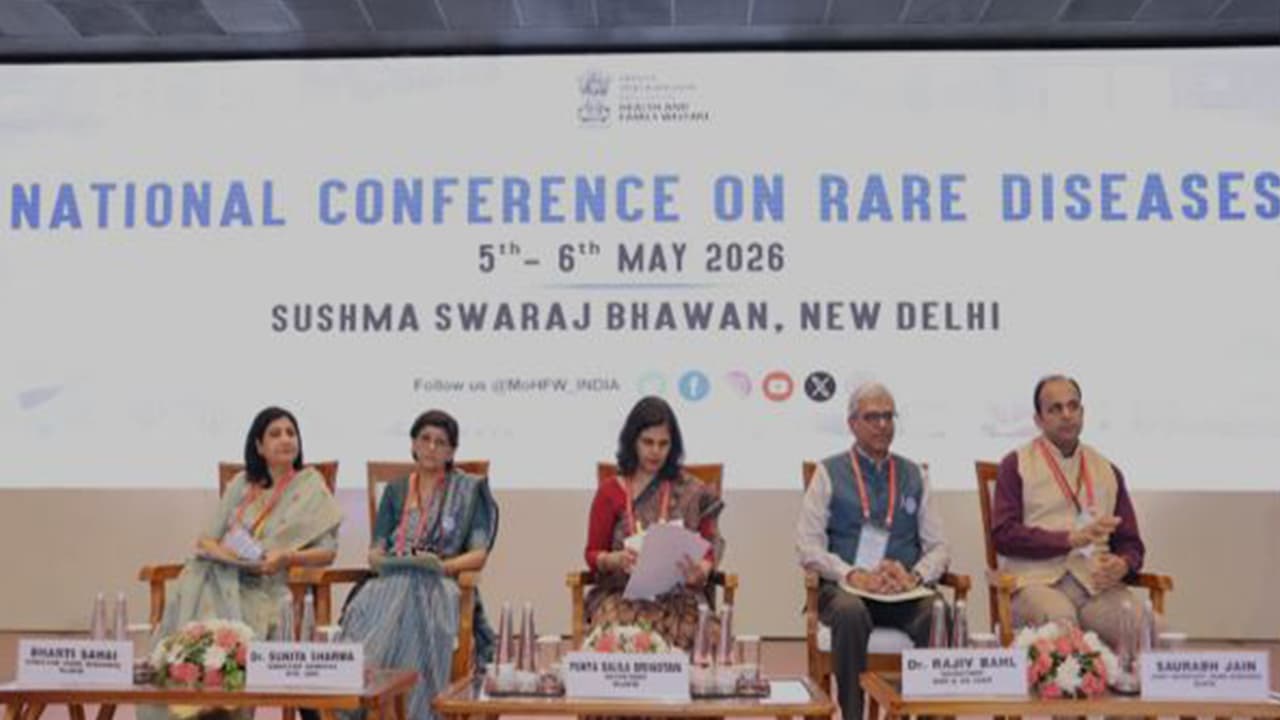
The Union Health Ministry held a two-day National Conference on Rare Diseases, highlighting increased financial aid to ₹50 lakh, customs duty exemptions, and a push for early diagnosis, genetic testing, and advanced research like gene therapy.
The Union Ministry of Health and Family Welfare inaugurated a two-day National Conference on Rare Diseases in New Delhi on May 5-6, marking a significant step toward strengthening India's response to rare diseases. The conference aims to bring together key stakeholders to discuss challenges, promote innovation, and enhance strategies for managing rare conditions across the country.
Government Initiatives and Policy Framework
Addressing the gathering, Union Health Secretary Punya Salila Srivastava said the conference seeks to understand stakeholder concerns and generate new ideas to improve rare disease care. She noted that rare diseases were first recognised in the National Health Policy, 2017, and later institutionalised through the National Policy for Rare Diseases, 2021, placing India among countries with a structured framework in this domain.
Enhanced Financial Support
She highlighted that financial assistance under the policy has been increased to ₹50 lakh, improving access to treatment. To reduce the burden of high-cost therapies, the government has also exempted certain life-saving drugs from basic customs duty and invited suggestions for expanding this list.
Awareness and Early Diagnosis
She further stressed the importance of awareness campaigns and capacity-building workshops across states, urging participants to identify more districts for expansion.
Emphasising early diagnosis and prevention, Srivastava underlined the role of genetic testing and informed clinical management. She said initiatives like the UMMID programme and NIDAN Kendras are strengthening genetic counselling services, with around 1,800 patients already receiving treatment support. She also acknowledged collaboration with regulatory bodies and other ministries to improve access to therapies.
Advancements in Research and Treatment
Dr. Rajiv Bahl, Secretary, Department of Health Research and Director General of ICMR, highlighted progress in rare disease research, including the use of repurposed drugs and advancements in gene therapy. He said India is moving closer to developing advanced treatments, citing emerging technologies like CAR-T cell therapy.
Call for Stronger Health Systems
Director General of Health Services Dr. Sunita Sharma also emphasised the need for stronger health systems, early diagnosis, and integrated care networks to ensure timely treatment and continuity of care for rare disease patients. (ANI)
(Except for the headline, this story has not been edited by Asianet Newsable English staff and is published from a syndicated feed.)