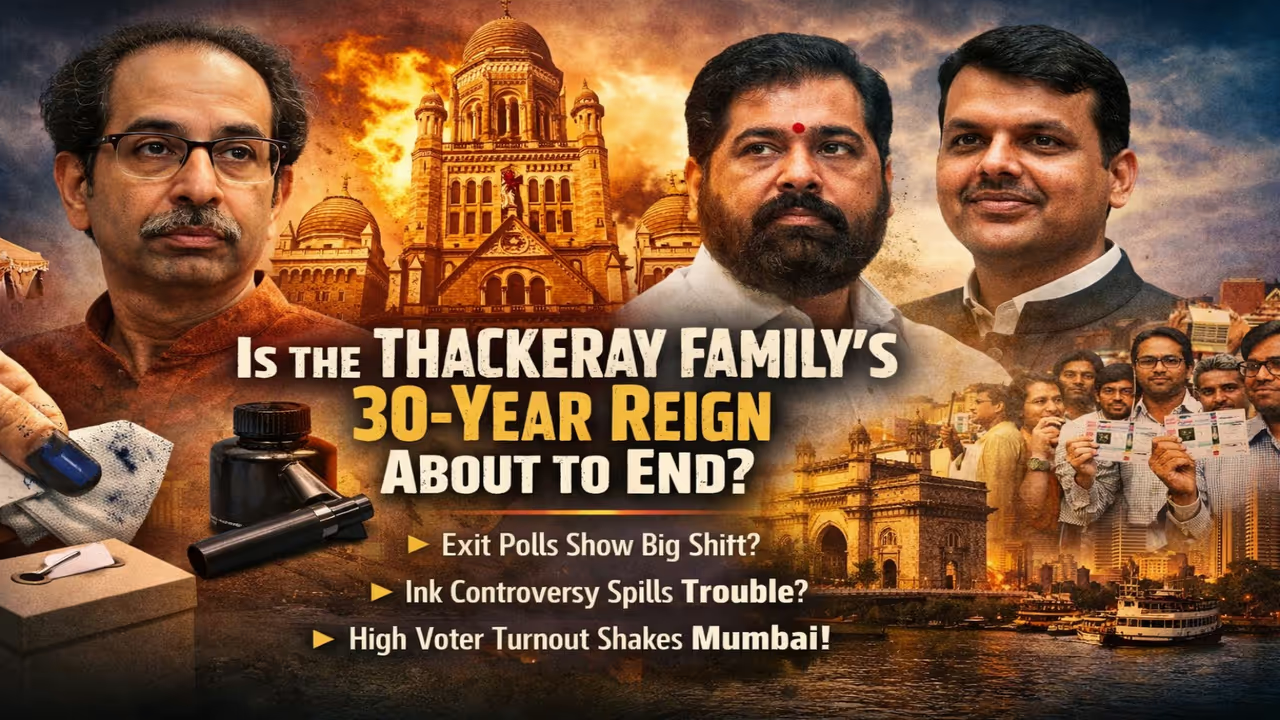
Exit polls for Mumbai’s recent Brihanmumbai Municipal Corporation (BMC) elections indicate a historic political shift. The BJP-led Mahayuti alliance is projected to win a commanding majority, with forecasts of 131-151 seats in the 227-seat body.
Mumbai’s highly anticipated 2026 Brihanmumbai Municipal Corporation (BMC) elections appear poised to bring about a historic shift in the political landscape of the country’s largest civic body, with multiple exit polls indicating a strong lead for the BJP-led Mahayuti alliance over the Thackeray family’s political coalition.
The BMC elections, held on January 15 after a nine-year hiatus, saw a notable voter turnout that defied Mumbai’s traditional reputation for electoral apathy. Early estimates suggested a turnout in the range of 54–56%, closely rivalling the last civic polls in 2017 despite administrative issues such as missing voter names and abrupt changes to polling booths.
According to aggregated exit poll data from reputable agencies including Axis My India, JVC, and others, the Mahayuti alliance — comprising the Bharatiya Janata Party (BJP), the Eknath Shinde-led Shiv Sena faction, and allied parties — is forecast to secure a commanding majority in the 227-seat body. Projections show the Mahayuti potentially winning between 131 and 151 seats, with some polls estimating as many as 138 seats, well above the majority mark of 114 required to control the civic body. The Thackeray-led bloc, including the reunited factions of Uddhav and Raj Thackeray, is expected to trail significantly.
Related Articles

This exit poll trend, if confirmed by actual results when votes are officially counted on January 16, would mark the end of a political era. The Thackeray family — whose political influence in Mumbai dates back over three decades and whose civic governance was seen as deeply entrenched — now risks losing control of the BMC to the Mahayuti alliance. This shift underscores a broader political realignment in Maharashtra’s urban electorate.
The election day was not without controversy. A high-profile “ink row” emerged as a major talking point, with opposition leaders alleging that the washable ink used to mark voters could be easily removed, potentially undermining the integrity of the poll process. The State Election Commission dismissed these claims, but the controversy added fuel to pre-existing tensions and may have contributed to increased public engagement at the polls.
The BJP and its allies have campaigned vigorously on themes of governance, development, and stability, while the Thackeray campaign focused on protecting regional identity and asserting local interests. Despite the Thackerays’ efforts to rally voters around Marathi identity politics and to reclaim their legacy by presenting a united front after years of internal schisms, exit polls suggest this strategy failed to translate into broad electoral support.
As Mumbai awaits the official counting results, the political implications of a potential Mahayuti takeover of the BMC could be far-reaching. Control of the municipal corporation — which manages a budget exceeding Rs 74,000 crore and delivers essential services to over 1.2 crore residents — has long been a symbol and instrument of political strength in Maharashtra’s most influential metropolis.