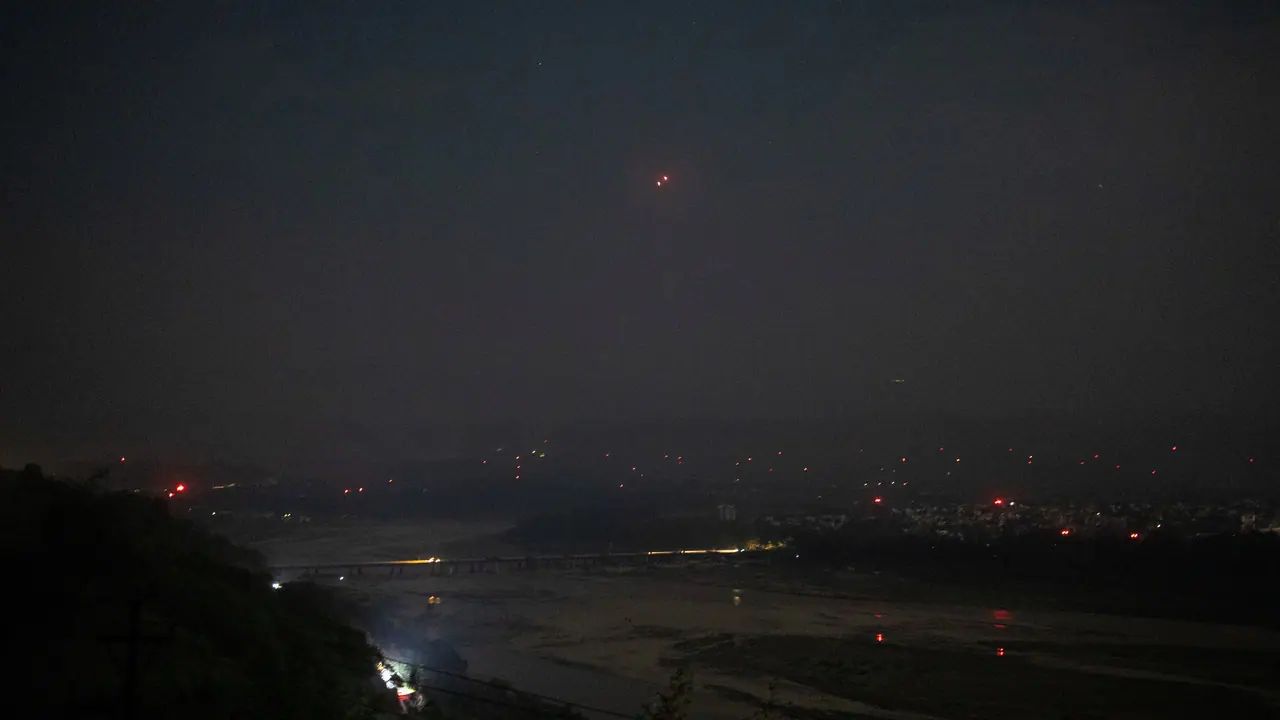
India successfully repelled a fresh wave of drone attacks from Pakistan on Friday night, targeting 26 locations across the northern and western regions of the country, including Srinagar airport.
India successfully thwarted fresh drone attacks launched by Pakistan on the night of May 9, targeting 26 locations across the country, including strategic sites such as Srinagar airport. The Indian government accused Pakistan of using civilian aircraft as a "shield" to carry out aerial strikes, putting civilian flights at risk during the ongoing tensions between the two nations.
The Pakistani drone strikes targeted various locations stretching from Baramulla in the north to Bhuj in the south, spanning both the International Border and the Line of Control (LoC). The drones, which were launched from multiple sites in Pakistan, were aimed at military installations but were effectively intercepted by Indian forces.
"Drone strikes in locations that included airports and airbases have been successfully thwarted," said military officials. Locations affected included Baramulla, Srinagar, Awantipora, Nagrota, Jammu, Ferozpur, Pathankot, Fazilka, Jaisalmer, and Bhuj, among others. Regrettably, one armed drone targeted a civilian area in Ferozpur, injuring members of a local family.
Related Articles

“The injured have been provided medical assistance and the area has been sanitised by security forces,” officials confirmed.
Drone attacks targeting Srinagar airport and the Awantipora airbase were successfully thwarted late on Friday, while explosions were reported in Jammu and parts of south Kashmir, according to defence officials in Srinagar.
For the second consecutive night, residents in several border districts endured a tense and fearful atmosphere as sirens rang out due to the detection of aerial threats from Pakistan, which were swiftly countered by the armed forces.
From Srinagar and Jammu to districts across Punjab and parts of Rajasthan, including Jaisalmer and Jodhpur, a wide swath of border areas was plunged into darkness. Public announcements urged residents to turn off their lights as a precautionary measure.
Additionally, heavy cross-border shelling was ongoing along the International Border in the Suchetgarh and Ramgarh sectors of Jammu and Samba districts.
India Condemns Pakistan's Attack on Places of Worship
Earlier today, Foreign Secretary Vikram Misri condemned Pakistan’s attack on places of worship, calling its attempts to falsely blame the Indian armed forces "preposterous" and a clear reflection of Islamabad's malicious intentions to deceive and mislead the international community.
Referring to Pakistan's assault on a gurdwara in Amritsar and its subsequent efforts to implicate the Indian military, Misri described Pakistan’s belief that India would attack its own cities as a "deranged fantasy" that only the Pakistani state could concoct.
At a media briefing, Foreign Secretary Vikram Misri condemned Pakistan’s provocative and escalatory actions, including attempts to target Indian cities and civilian infrastructure with drones the previous night.
Col. Sofiya Qureshi of the Army and Wing Commander Vyomika Singh of the Indian Air Force (IAF) reported that most of the drones were successfully intercepted using both kinetic and non-kinetic methods.
Both military officials noted that Pakistan had used its civilian airliners as a "shield" by not closing its civil airspace during its attempts to launch drone and missile attacks on Indian installations on May 7, fully aware that these strikes would provoke a swift response from India.
India’s Retaliatory Strikes Spark Tensions
The escalation follows Indian precision strikes under Operation Sindoor on Wednesday targeting nine terror launchpads in Pakistan and Pakistan-occupied Kashmir. These retaliatory strikes came after a terrorist attack in Pahalgam on April 22 that claimed 26 lives, mostly tourists.