
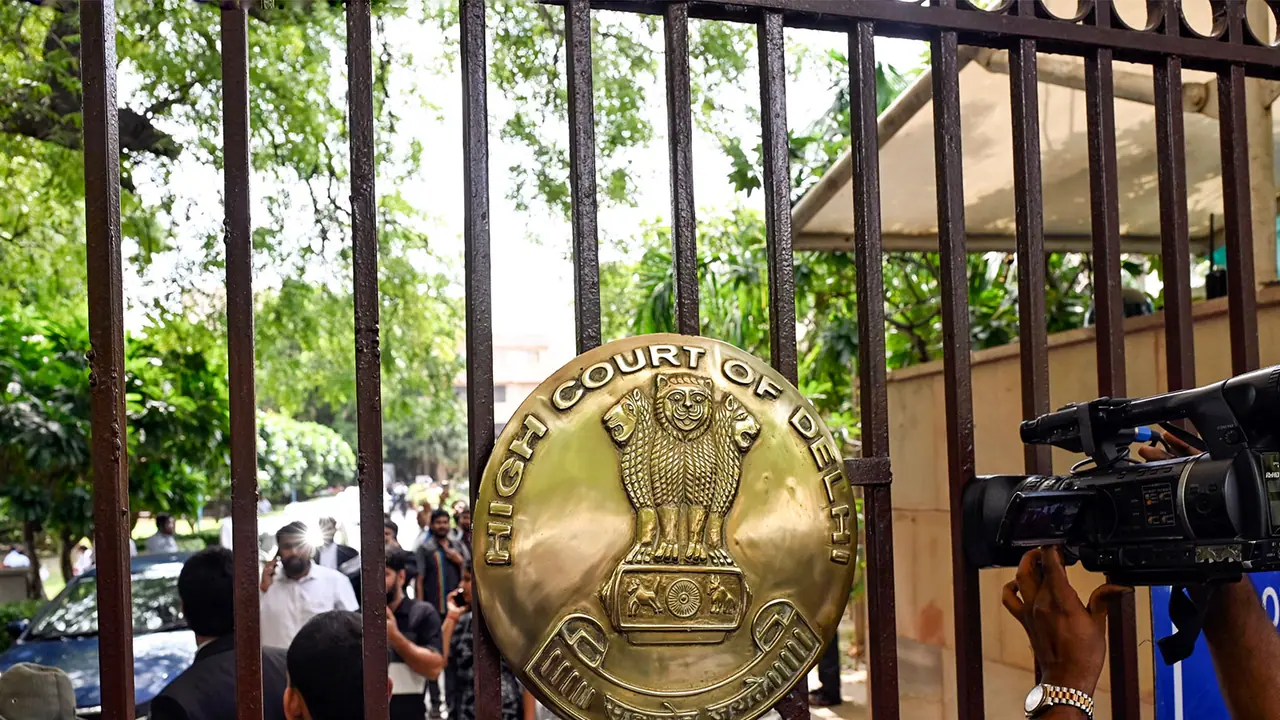
The Delhi High Court has ruled that leave encashment is a 'retiral due' and its delayed payment can attract interest. The court dismissed the Union of India's challenge to a Central Administrative Tribunal order mandating interest payment.
The Delhi High Court on Thursday held that leave encashment falls within the ambit of “retiral dues” and that delayed payment of such dues can attract interest, while dismissing a writ petition filed by the Union of India challenging an order of the Central Administrative Tribunal (CAT).
A Division Bench of Justice C Hari Shankar and Justice Nivedita Anil Sharma dismissed the Centre’s challenge to the CAT order, observing that there was no reason to interfere with the Tribunal’s direction requiring compliance with its earlier order concerning payment of interest on delayed retiral dues.
Background of the Dispute
The case arose from a dispute concerning the retiral benefits of the respondent, who had superannuated on November 30, 2021. The CAT had earlier directed the authorities to re-fix his pay and revise his pension and other retiral dues, with interest at GPF rates, where payable, for the period of delay.
Tribunal's Stance on Interest
The respondent subsequently approached the Tribunal alleging non-compliance, particularly regarding interest on leave encashment. The authorities had contended before the Tribunal that there was no specific provision under the applicable rules permitting payment of interest on leave encashment. Rejecting the contention, the Tribunal had held that where there is an inordinate delay in releasing retiral dues, an employee is entitled to compensation by way of interest and that such interest is compensatory in nature. It also relied on an earlier Delhi High Court judgment in Union of India v. Vijay Kumar Gupta, decided on August 6, 2025, concerning interest on delayed leave encashment. The Tribunal had thereafter granted the authorities a “last and final opportunity” to comply with its directions and file a compliance affidavit, warning of costs in case of non-compliance.
High Court Upholds Tribunal's Order
Before the High Court, the Centre challenged the Tribunal’s order. The High Court noted that the authorities had not challenged either the Tribunal’s original order dated October 4, 2023, or its subsequent order dated April 20, 2026, clarifying that leave encashment was covered by the expression “retiral dues”.
The Bench observed that “there can be no dispute” that leave encashment falls within the ambit of retiral dues, noting that such payment becomes due to an employee at the time of retirement for unavailed leave standing to the employee’s credit.
The High Court further noted that the Tribunal had specifically put to the authorities whether leave encashment formed part of retiral dues and observed that the impugned order did not indicate that any satisfactory answer had been provided to that query. “The answer, to our mind, has necessarily to be in the affirmative,” the Bench said.
The High Court also took note of the fact that the Tribunal had not proceeded against the authorities for contempt but had only directed them to comply with its earlier order.
The matter was scheduled before the Tribunal on September 25 for reporting compliance. The Bench observed that the writ petition had been listed before it a day ahead of the Tribunal proceedings and noted the Centre’s submission that the petition had been filed on September 2, about a month after the Tribunal’s order, and when the period granted for reporting compliance was nearing expiry.
Finding no reason to interfere with the Tribunal’s order, the High Court dismissed the Union of India’s writ petition. (ANI)
(Except for the headline, this story has not been edited by Asianet Newsable English staff and is published from a syndicated feed.)