
Dr. Lakshmi Venu has formally sought a partition of TVS family assets, citing equal rights as a coparcener. Supported by her mother, she alleges assets were unfairly concentrated with her brother, seeking a fair and lawful family distribution.
Lakshmi Venu Seeks Partition of TVS Family Assets for Equal Shares
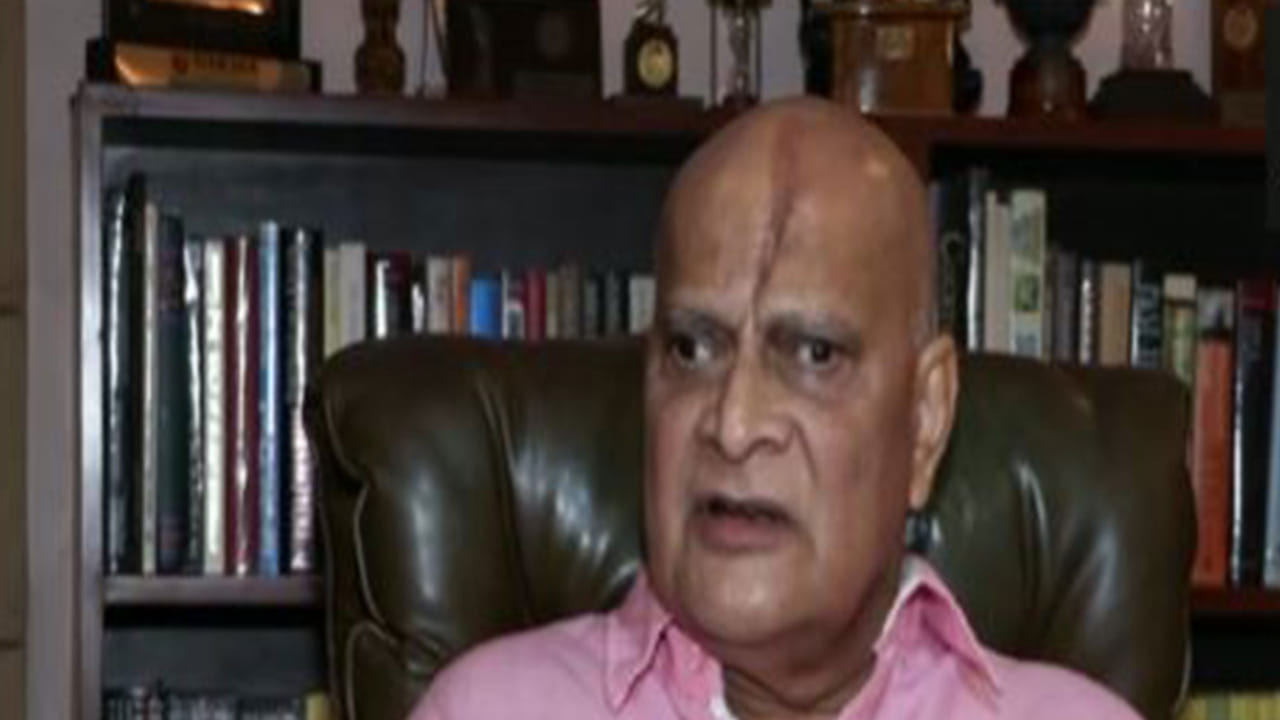
New Delhi [India], November 17 (ANI): The dispute over the division of assets within the TVS family’s Venu Srinivasan branch has intensified, with Senior Advocate C Aryama Sundaram, representing Dr Lakshmi Venu, alleging that her client was left with no option but to seek a formal partition after discovering that beneficial interests in family shares were reflected in her brother’s name.
In an interview with ANI, Sundaram said there had been no actual settlement or partition of the assets within the immediate family, despite several efforts to arrive at an amicable arrangement. He maintained that the assets, built by the TVS family’s forefathers over several generations, should be divided equally among the entitled family members.
“There was no question of not agreeing with the settlement. There was no settlement. All these TVS family assets came from the TVS family over several generations. As per law and fairness, all members of the family should get equal shares,” Sundaram said.
Explaining the circumstances behind Lakshmi Venu’s demand, he said she had always expected to receive an equal share in the family assets in keeping with the traditions of a Hindu joint family. However, she subsequently came across statutory disclosures indicating that beneficial interests in shares were reflected in her brother’s name rather than hers, he said.
“Without any partition or actual separation, what should have been her share was shown as belonging to her brother. She made inquiries and sought a fair and equitable division, which never happened. Despite all efforts, particularly those made by her mother, Mallika Srinivasan, nothing really transpired. She had no alternative but to seek a formal partition under law,” the senior advocate said.
Emphasising the statutory rights of daughters, Sundaram said the Hindu Succession Act, as amended in 2005, recognises daughters as coparceners and gives them the same rights as sons in ancestral and joint family property. He said the Supreme Court had repeatedly upheld the principle that a daughter’s right in coparcenary property arises by birth and is not dependent on her father’s death or any subsequent family arrangement.
“The law provides that daughters are also coparceners and are entitled to equal shares in joint family property and ancestral property. The Supreme Court has upheld this law and stated that a daughter’s right arises by birth. It is not something she acquires later; rather, the right is vested in her from the moment of her birth,” he said.
Stressing the need to end gender-based distinctions in inheritance, Sundaram said the law did not permit daughters to be treated differently from sons while dividing ancestral property. “It is particularly important in today’s society that we do not differentiate between girls and boys. Any kind of division that undermines equality between men and women is unwarranted. I believe that is the essence of this entire matter,” he added.
The senior advocate, however, expressed hope that the dispute would be resolved within the family and would not result in prolonged litigation. Describing the TVS family as an old and respected industrial family, he said Lakshmi Venu continued to hope for an amicable settlement despite the decision to seek formal partition.
“It is very unfortunate, and we all hope that there will be a family settlement. After all, this is a very old and respected family. Mr Venu Srinivasan is a highly respected industrialist. The entire family is well respected, and we sincerely hope that this matter will not have to go to court or lead to litigation,” Sundaram said.
He also referred to the position taken by Lakshmi Venu’s mother, Mallika Srinivasan, saying she wanted both her children to receive equal treatment and their rightful shares in the family assets. According to Sundaram, Mallika had made several efforts to ensure equality between her son and daughter and remained supportive of an equitable resolution.
“The mother is supporting equality and wants that equality to be maintained between both her children. After all, she is the mother of both the son and the daughter. She has an equal interest in both and wants equality to be maintained between them, rather than allowing the daughter to be sidelined,” he said.
Lakshmi Venu has formally sought partition of the joint family assets belonging to the Venu Srinivasan branch of the TVS family through a notice addressed to her father, Venu Srinivasan, Chairman Emeritus of TVS Motor Company. In the notice, she invoked the Hindu Succession Act, 1956, as amended in 2005, asserting her right to an equal share in the joint family assets and urging her father, as the head of the family, to facilitate a fair and lawful division.
The assets in question include family interests held through the VS Trust and other holding entities, covering businesses and investments such as TVS Holdings, TVS Motor Company, TVS Credit Services and Sundaram-Clayton. Lakshmi has maintained that the 2020 arrangement among the larger TVS family did not result in a partition of assets within the Venu Srinivasan branch. She has also contended that the allocation of management responsibilities or control over businesses cannot be equated with an actual division of ownership. She has alleged that beneficial interests in the family assets have been concentrated in favour of her brother, Sudarshan Venu, to the exclusion of her claimed legal entitlement. Her mother, Mallika Srinivasan, has publicly backed her demand for an equitable division, stating that a son and daughter are equal in every respect and that Lakshmi has a legitimate share in the family assets. Mallika has also expressed disappointment over the lack of progress towards an amicable settlement and called for transparent dialogue, equity and clarity to resolve the dispute. Lakshmi has maintained that she prefers an amicable resolution but has sought formal partition to secure her claimed share in the family assets. (ANI)








