
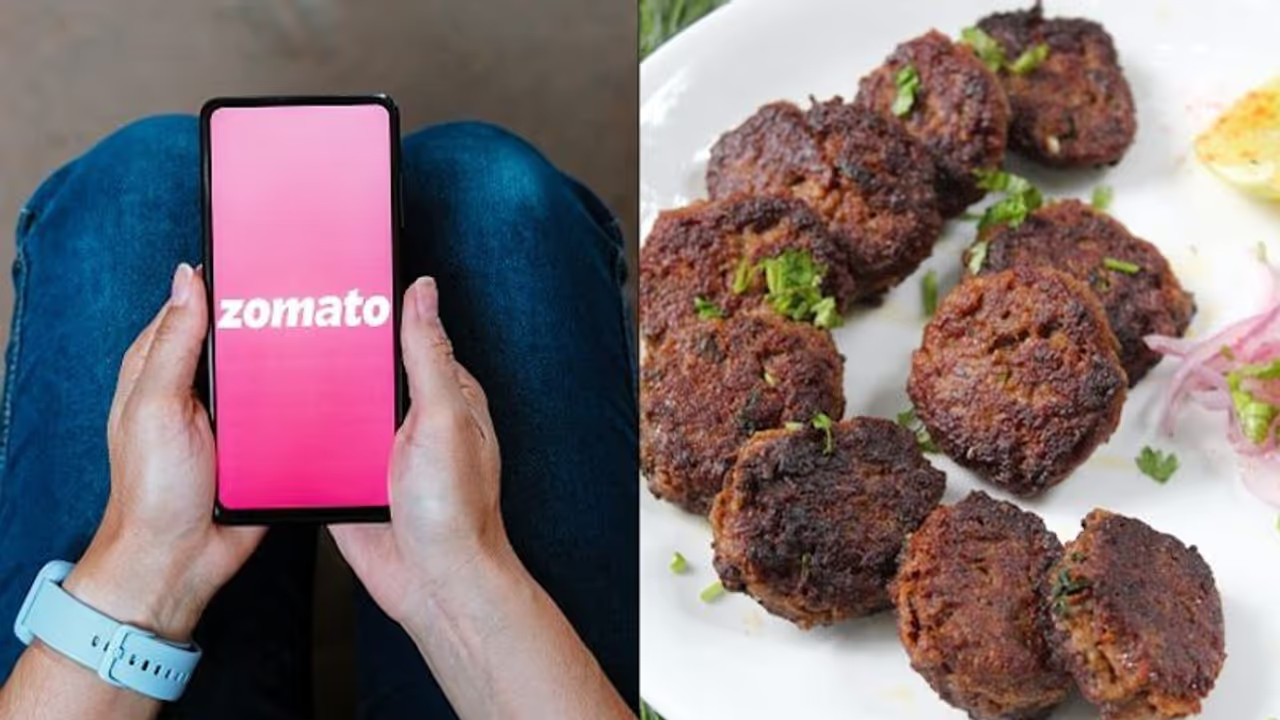
Zomato faces legal scrutiny over alleged deceptive practices as a user files a case for delivering food from Lucknow to Gurgaon in under 30 minutes, sparking concerns about the credibility of its swift delivery promises and the broader ethical landscape of the food delivery industry.
Zomato, the ubiquitous food delivery service, renowned for its rapid delivery times and diverse culinary offerings, finds itself embroiled in a legal battle over its lightning-fast service. A recent incident involving a user in Gurgaon has brought the company under scrutiny for delivering food from a shop in Lucknow, approximately 500 km away, in less than 30 minutes.
The protagonist of this legal saga, Sourav Mall, a 24-year-old resident of Gurgaon, has taken the bold step of filing a case in Delhi's Saket court, alleging "fraudulent and unfair practice, meant to misrepresent and deceive the class of consumers who are purchasing food products from Zomato". Mall's contention revolves around what he perceives as a deceptive promise of swift delivery under Zomato's Legends sub-service, which allows users to order dishes from renowned eateries located in different cities.
In his petition, Mall detailed an experience where he ordered four dishes using the Legends service on October 14, 2023. The order comprised a variety of dishes: a chicken kabab roll sourced from Jama Masjid, a triple chocolate cheesecake from Kailash Colony, a vegetarian sandwich from Jangpura, and a galauti kebab all the way from Lucknow. Despite the considerable distance, Zomato assured Mall of prompt delivery, with estimated arrival times ranging from 20 to 45 minutes.
"It is, therefore, inexplicable as to how Zomato is able to manage delivery from iconic restaurants of Delhi to delivery locations in Gurgaon/Noida within 30 minutes, that too allegedly hot food. Such representation to users, customers, and/or patrons of Zomato, are indeed intended to deceive the public," he said in his petition.
However, much to Mall's bewilderment, the food arrived within a mere 15 minutes, packaged in Zomato's branding rather than that of the partner restaurant. This discrepancy, coupled with Zomato's alleged misrepresentation of delivery times and the origin of the food, prompted Mall to question the integrity of Zomato's service standards.
Central to Mall's argument is the assertion that Zomato's portrayal of delivering hot, fresh food from iconic restaurants to distant locations within remarkably short timeframes is inherently misleading. He contends that such practices not only deceive consumers but also undermine the credibility of the food delivery industry as a whole.
"This conduct is fraudulent and in breach of service standards and form of propagation by Zomato as displayed to the plaintiff and the class being represented by way of this plaint. Therefore, this opaque and false modus operandi of business provides the plaintiff and the class represented an appropriate reason to approach the hon'ble court. Further, Zomato even while knowingly providing such quality and sub-standard service to the plaintiff and the consumers in the class represented, continues to advertise and suggest that it is getting fresh hot food from these legendary restaurants to the doorstep," the petition said.
The petition, filed as a representative suit under Order 1 Rule 8 of the Code of Civil Procedure, 1908, seeks to represent affected individuals who may have encountered similar experiences with Zomato's services. Mall's legal team, comprised of Advocates Tishampati Sen, Anurag Anand, and Biyanka Bhatiya, is spearheading the case, aiming to hold Zomato accountable for its alleged deceptive conduct.
In response to inquiries by the press, Zomato has remained tight-lipped, offering no official statement regarding the ongoing legal proceedings. The court's recent order, issued by Civil Judge Umesh Kumar, signals the commencement of a judicial inquiry into the matter, with summons issued to the defendants and further proceedings scheduled for March 20, 2024.
The implications of Mall's lawsuit extend beyond the confines of this singular case, raising broader questions about the ethical boundaries of fast-paced delivery services and the responsibilities of companies like Zomato towards their consumers. As the case unfolds, it promises to shine a spotlight on issues of transparency, consumer rights, and corporate accountability within the burgeoning e-commerce landscape.
