
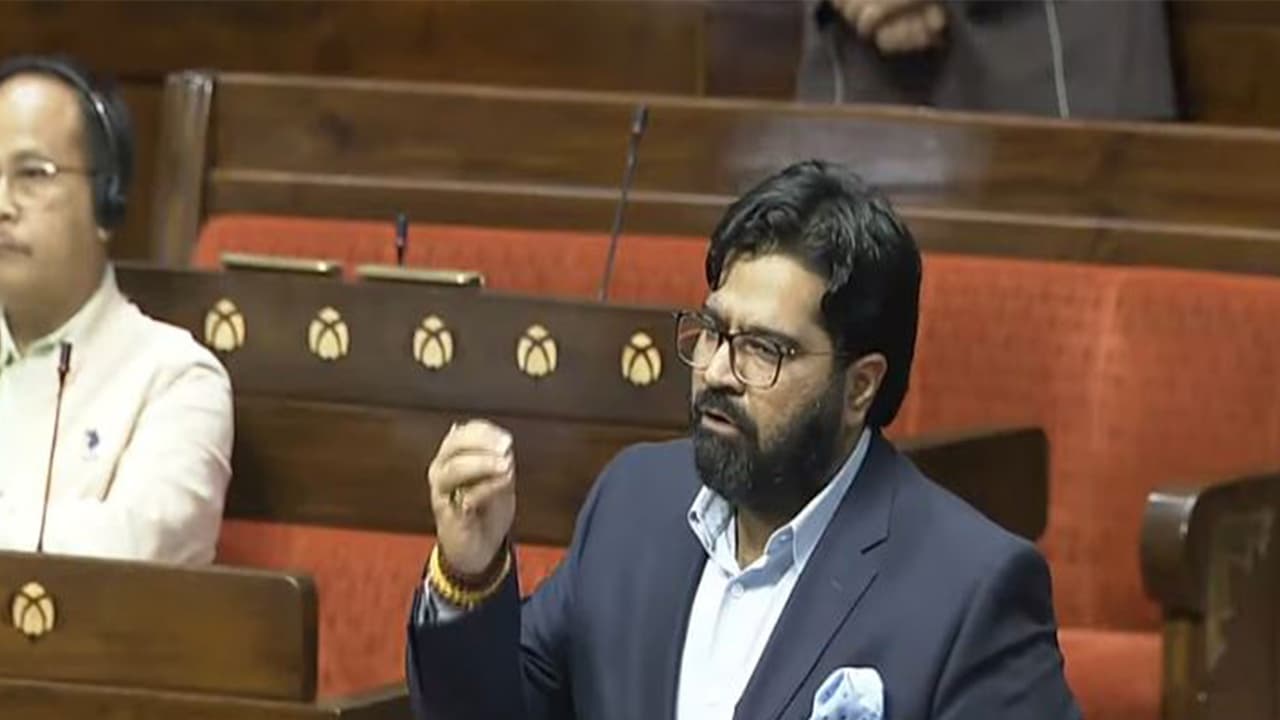
Rajya Sabha MP Kartikeya Sharma supported the Health Security Cess Bill, calling health a strategic investment. He highlighted rising cancer rates and his Namo Shakti Rath initiative for women's health as examples of the bill's importance.
Rajya Sabha MP Kartikeya Sharma on Monday supported the Health Security se National Security Cess Bill, saying that the current state of the country's public health indicators demands such a bold and adequate financial step, a press release said.
According to the release, Sharma said that this bill represents a significant shift in policy. "Health is no longer considered an expense, but a strategic investment in the nation's future. Imposing a cess on harmful products and channelling the revenue directly into health programs is a model that is both effective, equitable, and visionary."
Alarming Cancer Statistics
Sharma pointed out that more than 1.4 million new cancer cases are reported in India every year, and approximately 900,000 deaths are due to cancer. Between 1990 and 2023, cancer cases have increased by 26 per cent and mortality rates by 21 per cent. This trend, he said, clearly indicates the need for prompt and structural interventions in the health infrastructure.
He also underlined that breast cancer alone accounts for 27 per cent of total cancer cases among women in India. Cervical cancer kills 70,000-77,000 women every year, and more than 80 per cent of cases are detected late. In Haryana, cervical cancer accounts for 12-14 per cent of total cancer cases among women, primarily affecting rural and economically weaker sections.
Grassroots Action: The 'Namo Shakti Rath' Initiative
Invoking the Prime Minister's vision of 'Healthy women, empowered families', Sharma said that the core spirit of the Prime Minister's Swasth Naari Sashakt Abhiyan is clear: if women are healthy, families are empowered, and when families are empowered, the nation becomes stronger. He said that this is not just a slogan, but the driving force behind many impactful social and health initiatives in recent years.
As per the release, Sharma explained that, inspired by this national vision, he launched the Namo Shakti Rath in Haryana. The initiative aims to provide women with doorstep screening for diseases like breast and cervical cancer, especially those that are often under-discussed in society.
He said, while healthcare services typically require people to visit, the Namo Shakti Rath brings healthcare services to the people. Over 20 modern mobile vans will be operated under this project, supported through MPLADS funds and individual contributions. Each van is staffed with doctors, trained technicians, and field teams, who travel from village to village to conduct cancer screening, basic checkups, and awareness programs. These vans have covered dozens of gram panchayats, and thousands of women have benefited from timely screening, the release said.
Sharma said the on-the-ground experience has been extremely inspiring. "Many women who had never undergone a single screening in their lives are now able to get one in just a few minutes in their own villages," he said. In many cases, risks have been identified at an early stage, and he said that this is where India's fight against cancer truly begins.
He further stated that the Namo Shakti Rath is not just a health project. "It is an example of how change can be seen when Parliament's intentions and on-the-ground implementation come together. It fully reflects the spirit of the Bill; early detection, awareness, and investment in women's health can secure India's future."
'Health Security is the Foundation of National Security'
Further, Sharma said that policies made in Parliament are successful only when they reach the people for whom they are designed. It is the responsibility of MPs to ensure that schemes initiated in Delhi result in tangible results in districts, blocks, and villages.
He concluded that if citizens are not healthy, the nation cannot be safe. Health security is the foundation of national security. This bill will form the backbone of India's next phase of screening, prevention, and awareness plans. Sharma said, "With this bill, India is taking decisive steps towards a healthier, safer, and more confident future."
About the Bill
The Rajya Sabha today returned the Health Security se National Security Cess Bill, 2025 to the Lok Sabha after due consideration. The Bill was passed in the Lok Sabha on December 5.
The Bill aims to augment the resources for meeting expenditure on national security and for public health, and to levy a cess for the said purposes on the machines installed or other processes undertaken by which specified goods are manufactured or produced and for matters connected therewith or incidental thereto. (ANI)
(Except for the headline, this story has not been edited by Asianet Newsable English staff and is published from a syndicated feed.)