
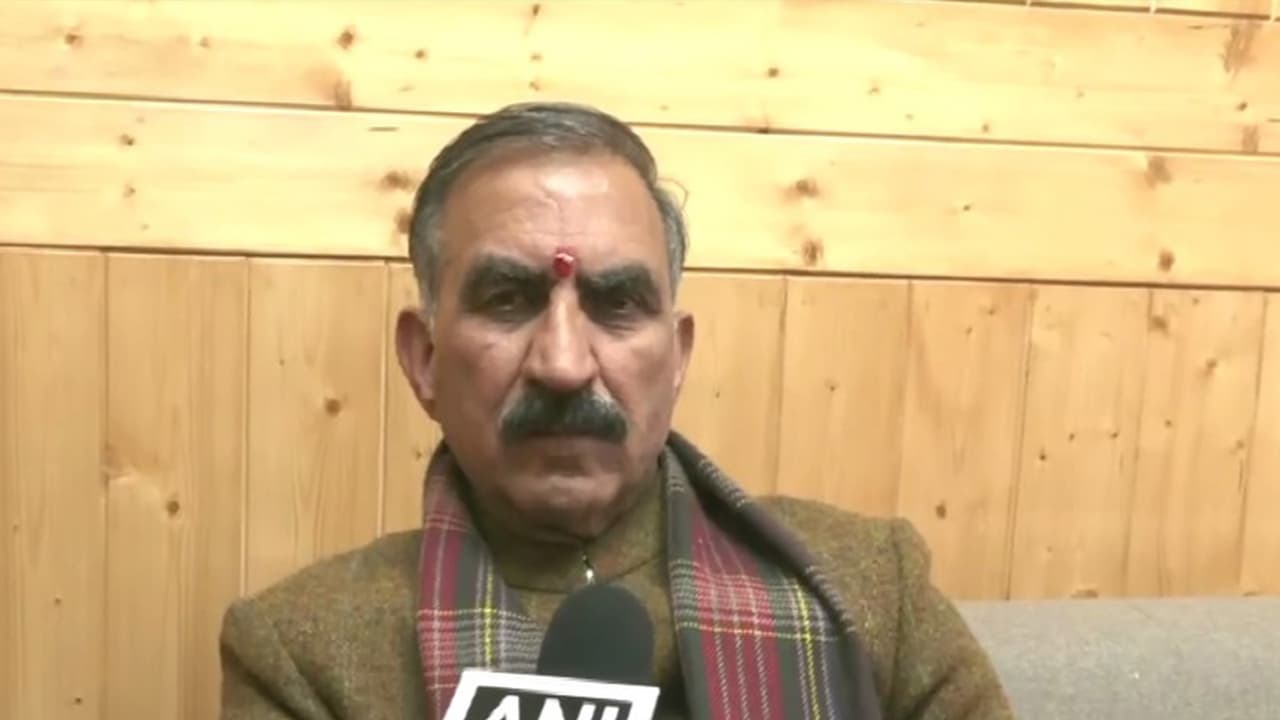
HPSEBL recorded a profit of Rs. 300 crore, a significant jump attributed by CM Sukhu to 'Vayavastha Parivartan'. Key initiatives include a new grid code, smart meters, SCADA systems, and plans to recruit over 2100 youth for the board.
The Himachal Pradesh State Electricity Board Limited has earned a profit of approximately Rs. 300 crore up to 31.12.2025 as a result of the sale of the power as compared to Rs 206 crore profit earned till 31.12.2024, i.e in the previous financial year, Chief Minister Sukhvinder Singh Sukhu stated at his official residence on Sunday.
According to an official release, he attributed the achievement to 'Vayavastha Parivartan' and smart policies undertaken by the present government. "To modernise and equip the state's electric power system, the government introduced the 'Himachal Pradesh Electricity Grid Code' to align the state's operations with National standards, enhancing grid security, transmission and reliability," the Chief Minister said.
Modernisation and Infrastructure Upgrades
He added that the key infrastructure highlights include 1.5 lakh smart metres in Shimla and Dharamshala, which are being installed to enable real-time consumption monitoring via mobile apps, helping citizens understand their daily consumption, in addition to implementing advanced Supervisory Control and Data Acquisition (SCADA) in industrial hubs like Kala Amb, which has reduced distribution losses by 4 per cent.
Strengthening the Workforce
The CM further called the field staff "the backbone of HPSEBL" and said that strengthening this workforce will greatly benefit consumers as besides ensuring an uninterrupted power supply, they play a pivotal role in repairing damaged infrastructure and restoring electricity during disasters and emergencies, the release stated.
The Chief Minister said that the state has approved the engagement of over 2100 youth on the board. This includes 1602 'Bijli Upbhogta Mitras' and 500 'T-Mates' to address long-standing vacancies. These recruitments aim to improve ground-level operations, expedite the repair of damaged infrastructure and ensure swift restoration of power during natural disasters.
Power Initiatives in Tribal Areas
As tribal areas are more prone to severe winters, the release noted that the State government has undertaken various initiatives to ensure reliable power for residents. To strengthen the power supply in Killar Valley, the Chief Minister stated that the state government was working on various projects worth Rs. 62 crore. He said Rs. 5 crore was being spent on laying an 11 KV line from Tindi to Shaur and Rs. 45.50 crore for laying a 33 KV line from Thirot to Killar.
Besides this, 148 households in remote Kaza have been provided with solar off-grid plants of 1 kW each viz: 57 households in Mud, 34 in Langza, 35 in Hikkim and 22 households in Kaumik. The Chief Minister stated that the decentralized solar projects with battery energy storage system (BESS) to be installed at village Hillour and Dharwas of 400 KW each in Pangi tribal region of Chamba district.
Promoting Solar Energy
He said that the State government was offering 5 per cent interest subsidy for setting up solar energy projects ranging from 250 KW to 1 MW in tribal areas. Whereas, in non-tribal regions, projects between 250 KW and 1 MW will receive a 4 per cent interest subsidy, while larger projects exceeding 1 MW will be eligible for a 3 percent interest subsidy, as per the release.
Future Infrastructure Development
To ensure quality power supply for consumers, necessary infrastructure will be developed in a phased manner. Starting with this initiative, six 33KVA/11KVA substations will be constructed in Kangra district in the upcoming financial year, located in Ganog in Nurpur, Karla Kotla in Dehra, Majheen in Jwalamukhi, Moki in Indora, Samloti in Nagrota Bagwan and Ther in Jwalamukhi, the release informed.
Digital Reforms and Cost Reduction
The Chief Minister further stated that series of digital administrative reforms with a vision of 'Vyavastha Parivartan' have already yielded significant results. By moving away from high-cost legacy contracts and adopting transparent, competitive bidding for IT services, the annual support costs for electricity billing and ERP (Enterprise Resource Planning) have been slashed by 46 per cent.
He further stated that this initiative demonstrates the Government's commitment to ensuring better services for electricity consumers, while simultaneously creating gainful employment opportunities for local youth, the release concluded.
(Except for the headline, this story has not been edited by Asianet Newsable English staff and is published from a syndicated feed.)