
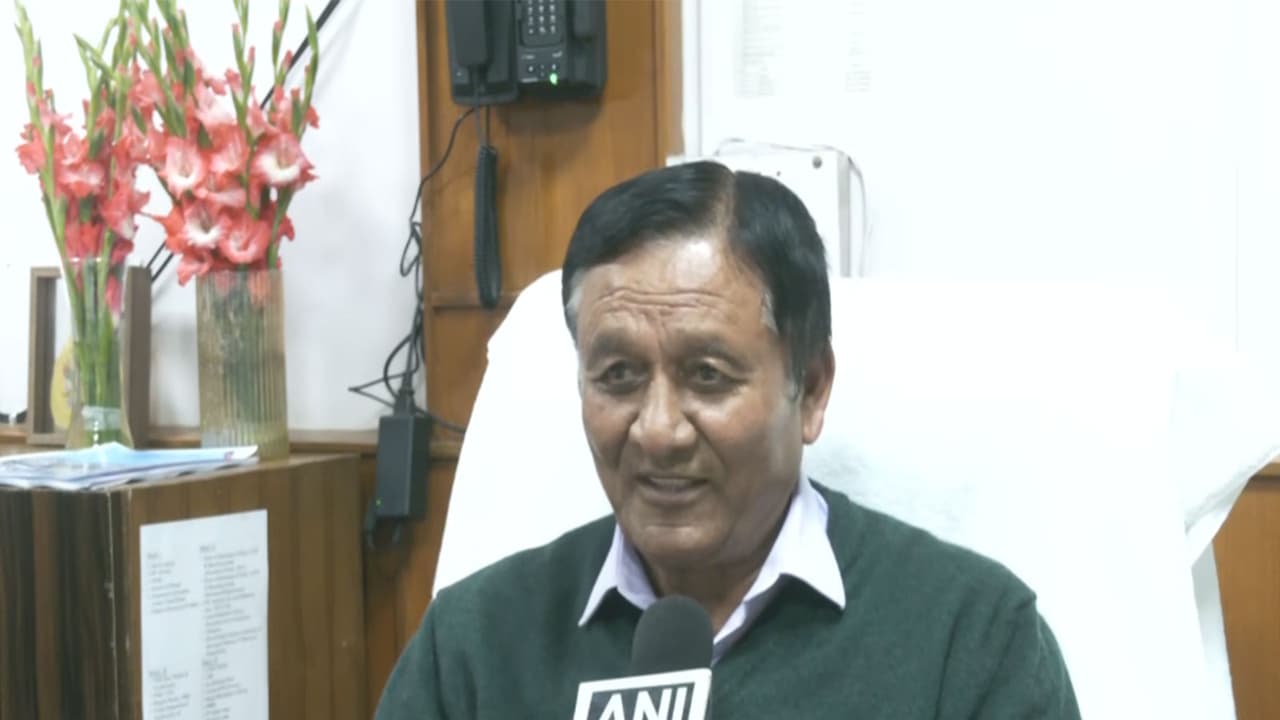
Himachal Minister Jagat Singh Negi has criticized Governor Kavinder Gupta for the delay in implementing Nautor land provisions in tribal areas, arguing it concerns the economic rights of tribals and questioning the pendency of the matter.
The Revenue, Horticulture and Tribal Development Minister of Himachal Pradesh, Jagat Singh Negi, has stepped up his criticism over the prolonged delay in the implementation of Nautor land provisions in the state's tribal areas, saying the issue concerns the economic rights of tribal communities and questioning the continued pendency of the matter before Governor Kavinder Gupta.
Negi said tribal people had already begun a "Nautor Yatra" to press for implementation of the provisions and asserted that the agitation was not merely a political programme but an expression of growing concern among people waiting for land allotment.
Legal Hurdles and Governor's Role
The Minister said the Nautor system was governed by rules framed by the state and pointed out that the Himachal Pradesh Nautor Land Rules, 1968 provide for the grant of Nautor land for purposes including horticulture and agriculture, subject to prescribed conditions.
According to Negi, the principal impediment in tribal areas was the applicability of the Forest Conservation Act, 1980, because much of the land in tribal areas falls within the forest-related regulatory framework. He argued that the state government alone could not remove a central legislation and maintained that the constitutional framework applicable to Scheduled Areas gives the Governor special powers in relation to laws and regulations affecting tribal areas.
Political Allegations Over Implementation
Negi claimed that the Forest Conservation Act had previously been kept inoperative for tribal areas during the Congress government between 2014 and 2016 and that the exemption was subsequently extended up to 2018. He said this had enabled the government to start processing Nautor cases as well as facilitate certain development works. "During that period, we were able to start the Nautor process. In Kinnaur, five pattas were granted in a single day, while around 7,000 cases awaiting joint inspection were processed," Negi said.
He alleged that when the BJP government came to power, only one Nautor grant was made in Kinnaur during the subsequent period before the process was again put on hold.
'Rules, Not Politics, Should Decide Eligibility'
Negi said the issue should not be viewed through the prism of political affiliation, maintaining that eligibility under the Nautor rules should determine who receives land. He said the rules do not distinguish between supporters of the Congress, BJP or any other political party, and argued that eligible tribal residents with holdings below the prescribed limit should be considered according to the rules.
"The eligibility should be based on the rules. It should not matter whether the person belongs to the Congress, BJP or no political party," Negi said. He argued that adequate landholding was important for enabling tribal families to move into productive agriculture and horticulture, particularly in remote and border areas.
Governor Seeks Clarity, Minister Urges Action
Negi said he had met the Governor on several occasions over the issue and claimed that he had met the present Governor twice and his predecessor several times. He said he expected to meet Governor Gupta once again but maintained that the issue had already remained pending for too long.
The minister's comments come amid the Governor's stated position that Nautor allotments should follow uniform, transparent and clear eligibility criteria. Governor Kavinder Gupta recently said he had sought details of the exact number of eligible people awaiting Nautor land and that the issue would be decided according to prescribed norms, with legal opinion sought if required.
Negi, however, argued that the Governor should exercise the constitutional powers available for Scheduled Areas and act on the matter rather than keeping it pending. He also accused the BJP of turning the issue into a political controversy and alleged that the party's approach was contrary to the need to strengthen tribal communities economically.
Link to Border Migration and Central Schemes
"On one side, the Centre talks about stopping migration from border areas, while on the other, people who want to stay there, cultivate land and develop orchards are not being provided the opportunity," he said. Negi linked the Nautor issue with the broader question of migration from border villages and argued that land for agriculture and horticulture could help strengthen the local economy and retain population in strategically important areas.
He also criticised the Centre's Vibrant Villages Programme, comparing it with the earlier Border Area Development Programme (BADP). Negi claimed that Kinnaur's two blocks and the entire Spiti block had earlier received additional funds under BADP and alleged that the flow of funds had subsequently declined after the scheme was renamed. He claimed that whereas a much larger number of villages had earlier been covered, the present Vibrant Villages framework covered only a fraction of them in Kinnaur and that the funds released so far were significantly below what would have been available under the earlier arrangement. He questioned how migration could be stopped without adequate investment in border villages.
Negi said the Nautor issue was therefore directly linked with the economic viability and long-term settlement of tribal and border populations. The minister also rejected suggestions that the Nautor agitation was simply a political mobilisation, saying the demand was rooted in existing rules and the economic concerns of tribal residents.
The Himachal Revenue Department lists implementation of the Nautor Rules, 1968 among its responsibilities, while the rules themselves specify agriculture and horticulture among the purposes for which Nautor land may be granted. The Governor's office, meanwhile, has indicated that the final decision would follow examination of eligibility, legal aspects and the applicable norms. Negi said that if the legal framework was clarified or the relevant restriction removed for Scheduled Areas, the existing Nautor rules could then be applied transparently to eligible beneficiaries.
"First, take a decision on the legal obstacle. Once that is done, the Nautor rules are already there, and the beneficiaries can be identified according to those rules," he said. (ANI)
(Except for the headline, this story has not been edited by Asianetnews Editorial staff and is published from a syndicated feed.)