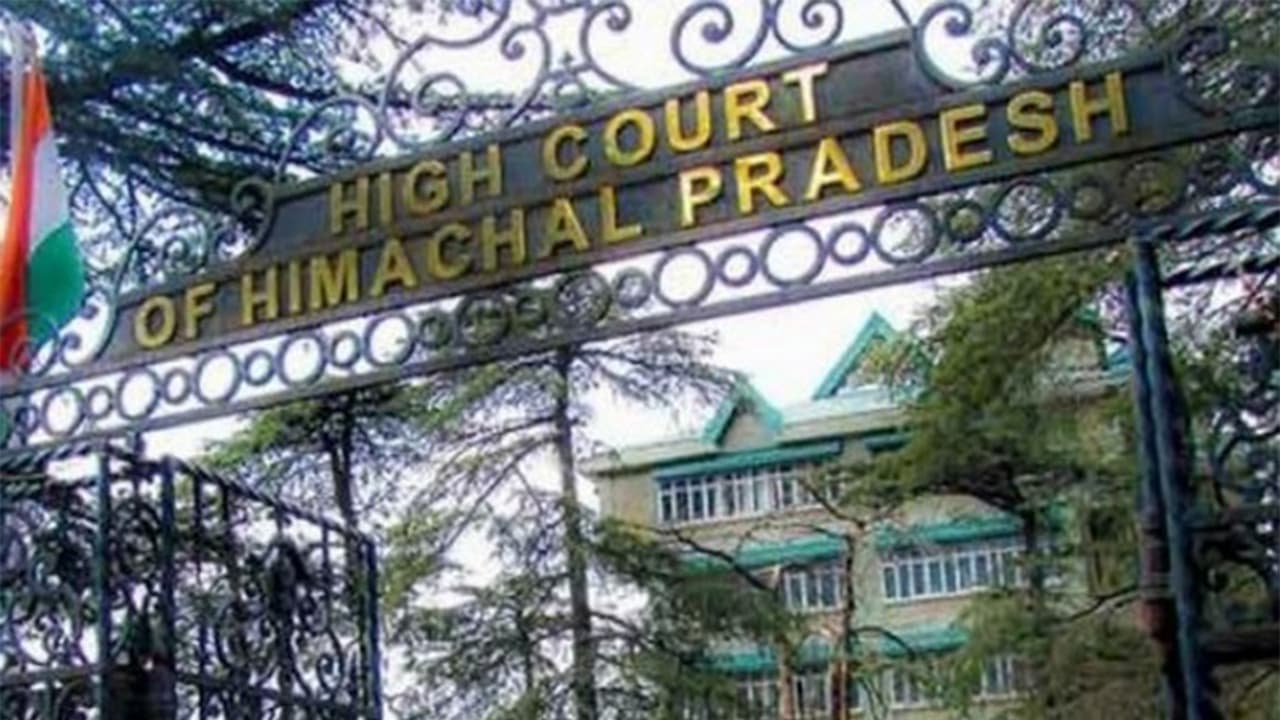
The Himachal Pradesh High Court has rebuked a judicial officer for a flawed MACT order, citing lack of legal knowledge and poor judgment. The officer has been directed to undergo refresher training after the court exonerated an insurer.
High Court Reprimands Judicial Officer
The Himachal Pradesh High Court has expressed strong displeasure with a judicial officer for passing a “mechanical” and “thoughtless” order in a Motor Accident Claims Tribunal (MACT) case, observing that the award reflected a “total non-application of mind” and a lack of elementary knowledge of the Motor Vehicles Act. Allowing an appeal filed by an insurance company, Justice Sushil Kukreja, in an order dated October 29, exonerated the insurer from liability for compensation awarded to the family of a man who died in a road accident, while directing the concerned judicial officer to undergo a refresher course and periodic training in MACT matters at the Himachal Pradesh State Judicial Academy.
The Court also directed the Registrar General to place a copy of the judgment on the judicial officer's service record and forward another copy to the Director of the Judicial Academy. “Before parting, in the considered opinion of this Court, the award passed by the Tribunal below clearly reflects total non-application of mind by the concerned Judicial Officer,” the Court observed.
Serious Lapses in Adjudication
Taking a serious view of the matter, the Single Judge Bench said it was “quite shocking” that the judicial officer had adjudicated the case by relying on an insurance policy that had no relevance to the accident. The Court noted that the officer had failed to distinguish between an Act or liability-only policy and a comprehensive or package policy, despite being the District and Sessions Judge heading the district judiciary and also dealing with MACT cases. “It is not expected from the head of District Judiciary to pass such kind of award/order which lacks even elementary knowledge of the MV Act,” the Court observed.
Emphasising the importance of the district judiciary, the Bench said it was the backbone of the judicial system and the primary point of access to justice for citizens. The Court further observed that judicial orders could not be passed mechanically and that such a tendency deserved to be deprecated. “It is not even aware about the difference between the Act/Liability only Policy and the Comprehensive/Package Policy and has not even cared to see the insurance policy,” the Court noted, referring to the judicial officer's approach. The Bench said the judicial officer had failed to apply his mind to the facts and settled legal principles, describing the approach as “highly objectionable”.
Background of the MACT Case
The case arose from the death of a 44-year-old painter, Trahru alias Kesav, who died on December 30, 2016, when the car in which he was travelling rolled down a hillside into fields at Beh-Ki-Dhar near Sundernagar in Mandi district. His wife and son subsequently filed a compensation claim of Rs 50 lakh, alleging that the accident occurred due to rash and negligent driving. The Motor Accident Claims Tribunal, through an award dated August 16, 2023, granted compensation of Rs 13,93,100 with interest at six per cent per annum, holding the respondents jointly and severally liable and directing the insurance company to deposit the amount.
The insurance company challenged the award before the High Court, contending that the policy covering the vehicle was an Act or third-party liability policy and did not cover the risk of death or bodily injuries to an occupant of a private car. The insurer argued that no additional premium had been paid to cover the risk of passengers travelling in the vehicle and, therefore, it could not be held liable to indemnify the owner.
High Court's Findings
Upon examining the record, the High Court found serious errors in the Tribunal's decision. The Court noted that although the accident occurred on December 30, 2016, the Tribunal had relied upon an insurance policy that was valid only from September 2015 to September 2016 and had already expired before the accident. A different insurance policy was in force on the date of the accident. The Court further found that the policy applicable to the vehicle was only a third-party liability policy and that no additional premium had been paid to cover the risk of occupants of the private car.
Observing that the deceased was a gratuitous passenger and did not fall within the definition of a third party for the purpose of the policy in question, the Court held that the insurer could not be made liable to pay compensation in the absence of additional coverage. The Bench observed that the Tribunal ought to have exonerated the insurance company from liability but had erroneously concluded that the insurer was liable to indemnify the vehicle owner. “Since the occupant of a private car does not fall within the definition of third party and he is only a gratuitous passenger, as such, the appellant-insurance company is not liable to pay any compensation to the petitioners as no additional premium was paid to cover the risk of death or bodily injuries to the occupant of the car,” the Court held.
The High Court accordingly modified the Tribunal's award to the extent of exonerating the insurance company from liability. The Court's directions regarding refresher training and placement of the judgment on the judicial officer's service record were issued in view of the serious lapses observed in the adjudication of the MACT case. (ANI)
(Except for the headline, this story has not been edited by Asianet Newsable English staff and is published from a syndicated feed.)