
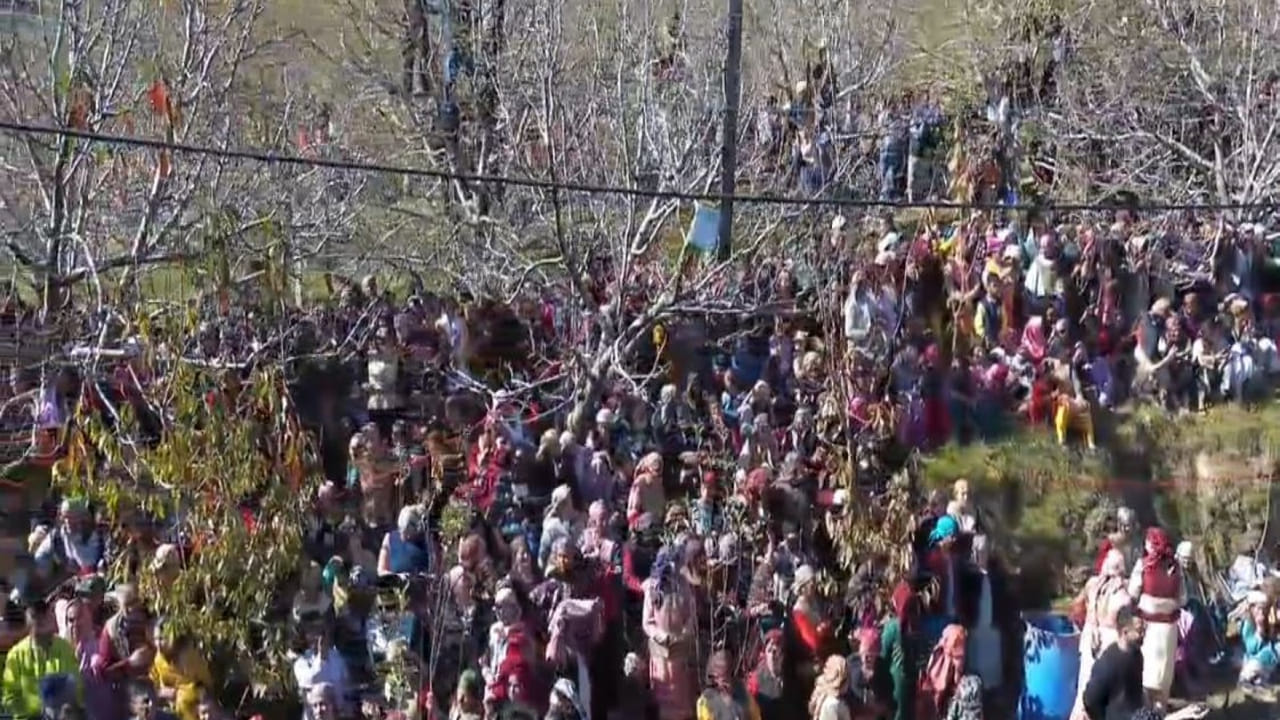
Villagers in Shimla, Himachal Pradesh, have ended the centuries-old tradition of animal sacrifice at the Mata Drotishwari Temple, choosing to conduct the consecration ceremony through Vedic rituals to honor their heritage and faith.
Himachal Villagers Stop Animal Sacrifice for New Temple Consecration
Shimla (Himachal Pradesh) [India], November 21 (ANI): In a significant social and religious initiative, villagers in Himachal Pradesh have ended the centuries-old practice of animal sacrifice during the consecration (Pratishtha) ceremony of a newly constructed temple, embracing Vedic rituals and a sattvik tradition while preserving their more than 150-year-old faith and cultural heritage. Thousands of devotees from around 30-40 villages gathered for the grand consecration ceremony of Mata Drotishwari Temple in the Nawar region, in Daroti Village nearly 150 kms from the state capital, Shimla, in the Tikkar area of Shimla district, with the younger generation taking a leading role in carrying forward the age-old religious tradition.
The temple, whose construction took nearly 10-12 years, was built through community contributions, voluntary labour and donations. The ceremony marked the culmination of a religious pilgrimage undertaken by a group of devotees who travelled to Nagarkot (Kangra), Jwala Ji and Haridwar before completing a long journey on foot to their village. The initiative to conduct the consecration without animal sacrifice was taken following a community meeting held around two months ago, where villagers collectively decided to observe the ceremony through Vedic rituals.
Speaking with ANI on Friday, Prem Ranta, a member of the temple committee, said devotees from different age groups, including young people and elderly residents, had travelled several kilometres on foot to attend the ceremony. He said the religious tradition traces its roots to their ancestors, who had brought a sacred symbol of the deity from Nagarkot in Kangra and established it in the village. Ranta said the temple construction took nearly a decade and incorporated traditional architectural designs inspired by prominent temples across Himachal Pradesh, while the consecration ceremony witnessed a festive atmosphere with thousands of people gathering from neighbouring villages.
"Our ancestors had brought a sacred symbol of the Mata from Nagarkot in Kangra and established it here, after which the tradition continued. Animal sacrifice was practised in this region, but around two months ago, a collective village meeting was held in the presence of a priest, where it was decided that the Pratishtha ceremony would be conducted according to Vedic rituals and there would be no animal sacrifice,” Ratna said. “This is perhaps the first such initiative in the region, and its message can reach neighbouring areas and even across Himachal Pradesh. Around 25-30, or even 30-40 villages, have come together, and at least 4,000-5,000 people have gathered for this grand celebration. The temple took nearly 10 years to construct, and its intricate carvings and designs have been inspired by some of the finest temples across Himachal Pradesh," he added.








