
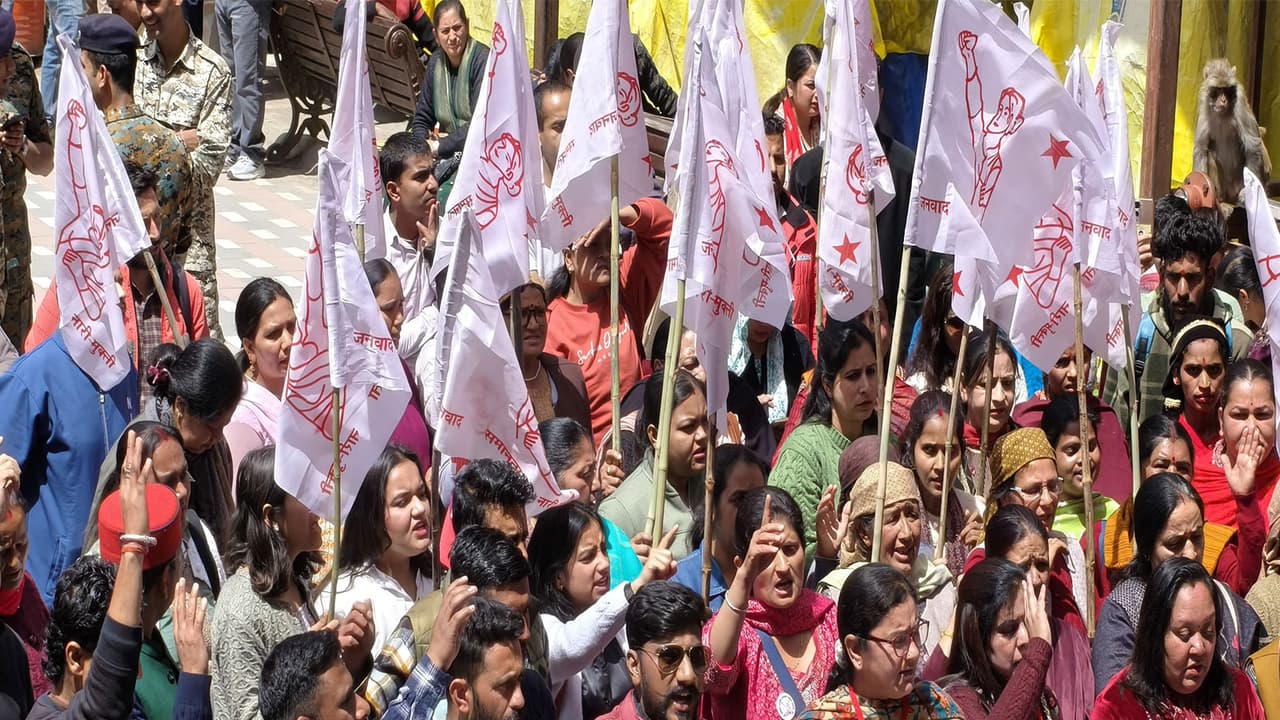
A plan to shift services from Shimla's historic Kamla Nehru Hospital has caused a public and political uproar. Critics argue it will fragment maternal care, while the CM insists it's for better facilities, leading to protests and scrutiny.
A deepening controversy over the future of one of Himachal Pradesh's most historic maternal healthcare institutions has triggered a wide-ranging public, political, and professional backlash, placing the state government under intense scrutiny. At the centre of the debate is the reported proposal concerning land use and partial shifting of services from Kamla Nehru Hospital (KNH), a century-old institution synonymous with maternal and child healthcare in the hill state. The issue has rapidly evolved from an administrative decision into a broader discourse on healthcare priorities, public sentiment, and the preservation of legacy institutions.
Named after freedom fighter Kamala Nehru, the hospital has long been a cornerstone of women's healthcare, catering to patients not only from Shimla but also from remote and rural regions of Himachal Pradesh. For generations, it has symbolised accessible and dedicated maternal care, making the current debate emotionally charged as well as policy-driven. Concerns have been raised that any move to repurpose hospital land or fragment its services could undermine its core function and disrupt emergency and maternity services relied upon by thousands.
Widespread Opposition Emerges
Reacting to the controversy, Himachal Pradesh Congress Committee chief Vinay Kumar asserted that the hospital should not be relocated. "This century-old hospital should not be shifted. Whatever is being proposed is not going to happen. I will take up this issue with the Chief Minister," he said, while emphasising that public institutions must continue to serve people effectively.
Reacting strongly to the proposed move, former Mayor of Shimla and State Secretary of CPI(m) , Sanjay Chauhan said, "We will not allow this shifting to happen under any circumstances. We are fully prepared to launch a protest to protect this over-a-century-old institution, popularly known as Lady Reading Hospital, which holds immense historical and emotional value for the people of Shimla."
"This hospital is not just a building but a symbol of public healthcare and heritage. Any attempt to tamper with its functioning or land will be strongly resisted. We will not allow builders, contractors, or any vested interests to play with such a vital public health institution."He added.
Emphasising the medical implications, Chauhan said, "Obstetrics and Gynecology (OBG) function as a single, integrated department and cannot be separated. These services must remain under one roof, as patients especially in gynaecology are highly vulnerable to infections. Fragmenting services will only compromise patient safety and quality of care."
He further stated, "There is already a proposal pending since 2015 with the government for strengthening the existing infrastructure. Instead of shifting services, the focus should be on upgrading and expanding facilities at the current site."
Highlighting public sentiment, he added, "The government must understand that this issue is directly linked to people's faith, healthcare access, and the legacy of the city. Any decision affecting it must prioritise public interest over all other considerations."
Government Defends Move
Responding to mounting criticism, Chief Minister Sukhvinder Singh Sukhu clarified that the hospital is not being shut down. "The Mother and Child Hospital, which is over 100 years old, will continue to function there. We have expanded it to 270 beds and are further strengthening infrastructure," he said.
Explaining the rationale behind shifting certain services, Sukhu added, "Some gynaecology services are being shifted to Indira Gandhi Medical College for better treatment facilities. Latest technology, including advanced ultrasound and robotic surgery, is available at IGMC. The decision has been taken purely in the interest of better healthcare for women, not for any political gain."
He also acknowledged infrastructure gaps, stating, "Some equipment at Kamla Nehru Hospital is outdated. We are upgrading facilities, but patients deserve the best available treatment." Accusing opponents of politicising the issue, he added that the government's sole aim is improving healthcare outcomes.
Experts and Civil Society Challenge Rationale
However, the assurances have done little to calm public anger. The All India Democratic Women's Association (AIDWA) has strongly condemned the move, alleging that the Chief Minister is being misled by officials and has not fully assessed the implications. The organisation emphasised that maternity and gynaecology departments are inherently interconnected and should not be separated. It questioned the logic of shifting services after years of infrastructure development at KNH, including proposed expansion plans dating back to 2016-17 that envisioned advanced facilities such as IVF centres, robotic surgery, and modern laboratories.
Reacting to the Chief Minister's statement, State Secretary of All India Democratic Women's Association Falma Chauhan said, "Such decisions reflect a lack of sensitivity towards women's health needs and any move undermining the hospital's role will face strong opposition."
State President of All India Democratic Women's Association Ranjana Jaret also endorsed the protest line, with the organization announcing plans for a Secretariat march in coordination with other civil society groups.
Medical Fraternity Raises Alarms
The issue has also drawn sharp reactions from within the medical fraternity, with experts cautioning against fragmented healthcare delivery. BJP MLA and former Medical Superintendent of IGMC, Dr. Janak Raj, said, "We have been informed that only the gynaecology wing is being shifted, not the entire institution. However, both services are closely linked and ideally should function from a single location--whether at IGMC or Kamla Nehru Hospital."
He added, "If the government plans to rebuild infrastructure, it would be more prudent to strengthen the existing facilities instead. Public sentiment must be respected. This hospital has a legacy that should be preserved. The key question is whether the state has the financial capacity to dismantle an existing structure and build a new one."
Raising political concerns, he remarked, "This could become the first instance where a Congress government appears to be undermining the legacy of Jawaharlal Nehru and Kamala Nehru, which is contrary to what the party claims."
Echoing concerns from a professional standpoint, senior paediatrician and former MS of IGMC and Deputy MS at KNH, Dr. Ramesh Chand, noted, "Such proposals were discussed in the past but were not considered practical due to lack of facilities. At that time, critical components like blood bank, specialist services, labs, and paediatric care were centred at IGMC."
He added that the situation has since changed, "Significant infrastructure has been developed at Kamla Nehru Hospital. Now, when facilities have improved, there is strong opposition to disrupting the system." Warning against partial relocation, he said,"Fragmenting services does not ensure continuity of care. If shifting is to be done, it should be comprehensive, not selective, otherwise it will create more challenges for patients and healthcare providers."
Adding an emotional and global dimension to the debate, UK-based surgeon and Shimla native Dr. Sunny Sareen voiced strong opposition through a social media post. "I was born in Kamla Nehru Hospital, and like many residents, I share a deep emotional connection with it. Medical care is a highly specialised field, and such institutions should not be shifted without extreme caution," he said.
Referring to past experiences, he added, "We have seen lapses when departments, including cardiology, were shifted from IGMC to Chamiyana, leading to serious consequences. These lessons should not be ignored."
"Decisions of this magnitude should involve medical professionals and the public, not be driven by political considerations. Healthcare infrastructure directly impacts patient safety and public trust."
As protests intensify and voices from across the spectrum converge, the controversy has evolved into a defining test for the state government, balancing modernisation with legacy, and administrative decisions with public trust. With civil society groups warning of sustained agitation and political pressure mounting, the coming days are likely to determine whether the government recalibrates its approach or faces an expanding movement centred on safeguarding one of Himachal Pradesh's most trusted healthcare institutions.
(Except for the headline, this story has not been edited by Asianet Newsable English staff and is published from a syndicated feed.)