
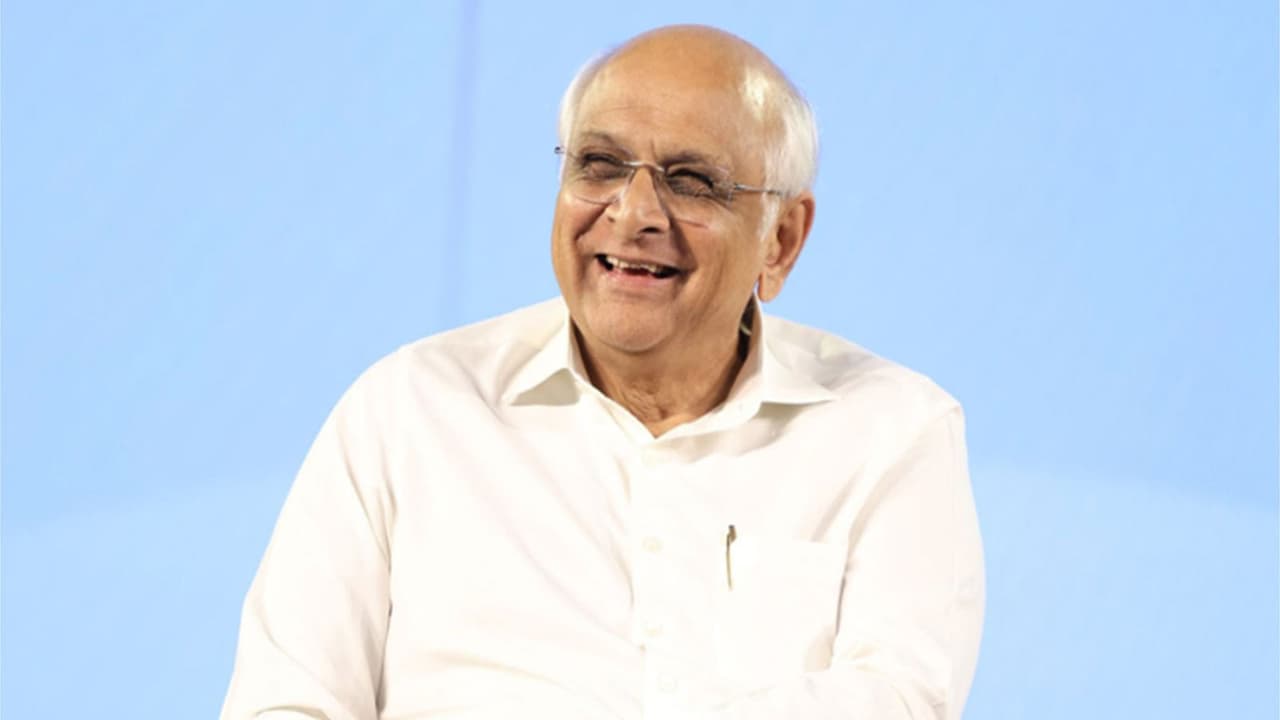
Gujarat CM Bhupendra Patel launched the Integrated Renewable Energy Policy-2025 on Good Governance Day. The policy targets over 100 GW capacity by 2030 to make Gujarat a global clean energy hub, supporting India's Panchamrit Sankalp goals.
The birth anniversary of the pioneer of good governance and former Prime Minister Late Atal Bihari Vajpayee is observed every year on 25 December across the country as Good Governance Day. Today, at a state-level programme in Gandhinagar, Chief Minister Bhupendra Patel launched the Government of Gujarat's Integrated Renewable Energy Policy-2025.
Under the guidance of the Chief Minister and the leadership of Energy Minister Rushikesh Patel and Minister of State Kaushik Vekariya, the Integrated Renewable Energy Policy-2025 has been prepared by the Energy Department to address the challenges of climate change and to ensure a rapid transition towards clean and sustainable energy systems, the Chief Minister's Office said in a press release.
Policy Aims and National Alignment
Aligned with India's Panchamrit Sankalp, Nationally Determined Contributions (NDCs), and the vision of Viksit Gujarat @2047, this policy is a significant step towards establishing Gujarat as a globally competitive clean energy hub by promoting investment, innovation, and grid stability in the renewable energy sector of the state. Building upon the state's legacy of leadership in the renewable energy sector and with a target of achieving more than 100 gigawatts of capacity by 2030, the Gujarat Integrated Renewable Energy Policy-2025 is being announced to make a significant contribution to India's target of achieving 500 gigawatts of non-fossil fuel-based energy capacity by 2030.
Framework for a Competitive Energy Hub
Through a simple and integrated framework, this policy aims to facilitate Ease of Doing Business, promote innovative and emerging technologies, enhance grid stability, generate employment in the green energy sector, and ensure energy security, affordable tariffs, and sustainable economic growth, thereby establishing Gujarat as a globally competitive renewable energy hub.
Focus on Battery Energy Storage Systems (BESS)
A key pillar of this policy is the promotion and integration of Battery Energy Storage Systems (BESS) to ensure large-scale renewable energy integration and grid stability. Grid-connected and co-located BESS projects along with solar, wind, and hybrid projects have been encouraged.
The use of BESS is envisaged for transmission support, grid ancillary services, distribution utilities, and end consumers. Strategic locations for BESS installation will be identified by the State Nodal Agency (GEDA) in coordination with GETCO, SLDC, and DISCOMs.
Key Provisions and Supportive Measures
Relaxations in Project Commissioning
Under the RE Policy-2025, relaxations have been provided for improvements in commissioning timelines for renewable energy projects, primarily for captive and third-party sale projects. Commissioning timelines for evacuation infrastructure have been rationalised based on voltage levels instead of project capacity. Additional time has been permitted for the commissioning of projects and evacuation lines, which will facilitate smoother project implementation.
Support for Wind Repowering and Refurbishment
The RE Policy-2025 establishes a supportive framework for wind repowering and refurbishment in alignment with the National Repowering Policy. Repowering and refurbishment have been permitted without mandatorily dismantling existing wind turbine generators, and the timeline for the same has been extended up to 24 months. Supportive measures include extension of the existing PPA tenure during the repowering period, waiver of transmission charges on unutilised transmission capacity during transition, priority for enhancement of renewable energy connectivity capacity, and relaxations in micro-siting norms.
Ensuring Connectivity and Policy Continuity
The RE Policy-2025 enables on-demand renewable energy connectivity through the Akshay-Urja-Setu portal and supports the development of new transmission schemes in renewable energy-rich areas. Continuity has been ensured through provisions such as permission for ownership transfer for projects under previous renewable energy policies and extension of timelines for completing projects pre-approved under earlier policies.
Promoting Emerging and Advanced Technologies
Importantly, the RE Policy-2025 actively encourages emerging and advanced renewable energy technologies to diversify Gujarat's clean energy portfolio and accelerate innovation. These include ocean energy, geothermal energy, concentrated solar thermal (CST), building-integrated photovoltaic (BIPV) systems, rail and road-integrated photovoltaic (RIPV) applications, agrivoltaics, and vertical-axis wind turbines, which will be supported through pilot projects.
Strengthening the Broader RE Ecosystem
In addition, the policy strengthens rooftop and distributed renewable energy, promotes private sector participation and start-ups, and integrates initiatives for employment generation and skill development in the green energy sector. Collectively, these measures will further reinforce Gujarat's transition towards a stable, investor-friendly, and future-ready renewable energy ecosystem. (ANI)
(Except for the headline, this story has not been edited by Asianet Newsable English staff and is published from a syndicated feed.)