
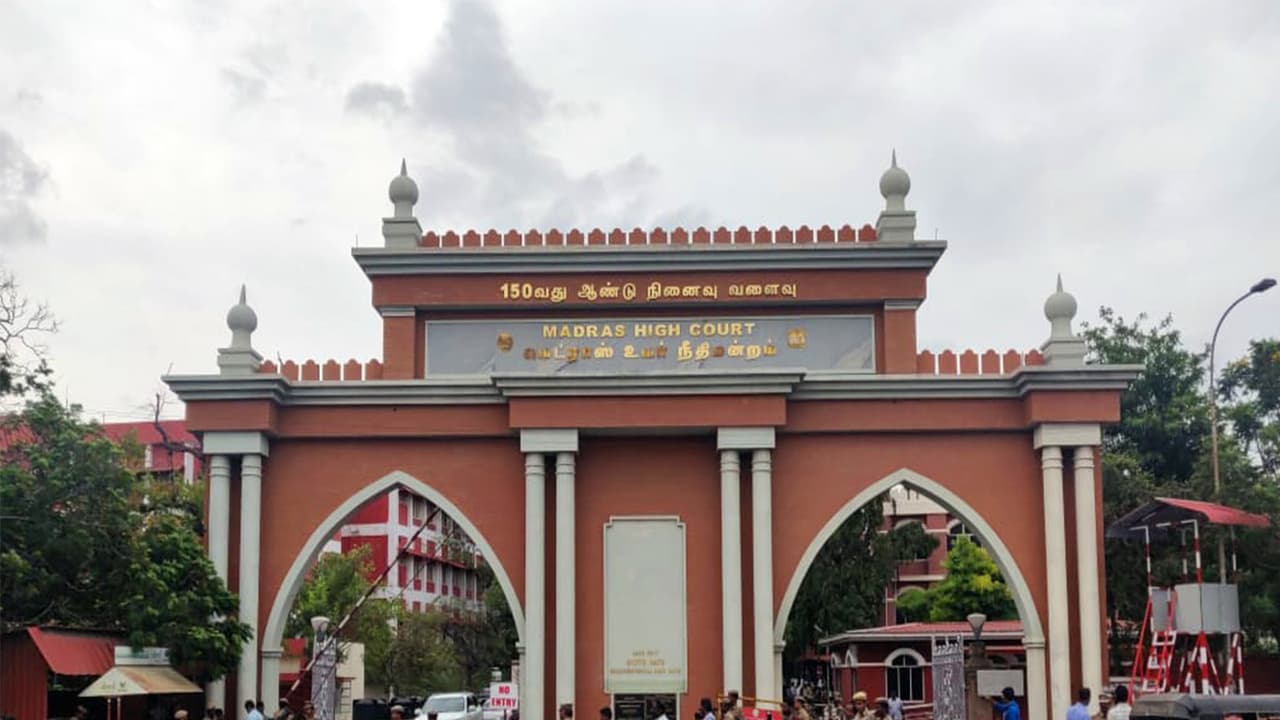
The Madras High Court closed the habeas corpus petition against Savukku Shankar's Goondas Act detention, rendering it infructuous. This followed the Tamil Nadu government's decision to revoke the detention order based on an Advisory Board's findings.
The Madras High Court on Wednesday officially closed the habeas corpus petition challenging the preventive detention of YouTuber and political commentator Savukku Shankar under the Tamil Nadu Goondas Act. The court rendered the plea infructuous after taking note of the state government's decision to revoke the detention order. A vacation bench was set to take up the challenge to Shankar's detention when the state's decision to revoke the order rendered further judicial intervention unnecessary.
What is the Goondas Act?
The Tamil Nadu Goondas Act empowers the state government to detain a person for up to 12 months without placing them before a court or establishing guilt through trial. The detaining authority -- typically a police commissioner or district collector -- needs only to record administrative satisfaction that the individual's presence at large poses a threat to public order. No judicial sanction is required at the point of detention. The only remedy available to the detainee is a habeas corpus petition before the High Court challenging the legality of the order itself.
Advisory Board Finds 'No Adequate Grounds' for Detention
The Tamil Nadu Home Department on May 19 had rescinded the detention order, acting on the unanimous finding of a statutory Advisory Board that no adequate grounds existed to keep Shankar confined. The Board, after examining the detention records and hearing Shankar's own oral submissions, concluded that continued custody under the Act was not warranted. The revocation was issued under Section 12(2) of the Tamil Nadu Preventive Detention Act, 1982, nullifying the original detention order of April 9, 2026, passed by the Greater Chennai Police Commissioner.
Background of the Detention and Petition
The petition had been moved by Shankar's nephew, D Bharath, who argued that the state had repeatedly deployed preventive detention as an instrument of harassment against the journalist, and that the latest order was procedurally flawed and lacked substantive justification. Shankar was arrested on April 8, 2026 and was classified as a "goonda" under the preventive detention law the following day. His arrest came in the backdrop of a December 2025 detention in an extortion matter, and occurred just as he was due to appear before authorities to surrender. The Goondas Act detention was premised on an attempt-to-murder case, though a court had subsequently granted him bail in that very matter.
Ongoing Legal Cases
The court separately granted Shankar bail last week in a case accusing him of throwing stones at police personnel during his transit to Chennai following his arrest. Despite the closure of the habeas corpus petition, Shankar continues to face multiple criminal cases across Tamil Nadu. (ANI)
(Except for the headline, this story has not been edited by Asianet Newsable English staff and is published from a syndicated feed.)