
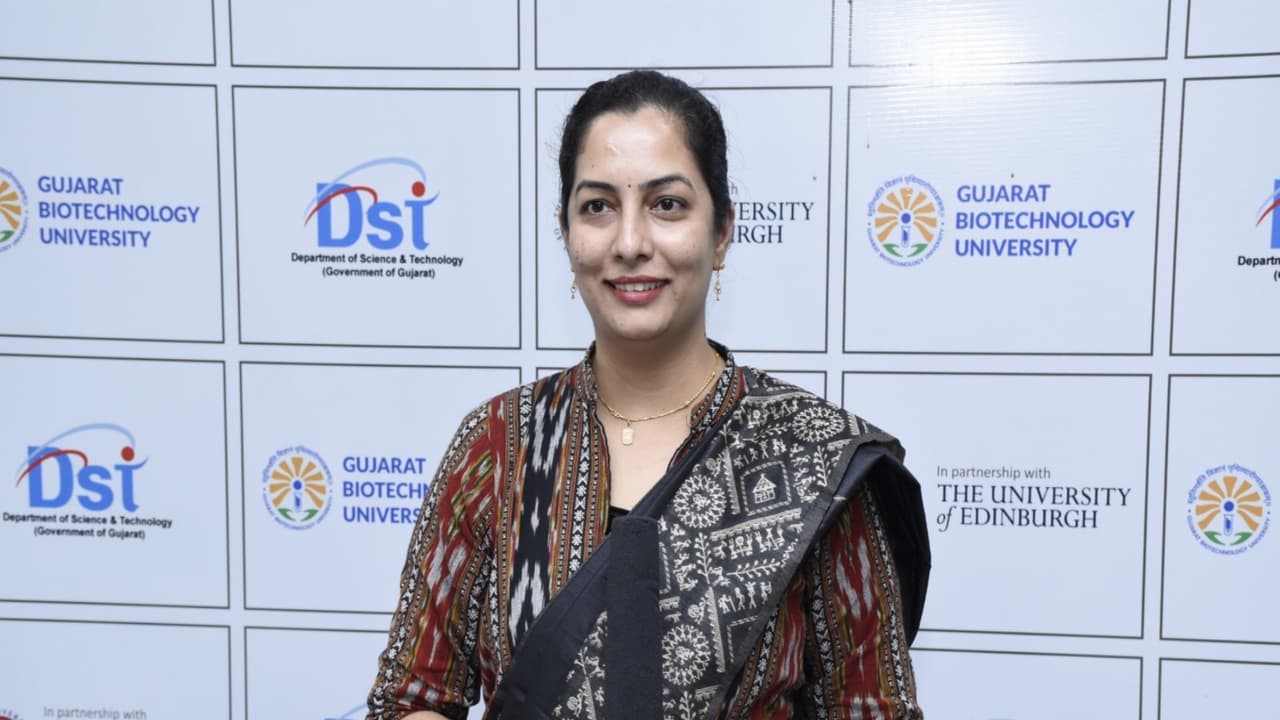
Gujarat Biotechnology University gets a ₹1.3 crore Gates Foundation grant for research led by Dr. Rohini Nair. The project will develop affordable, scalable RNA-based diagnostics and treatments for Heavy Menstrual Bleeding (HMB) in women.
Under the leadership of Dr Rohini Nair, Assistant Professor at Gujarat Biotechnology University (GBU), Gandhinagar, an institute operated by the State Government, a research team will develop RNA-based diagnostics and treatment solutions for Heavy Menstrual Bleeding (HMB), or excessive bleeding experienced by women during menstruation, with funding support from the Gates Foundation. The proposed solutions will be affordable, scalable, and minimally invasive. Aimed at enabling early diagnosis, personalised treatment, and improved menstrual health management for women, particularly in remote areas, the project has been approved under the 'Gates Foundation Grand Challenges Support'.
Gates Foundation Funds HMB Research
The Gates Foundation has sanctioned approximately ₹1.3 crore as financial assistance for this initiative. Dr Rohini Nair stated that, "The Gates Foundation launched the 'Grand Challenges' funding call in February 2025, inviting innovative approaches to address Heavy Menstrual Bleeding (HMB)--a serious yet often overlooked women's health issue. The Foundation follows a two-stage evaluation process, beginning with a concept note or Letter of Inquiry (LOI), after which shortlisted applicants are invited to submit a full proposal to ensure alignment with global health priorities and scientific rigour. To support efforts to address HMB and enhance awareness, GBU will also engage women, encouraging their participation so they can contribute in ways that benefit other women."
Collaborative Research and Broader Scope
The study will be carried out in collaboration with Dr Rohina Aggrawal, Dean and Head of the Department of Obstetrics and Gynaecology at the Institute of Kidney Diseases and Research Centre (IKDRC), Ahmedabad. In this research, Dr Aggrawal will lead the patient identification and clinical assessments, while Dr Nair's laboratory will focus on women's health research. THe research will actively focus on developing cost-effective and minimally invasive RNA-based solutions, particularly targeting Repeated Implantation Failure (RIF), Endometriosis, and Heavy Menstrual Bleeding (HMB).
Addressing a Widespread, Overlooked Health Issue
Dr Nair further stated, "Today, HMB affects millions of women worldwide, causing anaemia, reduced productivity, prolonged fatigue, and a decline in quality of life. Its impact is even more pronounced in under-resourced areas, where timely diagnosis and effective treatment are limited. This project will also explore ways to improve accessibility to and acceptance of treatments, such as Hormonal Intrauterine Devices (IUDs).
Despite its widespread prevalence, there is still insufficient understanding of the underlying biological causes of HMB, leading to delays in treatment and continued stigma. This issue affects not only older women but also younger generations. Social norms often prevent women from speaking openly about it, and many rely solely on painkillers to cope.
Understanding the Causes of AUB and HMB
Providing further insight into the issue, Dr Nair said, "Abnormal Uterine Bleeding (AUB), of which HMB is a subset, arises from various factors. Structural abnormalities include polyps, adenomyosis, fibroids, and malignancy (cancer), while non-structural factors involve bleeding disorders, ovulatory dysfunction, and endometrial dysfunction."
Innovative Scientific Approach
The project aims to use single-cell RNA sequencing to map the cellular and molecular factors underlying HMB, thereby creating a comprehensive dataset of the endometrial microenvironment. The findings are expected to identify key pathways and biomarkers associated with abnormal menstrual bleeding.
A Milestone for Indian Women's Health Research
Prof. Sudhir Pratap Singh, Dean of Research at Gujarat Biotechnology University, added, "Gujarat Biotechnology University regards this achievement as a significant milestone in India's contribution to global women's health research and reaffirms its commitment to promoting impactful, science-driven research." (ANI)
(Except for the headline, this story has not been edited by Asianet Newsable English staff and is published from a syndicated feed.)