
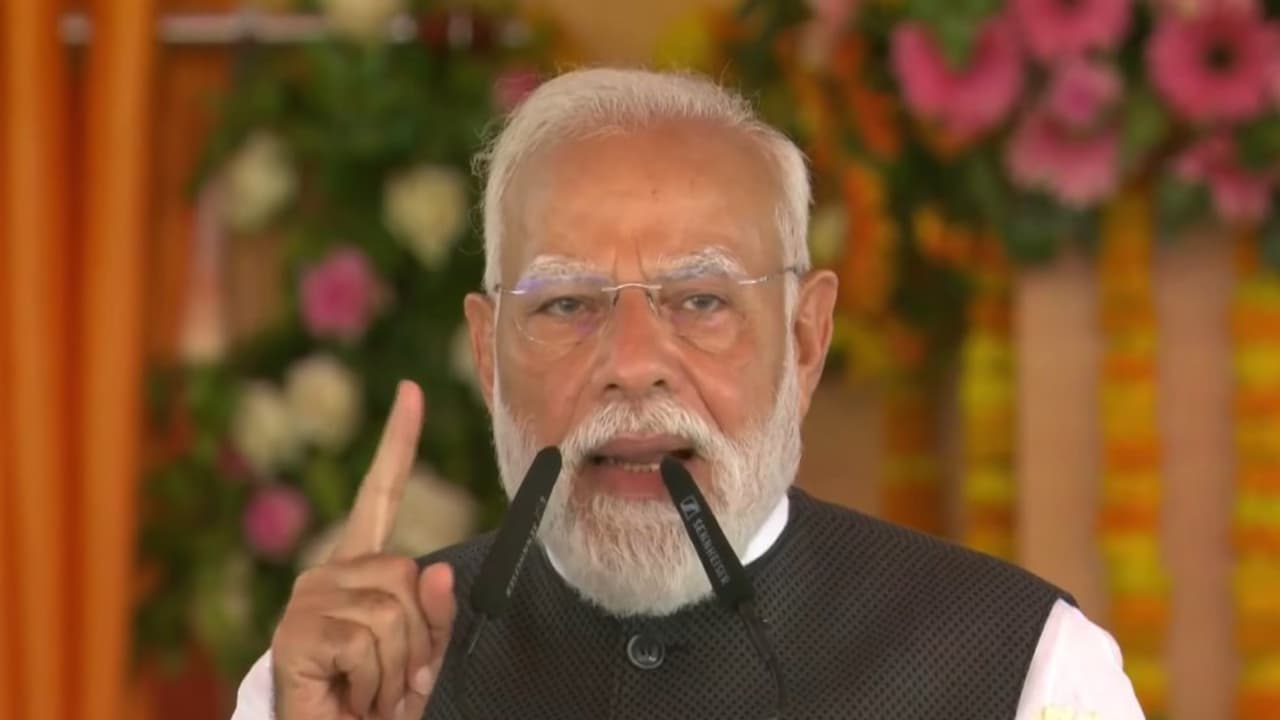
PM Modi inaugurated the 594-km Ganga Expressway, connecting Meerut and Prayagraj in UP. Built in under 3.5 years, it will reduce travel time, boost the economy, create jobs, and features an Emergency Landing Facility for the IAF.
Prime Minister Narendra Modi on Wednesday inaugurated the 594-km Ganga Expressway, one of India's largest greenfield infrastructure projects that was completed in less than 3.5 years, connecting Meerut with Prayagraj in Uttar Pradesh.
Unlocking Eastern UP's Potential
For decades, eastern UP has remained underdeveloped despite its demographic and economic potential. According to a release, the expressway is set to unlock this latent potential by improving access, reducing distances and integrating the region more closely with the state's growth corridors.
The project will reduce travel time from about 11 hours to nearly six hours and open new economic opportunities across the state. The expressway has deployed AI-enabled camera systems to provide advanced alerts and enhance road safety.
Strategic Capabilities and Emergency Landing Facility
A 3.5 km stretch in Shahjahanpur district has been developed as a dedicated Emergency Landing Facility (ELF) for the Indian Air Force (IAF), facilitating aircraft landing and strengthening the corridor's strategic capabilities.
Connecting Communities and Markets
Spanning 12 districts, the six-lane expressway, expandable to eight lanes, will improve access to markets, healthcare, education and tourism hubs. For families, this means quicker access to essential services, and for businesses, faster connections to markets, the press release stated.
Project Development and Execution
Adani Road Transport Limited (ARTL), the roads arm of Adani Enterprises Limited (AEL), developed 464 km, or nearly 80 per cent of the alignment, deploying over 12,000 workers at peak construction. The remaining stretch was developed by IRB Infrastructure.
594-kilometre-long, the six-lane expressway (expandable to eight lanes) connects 12 districts and 519 villages. Adani Enterprises Ltd. has developed 464 km (80 per cent), while IRB Infrastructure Ltd. has developed the remaining 130 km (20 per cent) of the project.
Economic Impact and Job Creation
According to the UP government's estimates, the expressway is expected to generate Rs 25,000-30,000 crore in annual logistics savings, create around 3 lakh jobs over the next decade and contribute over Rs 1 lakh crore to the state's GDP, while improving freight velocity and reducing inventory holding costs across sectors.
As per the release, the expressway will allow for the saving of about 30 per cent of fuel.
The Ganga Expressway is expected to generate roughly 3,00,000 direct and indirect employment opportunities over a 10-year period, according to the UP government's estimates.
Boosting Trade and Agriculture
The trunk corridor will strengthen trade flows by enabling faster movement of agricultural produce and goods. Farmers and small businesses stand to benefit from improved market access and better price realisation.
Enhancing Tourism and Connectivity
The expressway also strengthens UP's industrial and agricultural connectivity while improving access to religious destinations such as Prayagraj and Varanasi, supporting spiritual tourism and local livelihoods.
Expected to benefit over eight crore people, the corridor will improve connectivity, shorten journeys, and support sustained economic growth across UP.
The expressway will connect seven major tourist destinations, Garhmukteshwar, Kalkidham, Belhadevi, Chandrika (Shakti Peeth), Triveni Sangam, boosting the tourism economy in the region, the press release stated.
Industrial Corridors and Future Growth
Uttar Pradesh government is establishing 11 industrial corridors across all 12 districts -- Meerut, Hapur, Bulandshahr, Amroha, Sambhal, Badaun, Shahjahanpur, Hardoi, Unnao, Rae Bareli, Pratapgarh, Prayagraj -- creating millions of jobs over time. (ANI)
(Except for the headline, this story has not been edited by Asianet Newsable English staff and is published from a syndicated feed.)