
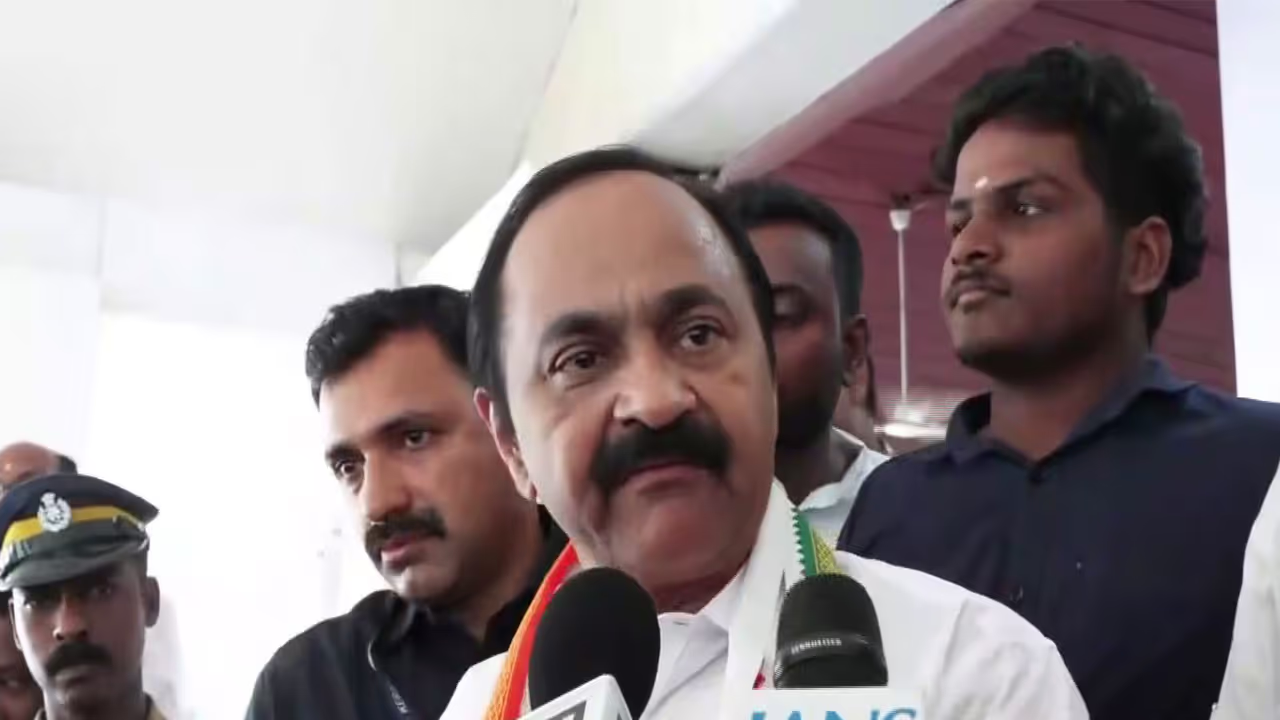
Following a directive from the Centre, the Keralam government has ordered that the full version of "Vande Mataram" be sung at all Independence Day celebrations, a reversal of its earlier stance. This aligns with the Har Ghar Tiranga campaign.
Kerala Mandates Full Vande Mataram Recitation
The Keralam government has directed that "Vande Mataram" be sung in full at Independence Day celebrations across the state, following instructions from the Centre. Chief Secretary Bishwanath Sinha issued the order on August 6, 2026, citing a communication from the Union Ministry of Culture.
According to the order, the Har Ghar Tiranga campaign will be observed from August 9 to 17, alongside the third phase of the nationwide commemoration of 150 years of the National Song "Vande Mataram." The Chief Secretary directed that all physical celebrations during the period should include the collective singing of Vande Mataram along with the hoisting or display of the National Flag. The order specifically states that the Government of India's instructions on the recitation of Vande Mataram should be followed in full.
Shift in Stance and New Legislation
The Keralam government had earlier maintained that the complete version of Vande Mataram need not be sung during official programmes. The development comes just over a week after Parliament passed the Prevention of Insults to National Honour (Amendment) Bill, 2026, extending to Vande Mataram the protection provided to the national anthem under the 1971 law. The Bill seeks to make obstruction or insult to the national song Vande Mataram a criminal offence during the Monsoon Session of Parliament.
Historical Context of 'Vande Mataram'
Authored by Bankim Chandra Chatterjee in his 1882 novel Anandamath, Vande Mataram played a monumental role in India's freedom struggle, serving as a rallying cry for nationalists.
However, debates surrounding its public recitation date back to the pre-independence era, specifically during the 1937 Indian National Congress session led by Jawaharlal Nehru, Subhas Chandra Bose, Maulana Abul Kalam Azad, and Rabindranath Tagore. While the opening stanzas invoke patriotism and praise for the motherland, later verses contain explicit imagery and references that led minority leaders and secular intellectuals to express reservations about mandating the song in pluralistic public spaces.
(Except for the headline, this story has not been edited by Asianetnews Editorial staff and is published from a syndicated feed.)