Divija Bhasin's viral Instagram video on reclaiming a sexist Hindi slur has sparked massive debate. Some hailed her as brave for challenging misogyny, while others accused her of insensitivity. Amid support and criticism, a POCSO complaint was filed.
Therapist and content creator Divija Bhasin, popularly known online as Awkward Goat, has found herself at the centre of a major online debate after posting a video discussing the use of a derogatory Hindi term for women. The video, which she shared on Instagram and later on YouTube with explanation of why she made the video, has got millions of views and has led to both praise and outrage.
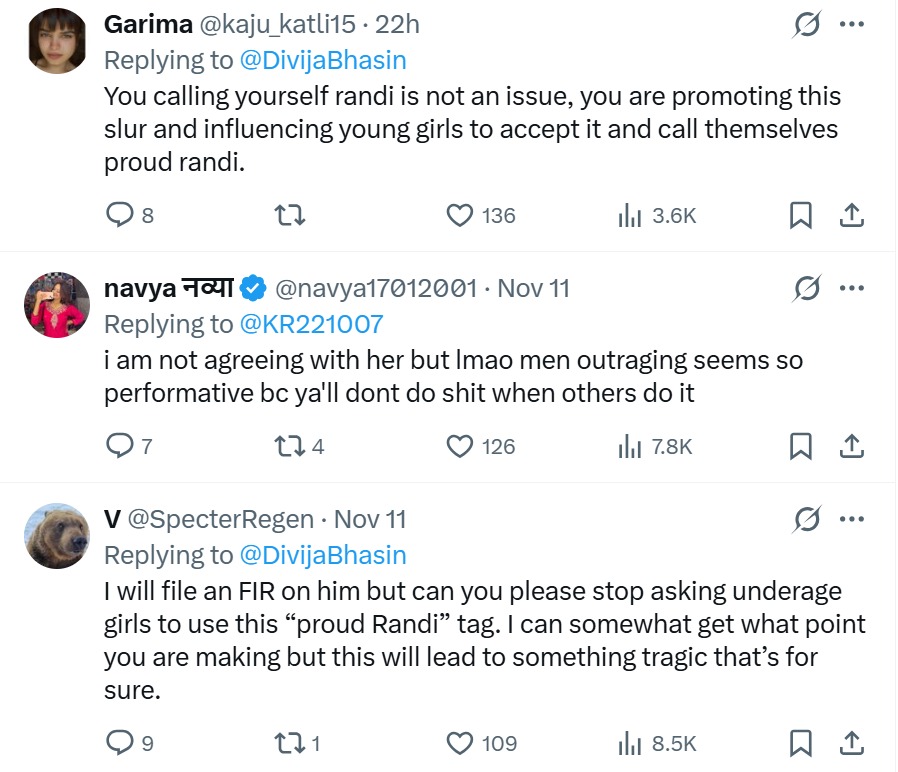
Many social media users accused her of 'normalising abuse' and 'influencing minors' with offensive language. Some even filed police and POCSO complaints, claiming her video encouraged young girls to use inappropriate words. Despite the outrage, Bhasin said she stands by her message and is ready to face any legal consequences.

Related Articles

In the clip, Bhasin sarcastically said she 'didn't look r**di enough', before changing into a strappy black dress and saying, "Many men call women r**di online and in real life because they’ve learnt it from their parents. They’ve heard their fathers use it for their mothers, and mothers sometimes use it for their daughters."
Her video on Instagram, titled 'Proud R**di: The R-Word Revolution', aimed to reclaim a word that is often hurled at women as a slur. But it has also triggered complaints, threats of legal action, and a deep public divide over whether reclaiming such a term is empowering or harmful.
Bhasin's message: 'It's just a word now'
In her viral reel, Bhasin explained that she used to feel hurt whenever someone used the word against her. "Men call me that every single day in my comments," she says in the video.
"Earlier it referred to a sex worker and became an insult, which is ridiculous because the insult should be directed at the men paying for sex, not at the workers themselves."
She added that over time, the word stopped affecting her. "Now it makes me feel nothing," she said. "So no, being called r**di doesn't mean you're a sex worker, it means you're a woman who's free and cannot be controlled." Bhasin said her decision to reclaim the term came from frustration with how normalised abuse toward women has become. "My followers told me their parents, relatives, and teachers have used this word for them. For wearing jeans, for having a boyfriend, for talking to boys, for simply existing as women."
Stories from followers: 'A six-year-old was called this by her father'
After the video went viral, Bhasin shared that many of her followers sent heartbreaking messages about being called the word in their own homes. One follower wrote that her father had called her the R-word when she was only six years old. “These are not rare stories,” Bhasin said. “They show how deep this verbal abuse runs in our society. This video is for all girls who’ve ever been called rai, prostitute, chh****l, whe, or any other insult. My heart goes out to them.”
Her message struck a chord with thousands of women and young girls who began commenting, sharing, and even adding hashtags like ‘#ProudRi’ to their bios**. Many saw it as a moment of solidarity, a way to take power away from the insult.
But not everyone agreed
Soon after the video gained traction, critics began to accuse Bhasin of crossing a line. Some argued that her attempt to 'reclaim' the word was insensitive, especially towards sex workers who have been degraded and attacked using that very word. One critic, Sampada Kaul, a content creator, said, “I understand where Bhasin is coming from, but it’s not her word to reclaim. It's been used against sex workers for decades. When a privileged woman uses it on Instagram, it erases the history behind it.” She added, "I’ve been called casteist slurs online too, but that doesn’t mean I can go around saying I’m a proud version of that word. Reclaiming a slur should come from the community it targets, not outsiders."
A legal complaint under POCSO Amid the growing online debate, one critic, Anubhav Gupta, who describes himself as a political reformer and "Sanatani Hindu," claimed that he had filed a formal complaint under the Protection of Children from Sexual Offences (POCSO) Act.
In a post on X, Gupta wrote, "I have filed a formal complaint for an FIR to UP Police against @DivijaBhasin for influencing minors to use inappropriate slurs and provoking them to indulge in such professions, which are offences under POCSO and various sections of Indian law." While there has been no confirmation yet of formal charges being filed, the post has been widely circulated online, with many tagging the police and demanding action.
Bhasin’s calm response: ‘I’m ready to go to jail’ Despite the backlash, Bhasin has not backed down. She has been replying to critics directly and defending her stance. "If I go to jail for calling myself ra**i," she wrote, "then all the men who called me that will have to go too. I’m fine with that." She said she hopes the controversy will push people to think about how freely verbal abuse against women is accepted. "If it takes me getting arrested for people to realise how damaging these words are, then so be it."
In another post, she added, “Every woman who’s ever been called this word knows how painful it is. I’ve just decided not to let that pain control me anymore.”
Support and criticism flood social media
Bhasin’s supporters have praised her courage in speaking up against everyday misogyny. Many women commented that her video helped them feel 'seen and heard' after being called similar words.
However, others say her way of reclaiming the word risks spreading it further among young audiences. “It’s a powerful message, but the approach is dangerous,” one user commented. “Teenagers are repeating the word online without understanding its background.” Some even warned that the movement could normalise abuse rather than challenge it, as people might start using the slur more casually.
Reclaiming slurs: A global debate
The debate sparked by Bhasin’s video is not new. Across the world, marginalised communities have reclaimed slurs that were once used to oppress them. For example, Black communities reclaimed the N-word, and LGBTQ+ groups reclaimed 'queer'. Supporters of Bhasin's message say that the same logic applies here that reclaiming the word weakens its power as an insult. But others argue that the difference lies in who is reclaiming it. "When women reclaim this word, they’re challenging patriarchy," one user said on Instagram. "But when privileged voices do it without including sex workers, it becomes another form of erasure."
A debate that reveals deep social wounds
At its core, the uproar surrounding Bhasin's video reflects how deeply ingrained verbal abuse and misogyny are in everyday life. Words that degrade women are often passed down casually, from fathers to sons, from one generation to the next. Whether one agrees with Bhasin or not, her video has forced people to confront an uncomfortable truth that women in India are insulted for simply existing. As one supporter wrote, "You can hate her way of saying it, but you can't deny the fact when she says, the word has been used to silence women for decades."