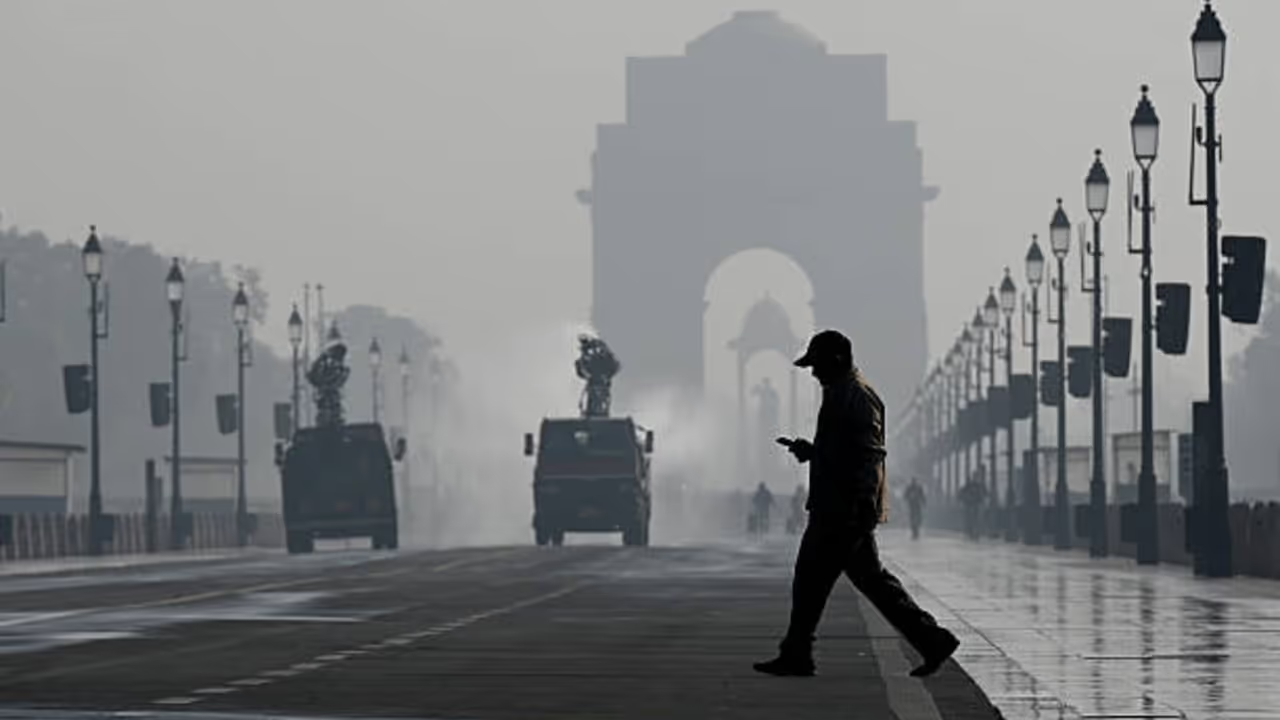
Delhi-NCR experienced a rapid decline in air quality, forcing authorities to escalate pollution controls twice in a single day. The Graded Response Action Plan (GRAP) Stage-III was imposed after the Air Quality Index (AQI) crossed 400.
Delhi-NCR woke up to severe air pollution on Saturday, but by evening, the situation had worsened so rapidly that authorities were forced to tighten curbs twice in a single day. What began with GRAP-3 restrictions in the afternoon soon escalated to the strictest GRAP-4 measures by evening.
GRAP-3 Imposed as AQI Crosses 400
The Commission for Air Quality Management (CAQM) invoked Stage-III of the Graded Response Action Plan (GRAP) after Delhi's Air Quality Index crossed the 400 mark, pushing pollution into the 'severe' category.
At this stage, several curbs come into force to limit emissions and protect public health, especially for vulnerable groups.
Related Articles

Pollution Worsens, GRAP-4 Brought In by Evening
Despite the afternoon measures, pollution levels continued to climb. Official data showed the AQI rising from 431 at 4 pm to 441 by 6 pm, prompting authorities to act again.
By Saturday evening, CAQM announced the implementation of GRAP-4, the toughest set of pollution restrictions, across the entire NCR with immediate effect.
"These actions are in addition to measures already in force under GRAP Stages I, II and III," the commission said.
What GRAP-4 Means for Residents
GRAP-4 is triggered when air quality is expected to enter the 'Severe+' category, typically when AQI threatens to cross 450. The stage includes the strictest controls on construction activities, industrial operations and other pollution sources to prevent further deterioration.
Residents are advised to limit outdoor exposure, while authorities keep a close watch on air quality trends.
Weather Conditions Behind the Sudden Spike
Interestingly, officials said the sharp rise in pollution was not mainly due to local emissions. Instead, the CAQM pointed to changing weather patterns.
A weak Western Disturbance approaching north-west India has led to low wind speeds, calm conditions at times, a shift in wind direction and increased moisture in the air.
"These winter conditions trap pollutants near the surface, allowing smog and fog to form and air quality to deteriorate rapidly," the commission explained.